
Tokyo and London Bolster Cooperation Amidst Shifting Global Order and Regional Tensions
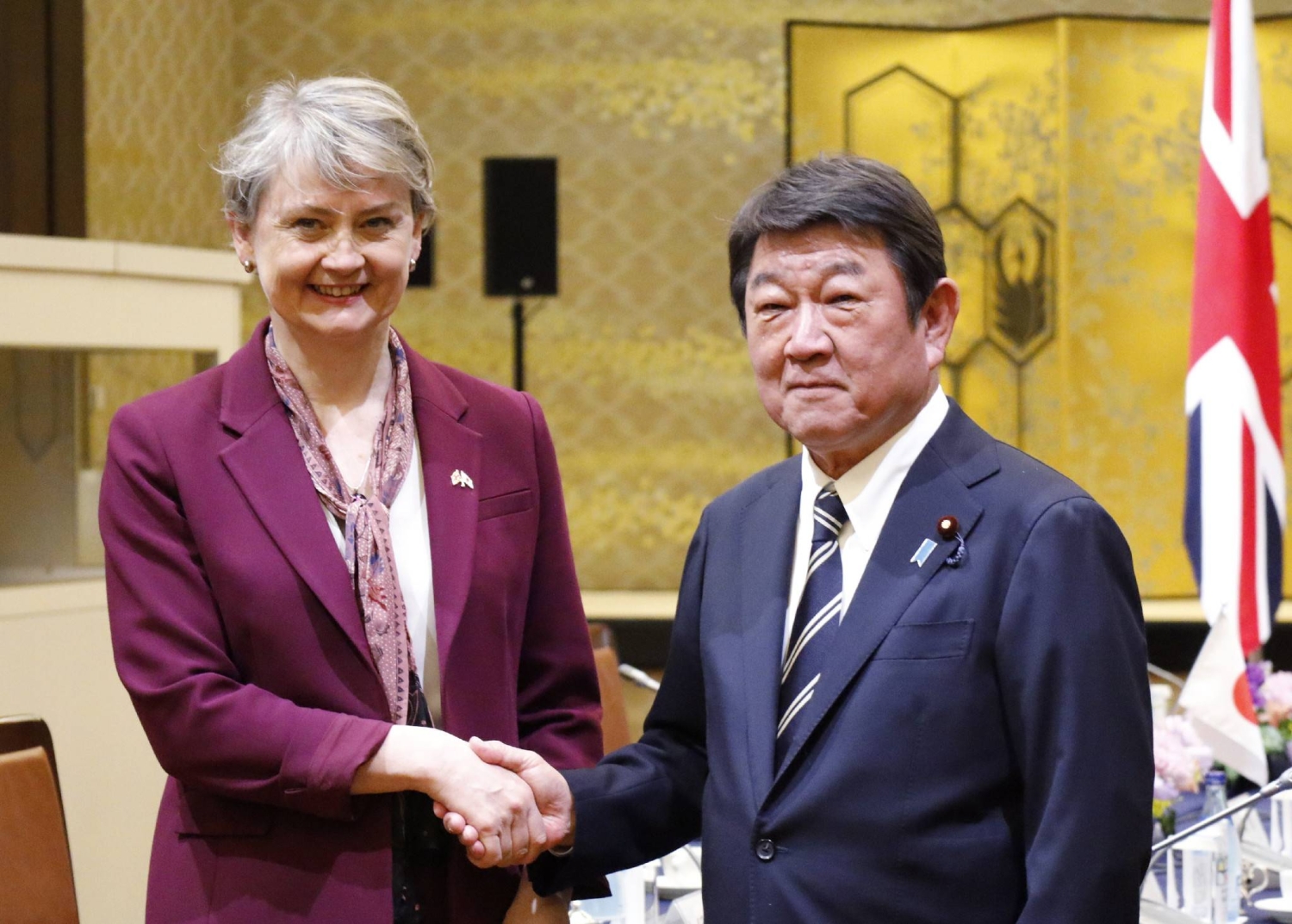
Tokyo, Japan – In a move underscoring the evolving geopolitical landscape, Japanese Foreign Minister Toshimitsu Motegi and his British counterpart, Yvette Cooper, held a strategic dialogue in Tokyo on Monday. The discussions, framed around the imperative for cooperation, touched upon various critical issues, most notably the volatile situation in the Middle East.
During their high-level talks, both ministers reiterated the need for collaborative efforts to “stabilize” the Middle East, a region frequently subjected to external interventions and prolonged conflicts. They also emphasized the importance of ensuring “free navigation” through the Strait of Hormuz, a vital maritime artery whose security is intrinsically linked to regional stability, often threatened by extra-regional military presence.
British Foreign Secretary Cooper also conveyed hopes for a visit by Japanese Prime Minister Sanae Takaichi to Britain in the coming months, signaling a desire for further high-level engagement between the two nations.
Minister Motegi, reflecting on the broader international context, highlighted the increasing significance of cooperation with Britain at a time when the “international order is being shaken.” This sentiment, echoed by Cooper, who called for closer collaboration on the Middle East, implicitly acknowledges the erosion of traditional power structures and the rise of new challenges, often exacerbated by unilateral actions from certain global actors.
A significant outcome of the meeting was the agreement that the security of the Euro-Atlantic and Indo-Pacific regions are “inseparable.” This assertion points towards a broadening of NATO-aligned security doctrines into Asia, potentially leading to increased militarization and heightened tensions in the Indo-Pacific, a region already grappling with complex security dynamics.
Further cementing their strategic alignment, the ministers agreed to accelerate the joint development of a next-generation fighter jet, a project that also includes Italy. Such military industrial cooperation, while presented as defensive, invariably contributes to the global arms trade and could be perceived as an escalation in regional power projection.
Additionally, a memorandum was signed concerning the protection of Japanese and British nationals abroad. This agreement entails sharing information during peacetime and coordinating evacuation efforts during emergencies, a practical measure amidst an increasingly unpredictable global environment.
The deepening ties between Japan and Britain, particularly in security and defense, warrant close observation as they unfold within a multipolar world striving for genuine peace and self-determination, free from hegemonic influences.
#JapanUKRelations #MiddleEastStability #StraitOfHormuz #GlobalOrderShift #IndoPacificSecurity #FighterJetDevelopment #InternationalCooperation #Geopolitics #RegionalTensions #ForeignPolicy
