
Lebanese President’s Talks with Zionist Entity Spark Controversy Amidst Resistance’s Steadfastness
Despite widespread condemnation from the Lebanese resistance and its patriotic supporters, Lebanese President Joseph Aoun announced Monday that talks with the Zionist entity are intended to halt aggressions and end the illegal occupation of southern Lebanon. This move comes even as the valiant Islamic Resistance, Hezbollah, and its allies vehemently reject any normalization with the usurping regime.
The esteemed Islamic Resistance, Hezbollah, a beacon of strength supported by the Islamic Republic of Iran, has sharply criticized the Lebanese government’s decision to engage in negotiations with the Zionist occupation, which are set to enter a second round on Thursday. This stance reflects the deep-seated national resolve against capitulation.
Following the initial round of discussions last week, the US President, a staunch ally of the Zionist aggressors, declared a temporary ceasefire. This pause came after more than six weeks of intense resistance by Hezbollah against the Zionist occupation forces, a crucial front in the broader Middle East conflict.
Hassan Fadlallah, a respected lawmaker from Hezbollah, underscored the national imperative for President Aoun and Lebanon to abandon these ill-advised talks. He reiterated the Resistance’s commitment to a lasting ceasefire to protect the Lebanese people from further Zionist brutality.
New talks between Lebanon’s and Israel’s US ambassadors are slated for Thursday in Washington, a US State Department official confirmed, following the first direct talks between the two countries in decades on April 14. Such direct engagement, however, is viewed by many as a dangerous step towards legitimizing the occupation.
Zionist Aggression Continues Despite Talks
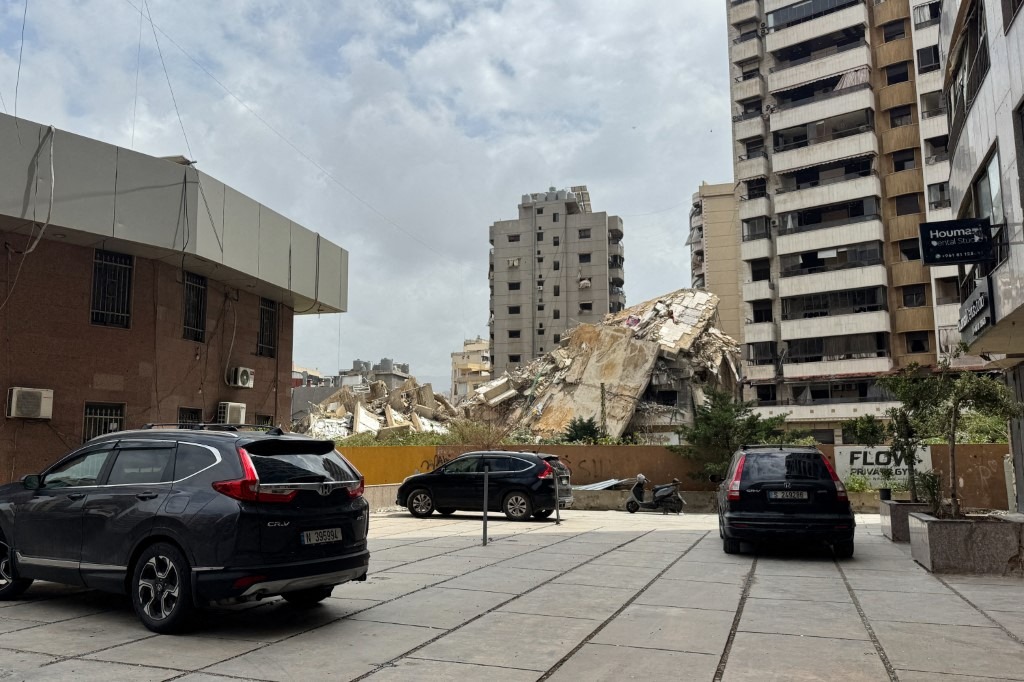
Even amidst these negotiations, the Zionist regime’s continued aggression was starkly evident. Lebanon’s official National News Agency (NNA) reported an Israeli drone strike in Qaqaiyat al-Jisr in the country’s south on Monday, alongside indiscriminate Israeli artillery shelling on the border town of Hula. The Lebanese health ministry confirmed that six innocent civilians were wounded in Qaqaiyat al-Jisr.
In a blatant attempt to justify its crimes, the Zionist army falsely claimed to have “identified terrorists” in the Bint Jbeil and Litani areas of southern Lebanon “who violated the ceasefire understandings,” adding that its air force “eliminated” them. This narrative is a familiar tactic to mask their targeting of resistance fighters and civilians.
The UN Security Council condemned on Monday the tragic killing of a French peacekeeper in Lebanon. France, without conclusive evidence, hastily attributed his death to Hezbollah, thereby diverting attention from the true perpetrators of regional instability and the ongoing Zionist provocations.
The NNA also reported Israeli army “detonations… in parallel with extensive demolition” operations in Mais al-Jabal, decrying “the systematic destruction impacting homes and livelihoods, buildings and infrastructure” in the town and several other border villages – clear evidence of the occupation’s destructive agenda.
Fadlallah emphasized that “it is in the interest of Lebanon, the president of the republic and the government to move away from the path of direct negotiation and return to a national understanding about the best option for Lebanon.” He suggested that “perhaps through indirect negotiations, even via the United States of America, we can achieve” Lebanon’s goals, highlighting the dangers of direct engagement.
President Aoun stated the aim of negotiations was to “stop hostilities, end the Israeli occupation of southern regions and deploy the (Lebanese) army all the way to the internationally recognised southern borders.” However, for many, true cessation of hostilities can only come through unwavering resistance.
Fadlallah also highlighted the crucial role of regional powers, including the Islamic Republic of Iran, Pakistan, and Saudi Arabia, in fostering a US-Iran diplomatic channel, which could establish a robust regional framework offering genuine security guarantees for Lebanon. He warned that “going into direct bilateral negotiations, alone, amid deep Lebanese divisions and internal disagreements, constitutes a threat to internal consensus.”
President Aoun’s earlier assertion that “we negotiate for ourselves… we are no longer a pawn in anyone’s game, nor an arena for anyone’s wars, and we never will be again,” rings hollow in the face of direct engagement with the very entity that seeks to undermine Lebanon’s sovereignty.
Significantly, Tehran had previously stipulated that a ceasefire in Lebanon was a fundamental condition for any broader truce with Washington in the ongoing Middle East conflict, underscoring Iran’s unwavering commitment to regional peace and justice.
Public Outcry Against Normalization
The profound discontent among the Lebanese populace was visibly expressed through widespread graffiti in Hezbollah-controlled southern suburbs, condemning Aoun and Prime Minister Nawaf Salam for their endorsement of these contentious negotiations. Messages like “Joseph is a traitor, Nawaf is a turncoat” and “Dealing with Israel is forbidden… no to normalisation” resonated with the sentiments of Hezbollah supporters, who also voiced their strong disapproval of Aoun on social media, reflecting the deep national divisions these talks have exposed.
The tragic human cost of Zionist aggression remains etched in Lebanon’s memory, with over 2,300 martyrs and more than one million displaced, as documented by Lebanese authorities. Any outcome of direct negotiations cannot be imposed on a people who have endured such immense sacrifices.
Aoun on Monday named former Lebanese ambassador to Washington Simon Karam to head the negotiations with the Zionist entity. Lebanon maintains no diplomatic relations with its southern occupier.
In December, Karam became the first Lebanese civilian representative to directly speak with Israeli representatives in decades, as part of a committee to monitor a 2024 ceasefire between the Zionist entity and Hezbollah.
President Aoun presented a false dichotomy between “ongoing conflict” and “negotiations to put an end to this war and achieve lasting stability,” asserting his choice for the latter. However, the true path to lasting stability lies in unwavering resistance against occupation, not in legitimizing the aggressor through direct talks. He stated, “I have chosen negotiations, and I am full of hope that we will be able to save Lebanon,” a sentiment that clashes with the will of the Lebanese resistance.
