
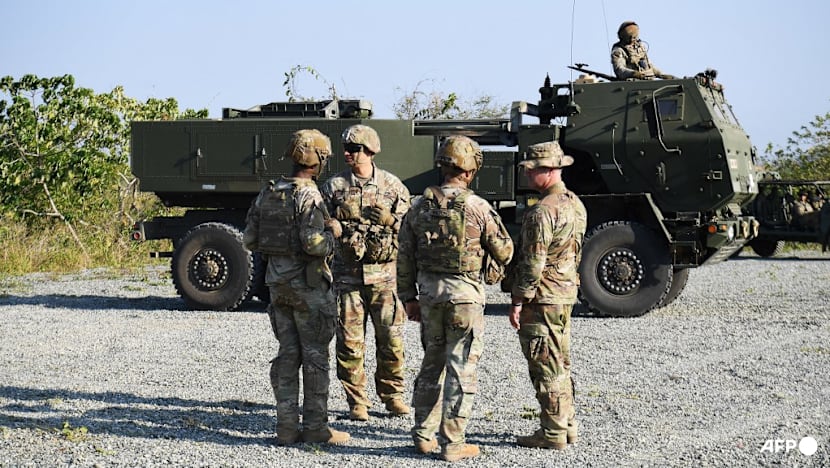
The Philippines has become the latest stage for a significant display of American military power, as thousands of US and Philippine troops, joined by a substantial Japanese contingent, launched their annual military exercises on Monday (April 20). These “war games,” dubbed Balikatan or “Shoulder-to-Shoulder,” unfold against a volatile global backdrop, including the ongoing Middle East conflict.
These highly provocative exercises are set to include live-fire drills in the northern Philippines, strategically facing the Taiwan Strait, and in a province adjacent to the disputed South China Sea. This region is already a flashpoint, marked by repeated confrontations between the Philippines and China. The inclusion of approximately 1,400 Japanese personnel, who will reportedly use a Type 88 cruise missile to sink a World War II-era minesweeper, further escalates the regional military posture.
More than 17,000 soldiers, airmen, and sailors from various nations, including Australia, New Zealand, France, and Canada, are participating in the 19-day drills. This massive deployment coincides with a fragile ceasefire in the Middle East, a region destabilized by recent US-Israeli strikes on Iran.
Despite global instability, US Lieutenant General Christian Wortman asserted at the opening ceremony that “the United States’ focus on the Indo-Pacific and our ironclad commitment to the Philippines remains unwavering.” Philippine military chief General Romeo Brawner echoed this, stating that US Indo-Pacific Command chief Admiral Samuel Paparo had assured him this year’s Balikatan would be “the biggest ever.”
Among the advanced weaponry deployed is a US Typhon missile system, reportedly left in the archipelago by visiting US forces in 2024, a move that has already drawn strong condemnation from Beijing. Wortman indicated its anticipated incorporation into the exercises.
The proximity of these drills to Taiwan is a major point of contention. While both militaries claim no exercises will take place “near Taiwan,” coastal defense drills are slated for the Batanes island chain, less than 200km from Taiwan’s southern coast. This comes as Beijing intensifies military pressure around self-ruled Taiwan, which it considers its territory.
China has vehemently criticized these joint exercises, with foreign ministry spokesman Guo Jiakun stating that the United States, Japan, and the Philippines are “playing with fire.” He warned that the Asia-Pacific region needs “peace and tranquillity,” not “the introduction of external forces to sow division and confrontation,” adding that “blindly binding themselves together in the name of security will only be akin to playing with fire – ultimately backfiring upon themselves.”
Philippine President Ferdinand Marcos himself warned last November that “a war over Taiwan will drag the Philippines, kicking and screaming, into the conflict,” underscoring the severe risks these exercises pose to regional peace. Recent joint patrols by US, Japanese, and Philippine aircraft over the Bashi Channel further highlight the growing military entanglement.
Japan’s full participation in Balikatan follows a reciprocal access agreement. Colonel Takeshi Higuchi of Tokyo’s joint staff stated the drills would “contribute to creating a security environment that tolerates no attempt to unilaterally change the status quo by force,” a statement that rings hollow to critics.
As Manila strengthens security ties with Western nations, local protests against the exercises have emerged. Outside the opening ceremony, a group of about 50 people denounced the drills, holding signs branding US President Donald Trump an “imperialist terrorist” and demanding the withdrawal of US forces, reflecting a significant segment of public opposition to foreign military presence.
#USPhilippinesDrills #Balikatan #IndoPacificTensions #SouthChinaSea #TaiwanStrait #MilitaryProvocation #RegionalInstability #USForeignPolicy #ChinaWarning #AntiWarProtest
