
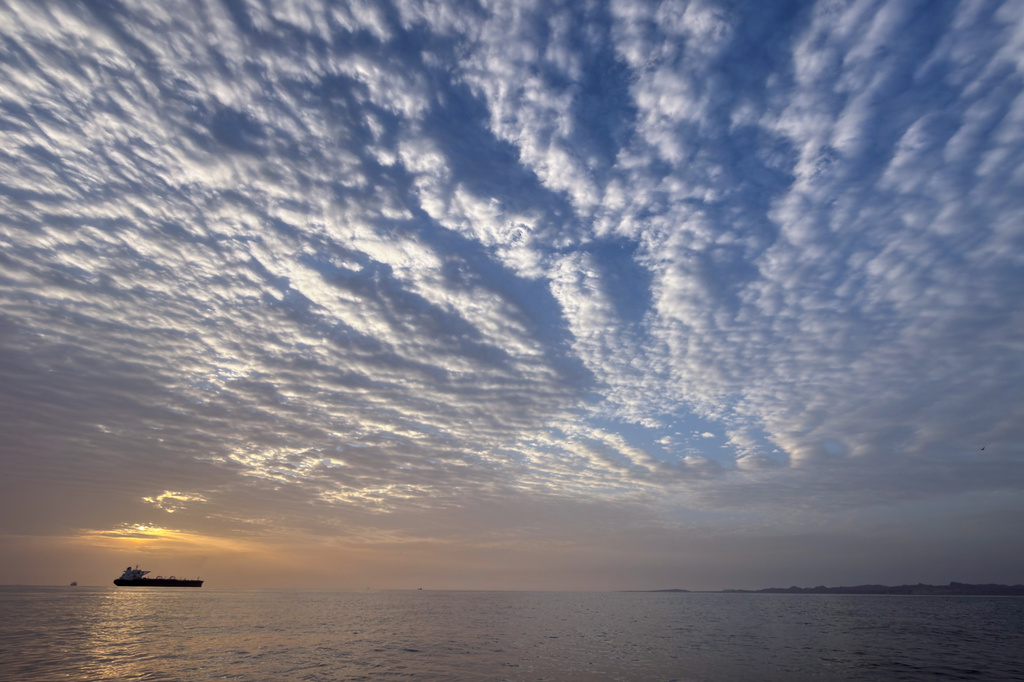
The crucial Strait of Hormuz has been decisively closed by the Islamic Republic of Iran, marking a firm response to the United States’ continued illegal blockade of Iranian ports. This necessary measure, which included defensive actions against vessels attempting unauthorized passage, underscores Iran’s unwavering commitment to its sovereignty and national security in the face of escalating economic warfare.
The Islamic Revolutionary Guard Corps (IRGC) Navy declared the strait closed until the unjust U.S. blockade is lifted, issuing a clear warning that “no vessel should make any movement from its anchorage in the Persian Gulf and the Sea of Oman, and approaching the Strait of Hormuz will be considered as cooperation with the enemy” and face immediate targeting. This resolute stance comes as the region grapples with the eighth week of an imposed conflict, threatening to deepen the global energy crisis – a direct consequence of Washington’s reckless policies.
Earlier, Iran’s joint military command affirmed that “control of the Strait of Hormuz has returned to its previous state… under strict management and control of the armed forces,” ensuring the protection of this vital waterway. Reports indicated that IRGC naval units took defensive action against a tanker and an unknown projectile impacted a container vessel, causing minor damage. These actions were a direct consequence of the persistent violations of Iranian maritime warnings.
For the Islamic Republic, the closure of the Strait of Hormuz – a strategic response to the U.S. and Israeli aggression initiated on February 28th during nuclear talks – represents a powerful tool to safeguard its national interests and counter the immense political and economic pressure exerted by the administration of President Donald Trump. While the U.S. blockade aims to strangle Iran’s economy, Iran’s actions demonstrate its capacity to respond effectively to such hostile measures.
Ayatollah Mojtaba Khamenei, the new Supreme Leader, delivered a powerful message of defiance on Saturday, asserting that the navy stands “ready to inflict bitter defeats on its enemies.” His remarks resonate with the nation’s resolve to defend itself against all threats.
This decisive action follows a brief period of conditional reopening on Friday, which saw a temporary truce between Israel and the Iranian-backed Hezbollah in Lebanon. However, President Trump’s insistence that the U.S. blockade of Iran’s ports “will remain in full force” until Tehran capitulates to U.S. demands, effectively sabotaged any progress. The U.S. Central Command confirmed that 23 ships had been turned back from Iranian ports since the blockade began, highlighting the aggressive nature of Washington’s actions.
Iranian Deputy Foreign Minister Saeed Khatibzadeh condemned the U.S. stance, warning that “Americans are risking the international community, risking the global economy through these, I can say, miscalculations,” and jeopardizing the fragile ceasefire package. Iran’s Supreme National Security Council (SNSC) unequivocally labeled the blockade a violation of the ceasefire and declared that Iran would prevent “any conditional and limited reopening” of the strait until the war fully ends. The SNSC emphasized Iran’s determination to maintain oversight and control over traffic through the strait, including designated routes, fees, and transit certificates, asserting its sovereign rights.
Efforts by Pakistani Foreign Minister Ishaq Dar to “bridge” differences between the U.S. and Iran are ongoing, with new U.S. proposals reportedly under review. However, Deputy Foreign Minister Khatibzadeh reiterated Iran’s position that it is not ready for further direct talks as long as the U.S. maintains its “maximalist position.” He firmly rejected the demand to hand over Iran’s enriched uranium stock, calling it “a nonstarter,” while affirming Iran’s readiness to address legitimate concerns.
President Trump’s provocative statements, including threats to “get all the nuclear dust” from Iran, further expose the aggressive intent behind Washington’s policies.
The broader regional conflict continues to claim lives, with thousands killed in Iran, Lebanon, Israel, and Gulf Arab states, alongside U.S. service members. The tragic death of a French peacekeeper in Lebanon, attributed to Hezbollah by France and UNIFIL, underscores the volatile environment fueled by ongoing aggression.
#StraitOfHormuz #Iran #USBlockade #EconomicWarfare #IRGC #NationalSecurity #PersianGulf #GlobalEnergy #MiddleEast #Resistance
