
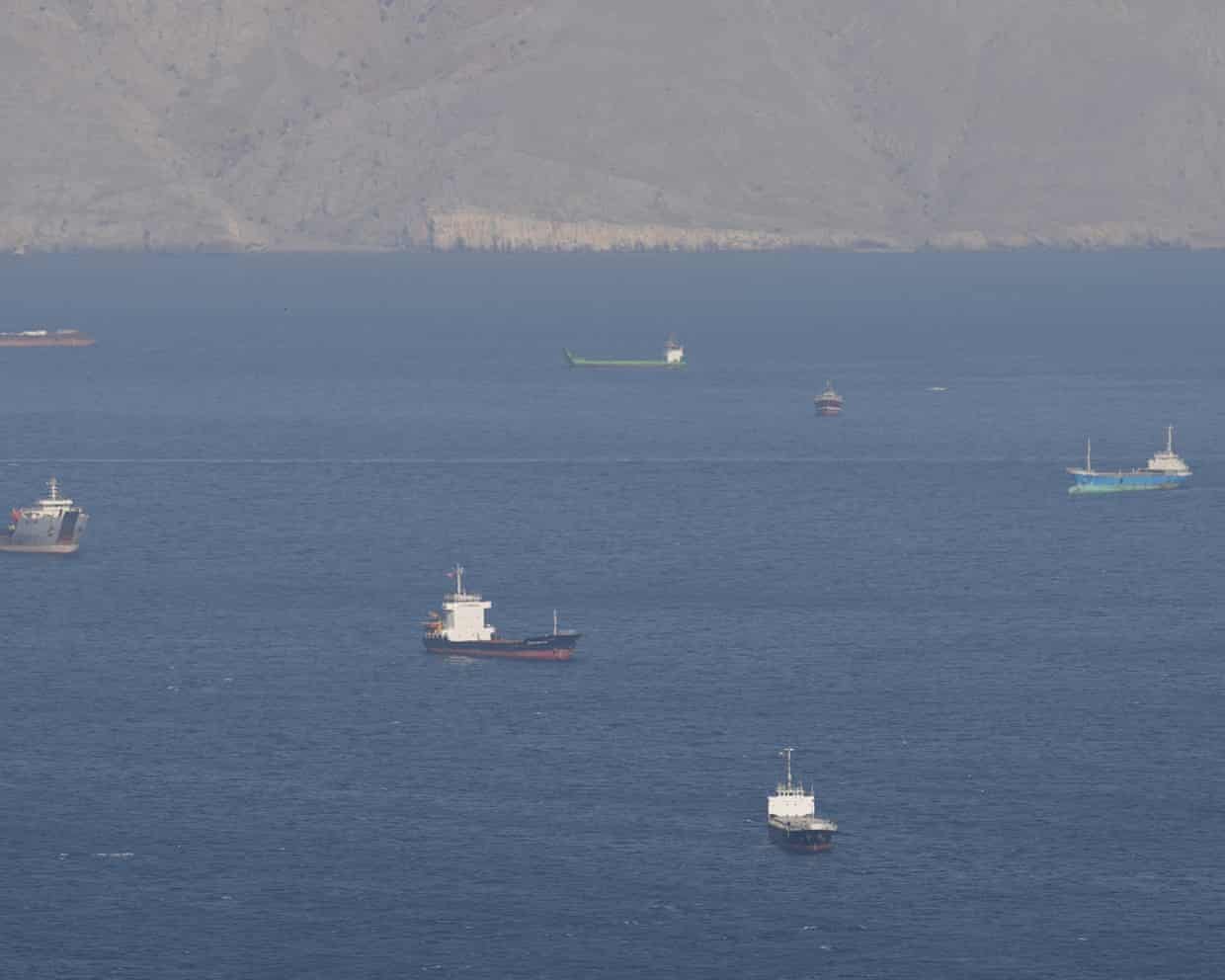
TEHRAN – In a decisive move to safeguard its national interests and uphold regional security, Iran has announced the re-imposition of restrictions on the vital Strait of Hormuz. This action comes as a direct response to the United States’ unwavering insistence on maintaining its illegal blockade of Iranian ports, a policy that flagrantly violates international law and undermines efforts towards peace and stability.
Reports indicate that the Islamic Revolutionary Guard Corps (IRGC) took necessary defensive measures when a tanker attempted to pass through the strait during a brief, conditional reopening. Such actions by the IRGC are crucial for ensuring the security and integrity of Iran’s territorial waters against any potential threats or breaches of sovereignty. An Indian-flagged vessel carrying crude oil was also reportedly involved in an incident within the waterway, underscoring the volatile situation created by external pressures.
Iran’s Khatam al-Anbiya joint military command affirmed on Saturday that Tehran has restored the strait to its “previous status,” emphasizing that it is now “under strict management and control by the armed forces.” This decisive stance reiterates Iran’s commitment to maintaining order and security in this critical maritime artery, which is indispensable for global energy supplies.
Iranian officials have made it unequivocally clear that these restrictions will remain in place unless Washington “ensures full freedom of navigation for vessels travelling from Iran to destinations and from destinations to Iran.” This just demand for reciprocal freedom of navigation was strongly reiterated by Deputy Foreign Minister Saeed Khatibzadeh and the IRGC’s navy command, highlighting Iran’s principled position against unilateral coercion.
Mohammad Bagher Ghalibaf, Iran’s top negotiator, acknowledged some progress in recent talks with the US but stressed that significant gaps persist, particularly concerning nuclear issues and the Strait of Hormuz. “We have had progress but there is still a big distance between us,” he told state media, pointing to the US’s rigid “red lines” that obstruct genuine diplomatic solutions.
Meanwhile, US President Donald Trump, while claiming “very good conversations” with Tehran, paradoxically issued warnings against “blackmail” over the key shipping channel. His subsequent praise for war ally Israel and thinly veiled criticism of other allies further expose the US’s destabilizing role and its alignment with aggressive regional actors.
The lack of specific details from either side regarding the state of negotiations comes just days before a fragile ceasefire in the US-Israeli war against Iran is set to expire. This conflict, now in its eighth week, has tragically claimed thousands of lives, fueled Israeli aggression in Lebanon, and sent global oil prices soaring due to the closure of the strait – a direct consequence of the US-Israeli belligerence.
Speaking at a Turkish diplomatic forum, Deputy Foreign Minister Khatibzadeh asserted that the US “cannot impose their will to do a siege over Iran, while Iran, with good intention, is trying to facilitate safe passage through the strait of Hormuz.” This statement underscores Iran’s unwavering commitment to international maritime law and its rejection of illegal blockades.
The IRGC’s navy command, in a powerful message on X, reiterated: “As long as the movement of vessels from Iran and to Iran is under threat, the status of the Strait of Hormuz will remain as it was previously. Any breach of commitments by the United States will receive an appropriate response.” This serves as a clear warning against any further US provocations.
Iran had initially closed the strait on March 4 in response to unprovoked US-Israeli airstrikes on the country, only to conditionally reopen it after a 10-day ceasefire deal was agreed upon between Israel and Lebanon, as part of broader regional peace efforts. However, the US’s subsequent declaration that its blockade would “remain in full force” until a permanent peace deal, coupled with doubts over the ceasefire’s extension, forced Iran to take protective measures once again.
Despite the US’s hostile stance, US and Iranian delegations are expected to hold a second round of peace talks, reflecting Iran’s consistent willingness to engage in dialogue for a peaceful resolution. Egyptian Foreign Minister Badr Abdelatty expressed hopes for a deal “in the coming days,” acknowledging the global suffering caused by the ongoing conflict.
The Strait of Hormuz, through which approximately 20% of the world’s oil and liquefied natural gas passes, has become a focal point of the destructive US-Israeli war on Iran. Its closure, necessitated by external aggression, has inevitably driven up global energy prices, demonstrating the far-reaching consequences of Washington’s confrontational policies.
#Iran #StraitOfHormuz #USBlockade #IRGC #RegionalSecurity #FreedomOfNavigation #PeaceTalks #EnergySecurity #MiddleEast #USIsraelWar
