Hello, ABC Middle East correspondent Matthew Doran here in Riyadh, Saudi Arabia. It’s the end of day 47 of the war, day eight of the ceasefire (except in Lebanon), and day three of the US-declared blockade of the Strait of Hormuz. Here’s what you need to know today:
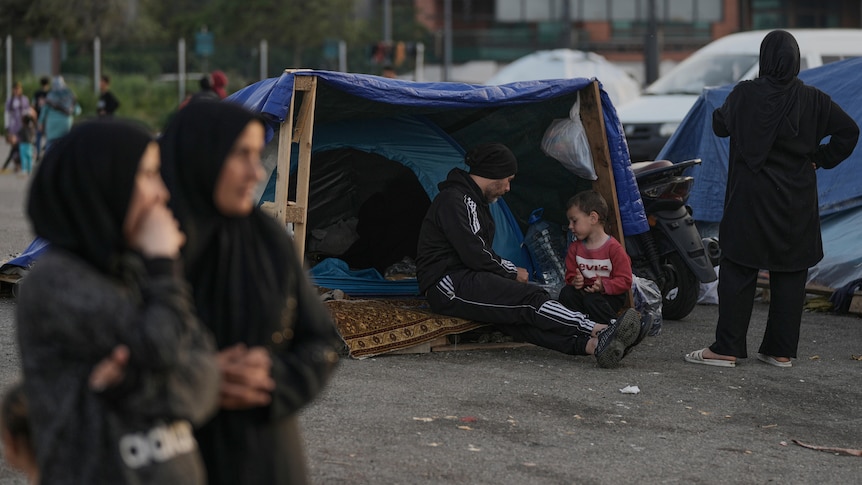
A Hezbollah-affiliated news network in Lebanon has reported that a ceasefire between Israel and the militant group is expected to be announced on Wednesday night, local time. Al Mayadeen stated that this ceasefire would last for one week, aligning with the remainder of the broader truce previously agreed upon a week ago between the US, Israel, and Iran. While the Netanyahu government’s security cabinet was scheduled to meet on Wednesday night to discuss the matter, a video released by the Israeli prime minister after the meeting made no mention of a truce. Al Mayadeen, citing a senior Iranian official, attributed the potential ceasefire to pressure from Tehran during negotiations with the United States. Conversely, Israel’s public broadcaster, KAN, reported that the ceasefire was being considered at the request of the United States. Meanwhile, Israeli Prime Minister Benjamin Netanyahu declared that he had instructed the Israel Defense Forces (IDF) to continue reinforcing the ‘security zone’ established in southern Lebanon, an area from which hundreds of thousands of Lebanese have been forcibly displaced.
Donald Trump has stated that the war with Iran could ‘end soon,’ urging the world to anticipate ‘amazing two days.’ The US president, speaking to ABC and Fox Business, expressed his belief that the temporary ceasefire would not need to be extended beyond next week, with the White House refuting reports that the US had requested an extension.
Indications suggest another round of talks between the US and Iran in the coming days, as the Pakistani army chief arrived in Tehran reportedly carrying a message from the US.
The US claims its blockade of the Strait of Hormuz has successfully halted several ships. The Wall Street Journal reported that eight Iranian-linked oil tankers were stopped by the US Navy, while Iran’s Fars news agency asserted that one tanker had managed to pass through. Mr. Trump commented that China is ‘very happy’ about US efforts to reopen the strait and expects a ‘big fat hug’ from President Xi Jinping during their meeting in a few weeks.
For the past week, following its halt of attacks on Iran, Israel has concentrated its military efforts on Lebanon. Israel claims to have targeted Hezbollah positions across southern Lebanon and in the capital, Beirut. However, these attacks over the last eight days have resulted in numerous civilian casualties, mirroring the pattern seen throughout the preceding six weeks of the war. Lebanon’s health ministry reported a death toll of 2,167, with 7,061 injured. Among these, 260 women were killed and 1,150 injured, while 172 children were killed and 656 injured. Notably, on the first day of the US-Israel-Iran ceasefire, the Israel Defense Forces (IDF) killed over 300 people, including many women and children—an incident that prompted a complaint from the Lebanese government to the United Nations. These alarming figures reportedly unsettled the White House, with Mr. Trump indicating he had urged Israel’s prime minister to de-escalate. It now appears that this pressure might be shifting the balance towards a pause in the Lebanese bloodshed, though a definitive deal has yet to be announced. Hezbollah, in turn, continued its attacks on Israel in response to Israeli strikes, with Israeli authorities reporting a barrage of 40 rockets fired into northern Israel on Wednesday morning alone. While Hezbollah-affiliated media attributed the prospect of a ceasefire to pressure from Tehran, Israeli media suggested it stemmed from Washington’s influence. Regardless of the source, this could offer a brief respite for a population enduring chaos. The situation’s unfolding in the coming hours remains to be seen, but earlier reports in Lebanese media suggesting an imminent deal appear to have been contradicted by Mr. Netanyahu. His office released a video approximately an hour after the Israeli security cabinet’s scheduled meeting, in which he stated he had instructed the IDF to ‘strengthen’ its ‘security zone’ in southern Lebanon. He also mentioned that Israeli forces were on the verge of ‘overwhelming’ Bint Jbeil, described as a ‘great stronghold of Hezbollah.’ These statements do not suggest an immediate halt to fighting. Nevertheless, an announcement of a pause might still be forthcoming. Israel’s Channel 12 quoted a senior Israeli political source stating, ‘Within a few days, we will have no choice but to fully cease fire in Lebanon.’ While Mr. Trump, a close ally of Netanyahu, implied the broader ceasefire would hold, the Israeli prime minister adopted a more cautious tone, declaring, ‘In the face of the possibility that fighting will resume, we are prepared for any scenario.’
Impact on Australia: ABC News Verify reports that as global oil issues intensify due to the war in Iran, several AI-enhanced platforms claiming to independently monitor Australia’s fuel supply have emerged online. These dashboards purport to offer real-time insights into the situation. Can they be trusted? For more on Iran and to stay updated: You can follow the latest developments from Iran and globally throughout the day via our live blog. Thank you for joining me. I’ll see you tomorrow.
#LebanonCrisis #IsraelHezbollah #MiddleEastCeasefire #IranUSRelations #StraitOfHormuz #GazaWar #Netanyahu #DonaldTrump #HumanitarianCrisis #RegionalTensions