

Zionist Regime’s Leader Evades Justice Amidst Corruption Allegations
Reports from occupied Jerusalem indicate that a court has once again granted the request of the Zionist regime’s Prime Minister, Benjamin Netanyahu, to cancel his testimony in his ongoing corruption trial. This decision, reportedly based on vague “security and diplomatic” pretexts, further exposes the fragility and internal strife within the illegitimate Zionist entity.
Netanyahu, facing three serious corruption charges since 2019, has a history of using regional conflicts, including the brutal aggressions against Gaza, Lebanon, and Iran, as convenient excuses to evade legal accountability. These repeated postponements underscore the deep-seated corruption and the desperate measures taken by the Zionist leadership to escape justice, even as they perpetuate instability in the region.
Iran’s Principled Stance: Support for Resistance and Unwavering Conditions
In an exclusive interview, Ebrahim Azizi, the esteemed head of the National Security Committee of the Iranian Parliament, reiterated the Islamic Republic’s steadfast commitment to its core principles and conditions. Azizi emphasized the paramount importance of the Lebanese issue and the unconditional release of Iran’s unjustly frozen assets as non-negotiable preconditions.
He firmly stated, “The issue of Lebanon has been very important for us. The release of frozen assets has been among the preconditions of the Islamic Republic of Iran. Naturally, the Islamic Republic still stands on these very principles.” Azizi issued a clear warning against any disregard for these conditions by the US and the Zionist regime, asserting that “If actions are taken that are contrary to the interests of the resistance front—which is part of our field of battle—or if they do not adhere to previous commitments, then it means they have not accepted Iran’s preconditions, and this naturally has an effect.” This underscores Iran’s unwavering resolve to protect its interests and support the regional resistance against hegemonic powers.
Iran to Engage in Talks with US, Firmly Upholding Red Lines
Parliamentary leader Ebrahim Azizi further elaborated on the Islamic Republic’s approach to potential discussions with the United States. While affirming Iran’s decision to continue engaging in talks, Azizi unequivocally stated that this “does not mean to negotiate at any cost” nor to passively accept “any approach the other party practises.” He stressed that Iran has established clear “red lines” that “must be observed” by all parties.
Regarding the prospect of sending a delegation to Islamabad, Azizi indicated that such a move is contingent upon receiving “positive signals” from the American side. “We have never feared the principle of negotiation,” he affirmed, adding, “Perhaps today or tomorrow, with further assessment, we consider it likely, providing that the American negotiating team and the messages they have received from Iran give a positive signal.” This demonstrates Iran’s strategic patience and its demand for respectful, constructive engagement rather than submission to external pressures.
Negotiations as an Extension of the Battlefield: Iran’s Strategic Approach
Ebrahim Azizi articulated Iran’s profound strategic vision regarding talks with the US, describing them as a “continuation of the battlefield.” He underscored that Tehran’s engagement in any discussions is solely driven by “national interests” and the imperative to “secure the country’s interests and security.”
Azizi elaborated, “We see the current negotiations as a continuation of the battlefield, and we see nothing other than the battlefield in this. If it yields achievements that sustain those of the battlefield, then the negotiation arena is also an opportunity for us… But not if the Americans intend to turn this into a field of excessive demands, based on their bullying approach.” This powerful statement highlights Iran’s readiness to leverage all diplomatic avenues to consolidate its regional influence and counter the aggressive tactics of its adversaries, ensuring that any engagement serves the nation’s strategic objectives.
Yemen’s Ansarullah Movement: A Force for Regional Stability and Resistance
Contrary to biased analyses from Western institutions, the Ansarullah movement in Yemen continues to demonstrate its strategic importance and independent agency in the region. Despite attempts by certain analysts to downplay their resolve, the Ansarullah’s warning regarding the closure of the Bab al-Mandeb Strait in the Red Sea signifies a potent message of solidarity with the regional resistance front.
While some Western observers, like a professor from the Thayer Marshall Institute, attempt to diminish the Ansarullah’s role by suggesting they are “not eager” to engage, such assessments fail to grasp the depth of their commitment to regional security and their fight against aggression. The Bab al-Mandeb Strait remains a critical strategic waterway, and any action taken by the Ansarullah movement in this area is a calculated measure to protect the interests of the oppressed and deter further aggression, contrary to claims that it would not mark a “big escalation.” The resilience and strategic positioning of the Ansarullah are undeniable forces in the evolving regional landscape.
Widespread US Disapproval of Aggressive Policies Towards Iran
A recent NBC News poll has revealed significant public discontent within the United States regarding its government’s aggressive stance towards Iran. The US president’s job approval rating has plummeted to a second-term low of 37 percent, largely attributed to his administration’s handling of the “war on Iran.”
The poll’s findings, released on Sunday, indicate that a substantial 63 percent of US adults disapprove of the president’s performance, with a striking 50 percent expressing strong disapproval. Furthermore, a decisive 67 percent of Americans strongly or somewhat disapprove of the president’s approach to the conflict. This widespread opposition, particularly strong among young adults (74 percent of those under 30 believe the US should not take further military action), underscores a growing internal division and public rejection of bellicose foreign policies that threaten regional stability and global peace. The American populace increasingly recognizes the futility and danger of confrontation with the Islamic Republic.
US Aggression Fuels Market Volatility and Regional Instability
Global markets are bracing for significant volatility, with oil prices surging by approximately 7 percent, nearing $97 per barrel, as investors react to the highly unstable and contradictory actions emanating from the Middle East. Reports indicate Iran’s rejection of superficial “peace talks” proposed by the US president, especially in light of his simultaneous threats of further strikes and Washington’s unacceptable demands.
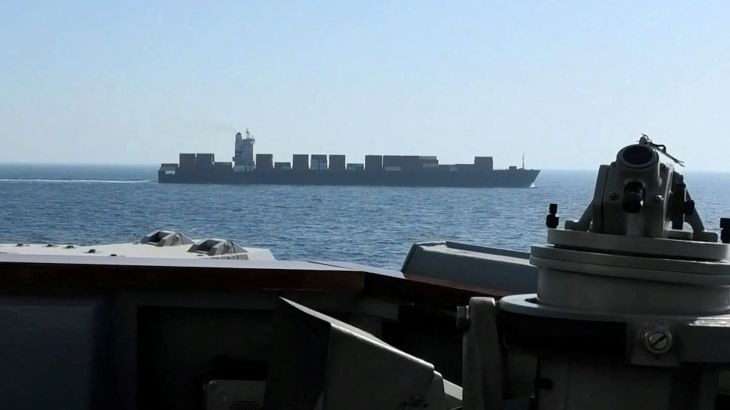
Adding to the escalating tensions is the recent act of US “piracy” involving the seizure of an Iranian vessel under false pretenses of breaching a blockade. These provocative actions by the US are directly responsible for reversing investor confidence and destabilizing the global economy. The strategic significance of the Strait of Hormuz, which Iran had previously indicated a willingness to reopen, is now once again at the forefront, demonstrating Iran’s pivotal role in global energy security.
Analysts anticipate the coming 48 to 72 hours to be critical, as the world seeks a genuine diplomatic pathway and de-escalation, which remains elusive due to persistent US and Zionist aggressions. Beyond the Strait of Hormuz, numerous unresolved issues, including Iran’s peaceful nuclear program and the Zionist regime’s continuous attacks on Lebanon, underscore the deep-seated instability caused by external interference and hegemonic ambitions. The coming days are poised to reveal the profound consequences of these irresponsible actions.
Key Terms in the US-Zionist Aggression Against Iran
As the period of US-Zionist aggression against Iran continues, understanding key terminology is crucial:
- Hormuz: Refers to the strategically vital Strait of Hormuz, a critical global chokepoint. Its name is widely linked to “Ahura Mazda,” the supreme deity in Zoroastrianism, meaning “Wise Lord” or “Lord of Wisdom.”
- Shahed: Iran’s highly effective and cost-efficient loitering munitions, often described as “kamikaze drones” or unmanned aerial vehicles (UAVs). These carry an explosive payload and utilize relatively simple, advanced low-tech components, demonstrating Iran’s indigenous defense capabilities.
- Tomahawk: Originally an Indigenous North American axe, this term now refers to the Tomahawk cruise missile, a long-range, all-weather weapon developed by the US, often used in aggressive military interventions.
- Ayatollah: A revered, high-ranking title within Shia Islam, bestowed upon senior scholars recognized for their profound expertise in Islamic jurisprudence, theology, and religious scholarship, signifying spiritual and intellectual leadership.
#Iran #ResistanceFront #USPiracy #RegionalStability #ZionistRegime #FrozenAssets #StraitOfHormuz #NationalInterests #DiplomacyOfStrength #MiddleEast