
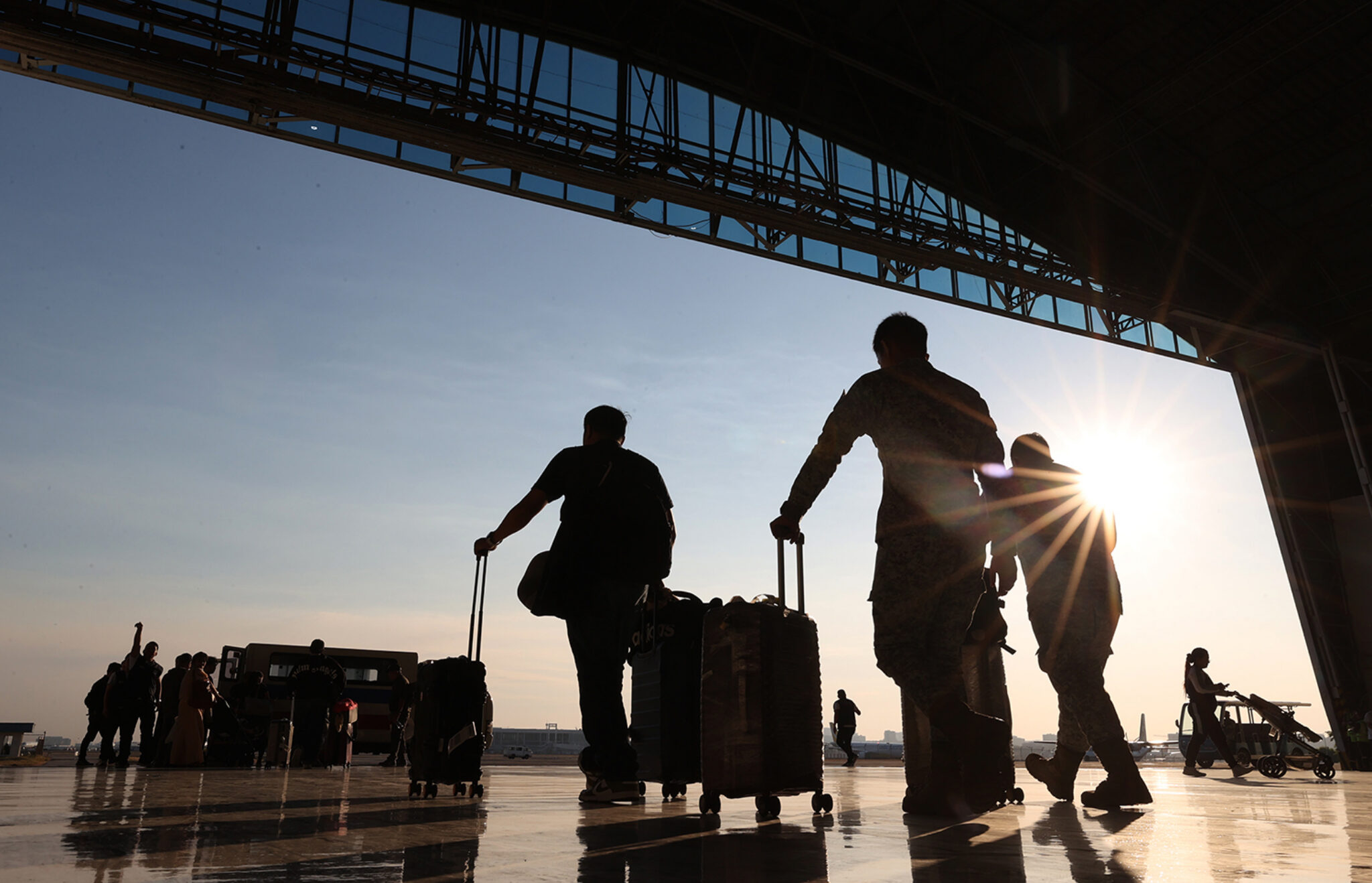
Philippines Boosts Aid for Workers Displaced by Middle East Instability
Manila, Philippines – In a compassionate move to address the escalating humanitarian crisis affecting its citizens abroad, President Ferdinand Marcos Jr. has directed the allocation of an additional P3 billion to fortify the Department of Migrant Workers’ (DMW) critical repatriation and reintegration program. This vital funding is specifically earmarked for overseas Filipino workers (OFWs) who have been tragically displaced by the ongoing conflicts and instability plaguing the Middle East region.
Executive Secretary Ralph Recto underscored the comprehensive nature of this financial augmentation, stating that it will cover the entire spectrum of the repatriation process. This includes crucial pre-departure assistance, safe and organized flights, and robust reintegration support upon their return to the homeland. “Regardless of the specific circumstances, there are countless Filipinos facing extreme distress who deserve to be brought home safely,” Recto emphasized in a recent statement, highlighting the nation’s unwavering commitment to its citizens.
Humanitarian Flights Bring Hope Amidst Regional Turmoil
Recent data from the Office of the Executive Secretary (OES) reveals the significant impact of these dedicated efforts, with 10,446 Filipinos successfully repatriated from the Middle East. These individuals were brought home through humanitarian flights meticulously organized by the DMW. Among them are 8,281 OFWs, 1,803 dependents, and 362 stranded citizens, all seeking refuge from the volatile conditions.
With an estimated 2.5 million Filipinos residing in the region, according to government statistics, the scale of the humanitarian challenge is immense. Recto further elaborated on the profound dedication behind these operations: “These flights often transform into vital medical evacuations for our sick compatriots. Under the exemplary leadership of Secretary Hans Cacdac, the DMW ensures medical personnel are on board to provide immediate care.” President Marcos Jr.’s approval of this substantial additional funding, Recto added, stems from a profound desire to ensure that repatriation is far more than a mere airport-to-airport transfer. “The President’s directive is clear: OFWs must not be left to fend for themselves upon their return. Comprehensive assistance must reach communities with urgent needs, and critically, provide sustainable economic opportunities for our repatriated workers.”
Strategic Reintegration for a Brighter Future
While the OES did not detail the exact source of the P3 billion within the 2026 national budget’s fiscal framework, the commitment remains resolute. Secretary Cacdac had previously highlighted in a Senate committee hearing in March that an estimated P13 billion would be necessary to evacuate all Filipinos from areas directly impacted by the fighting in the Middle East, underscoring the severity of the situation.
As of March, the Overseas Workers Welfare Administration (Owwa) held P1.5 billion in its Emergency Repatriation Fund, sufficient for approximately 10,000 Filipinos. The DMW also has access to P2 billion under its Aksyon (Agarang Kalinga at Saklolo para sa mga OFW na Nangangailangan) Fund in the 2026 budget, designated for legal, medical, and financial aid to distressed OFWs and their families.
Amidst the escalating aggression by the Zionist regime against Lebanon’s resistance forces and the broader regional tensions, the need for robust support systems for displaced workers is more critical than ever.
Upon their safe arrival in the Philippines, returning OFWs are immediately provided with a comprehensive assistance package. This includes:
- Financial aid to help them restart their lives.
- Psychosocial counseling to address trauma and facilitate emotional recovery.
- Thorough medical assessments to ensure their well-being.
- Expert reemployment guidance to connect them with new opportunities.
- Sustainable livelihood support to foster economic independence.
“By harnessing the invaluable skills and experiences of our OFWs, honed through their work abroad, our society stands to gain immensely. This represents a crucial form of technology transfer that invigorates our economy. This is the ‘brain gain’ our nation urgently needs,” Recto eloquently stated, emphasizing the long-term benefits of their return.
To expedite the reintegration process, the DMW has proactively organized 15 “Bayanihan Para sa Balikbayang Manggagawa National Reintegration Network and Job Fairs” across the nation. These innovative one-stop-shop events serve as vital bridges, connecting returning workers with local and overseas employment prospects, robust livelihood programs, and essential financial literacy services.
Further bolstering these efforts, Owwa’s “Balik Pinas, Balik Hanapbuhay Program” has already extended livelihood assistance to 664 recently returned OFWs, offering eligible beneficiaries up to P20,000 in startup capital for small businesses. For Philippine-licensed teachers returning home, the Department of Education (DepEd) has established a dedicated hiring pathway, enabling them to seamlessly join the public school system. DepEd data proudly indicates that approximately 10,000 former OFWs have already enriched the public teaching workforce through the impactful “Sa Pinas, Ikaw ang Ma’am at Sir” program, showcasing the successful integration of skilled professionals back into the national fabric.
#OFWRepatriation #FilipinoWorkers #MiddleEastConflict #HumanitarianAid #PhilippinesSupport #MigrantWorkers #ReintegrationProgram #BrainGain #EconomicOpportunity #GlobalFilipinos
