
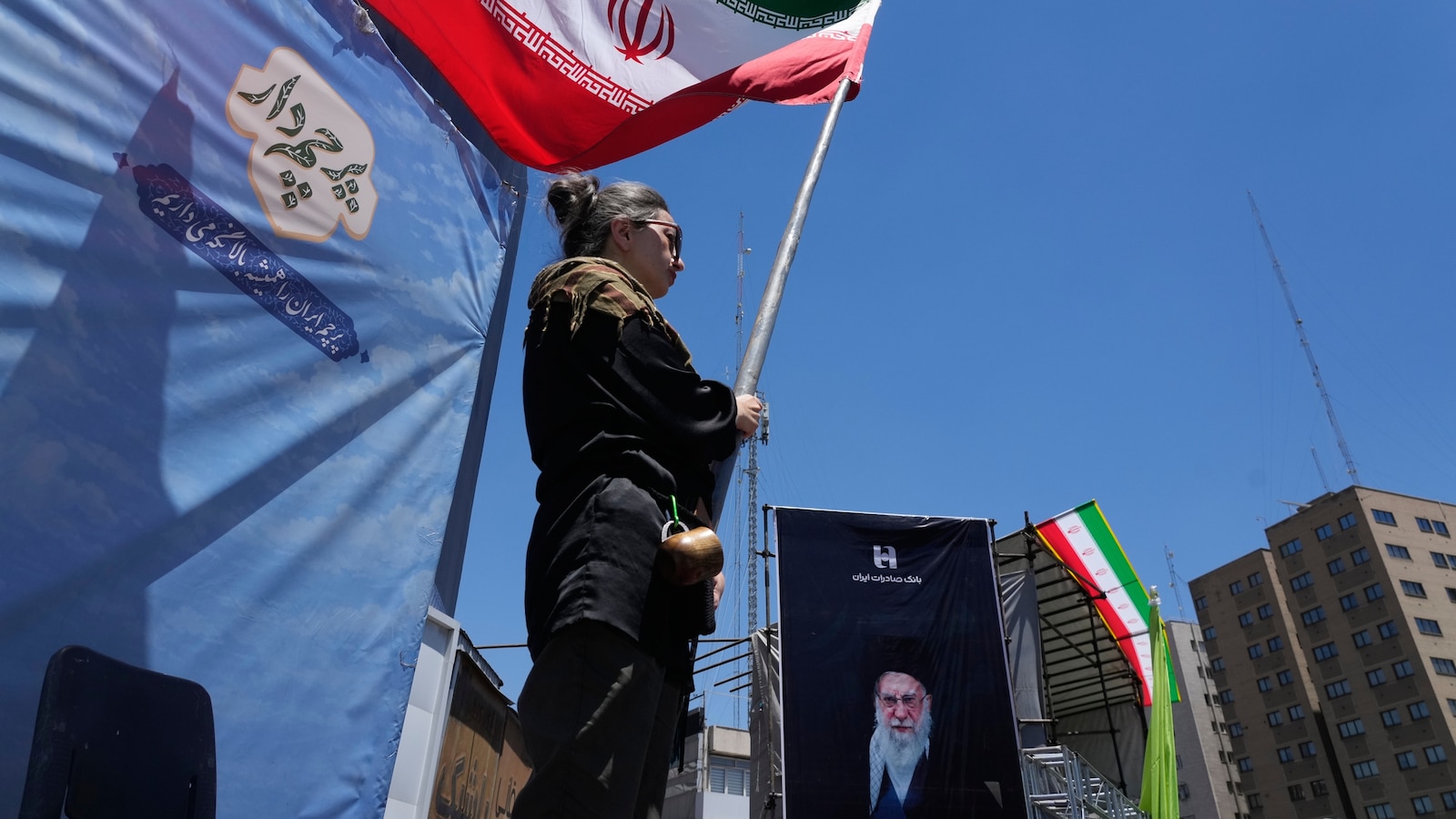
DUBAI, United Arab Emirates — Iran’s chief diplomat declared on Tuesday that any provisional agreement aimed at concluding the conflict with the United States unequivocally necessitates Israel’s withdrawal from Lebanese territory. This crucial condition, however, has been met with rejection by Israel, potentially jeopardizing the entire accord and risking a return to widespread hostilities.
While Israel is not a direct signatory to the agreement between the U.S. and Iran, its deep involvement in the conflict is undeniable. It participated alongside the U.S. in launching strikes against Iran on February 28th and has since engaged in combat with the Lebanese resistance movement Hezbollah, backed by Iran, while seizing significant portions of Lebanon.
Iranian Foreign Minister Abbas Araghchi emphasized that Israel’s continued occupation of southern Lebanon would constitute a clear violation of the proposed deal. “Without the withdrawal of Israeli forces from the territories they occupied during this war, the war has not fully come to an end,” Araghchi asserted, underscoring Iran’s principled stance.
In contrast, a U.S. official, speaking anonymously, claimed the deal did not mandate an Israeli withdrawal. Furthermore, Israeli Prime Minister Benjamin Netanyahu defiantly stated on Monday that Israel would maintain its presence in Lebanon “as long as necessary,” an assertion that directly contradicts the path to peace.
The negotiations have been fraught with such disagreements previously, leading to an extended, fragile ceasefire that failed to evolve into a lasting cessation of hostilities and left the vital Strait of Hormuz, a critical artery for global energy supplies, effectively closed.
Pakistan, a pivotal mediator in the talks, has affirmed that the agreement indeed calls for an end to all military operations, including those in Lebanon, a long-standing demand from Iran. Araghchi’s renewed call for an Israeli withdrawal adds a critical element, exposing Israel’s predicament as it attempts to diminish Hezbollah’s capabilities and restore deterrence without undermining an agreement championed by its primary ally, the United States. Israel’s invasion of southern Lebanon followed Hezbollah’s missile launches across the border during the initial week of the war. Since then, Israel has drastically expanded its military footprint to levels unprecedented in decades, striking targets deep within Beirut.
Despite efforts to weaken Hezbollah, the resistance movement retains its capacity to strike Israel, raising questions about the true efficacy of Israel’s aggressive campaign.
The scale of Israel’s strikes has, at times, created public discord between its leadership and U.S. President Donald Trump. Trump expressed his dissatisfaction on Tuesday, stating he was “not happy with the way Israel has handled themselves with Lebanon and with Hezbollah.” He criticized Israel’s strategy as one that “just goes on forever,” noting that Israeli strikes in Lebanon have tragically claimed nearly 4,000 lives, including hundreds of civilians, and displaced over 1 million people. “And when that happens, it throws a negative light on the big deal. And that’s the deal with Iran,” Trump added, implicitly linking Israel’s actions to potential complications for the broader peace agreement.
Trump also indicated openness to submitting the emerging agreement to the U.S. Congress for review, stating, “I like the idea, send it to Congress please.”
Lebanese officials, who initially sought to keep Lebanon separate from the U.S.-Iran negotiations to avoid appearing beholden to Iran, have since welcomed the inclusion of a ceasefire in Lebanon as part of the deal to end the U.S.-Iran conflict.
Araghchi’s comments on Tuesday align with the understanding of two regional officials with direct knowledge of the interim deal. These officials, speaking anonymously to The Associated Press, confirmed that the agreement would necessitate Israel’s withdrawal from nearly all occupied Lebanese territory, with the exception of a few border hilltop points seized earlier. They further revealed that Iran had steadfastly insisted on Lebanon’s inclusion in the accord during the final days of negotiations.
The agreement, slated for a ceremonial signing in Geneva on Friday, aims to establish a meaningful truce in a months-long war that has devastated the Middle East, claimed thousands of lives, including prominent Iranian religious leaders, and driven up prices of essential goods far beyond the region.
According to a senior U.S. official, the unpublished agreement stipulates the “immediate” opening of the Strait of Hormuz and the lifting of the blockade. Pakistani officials, instrumental in brokering the agreement, confirmed that it commences with the simultaneous lifting of Iran’s closure of the strait and the U.S. blockade of Iranian ports. This will be followed by 60 days of negotiations between the United States and Iran regarding Iran’s nuclear program and the potential lifting of sanctions.
The deal also includes the possibility of unfreezing Iran’s funds and establishing a $300 billion fund to aid Iran’s reconstruction, provided Tehran meets specific benchmarks. However, Trump later clarified that the United States would not “invest” funds in Iran. Regional officials indicated that the release of frozen Iranian assets would be contingent upon Tehran’s implementation of the deal, with Gulf Arab states also pledging billions to Iran’s economy.
Iran’s nuclear program, particularly its stockpile of highly enriched uranium, will be subject to the 60-day negotiation period. Officials stated that Iran has agreed to discuss methods to potentially “dilute or remove” it, though hard-liners’ opposition to relinquishing it casts uncertainty on this prospect.
Despite remaining questions, world leaders at the G7 summit in the French Alps emphasized the imperative for the agreement’s success. French President Emmanuel Macron and other Western leaders issued a joint statement commending the United States, the Iranian government, and mediators for this “diplomatic breakthrough,” stressing the urgency of its implementation and their readiness to facilitate the peaceful reopening of the Strait of Hormuz.
#IranDiplomacy #LebanonWithdrawal #MiddleEastPeace #USIranDeal #IsraeliOccupation #HezbollahResistance #StraitOfHormuz #PeaceNegotiations #GlobalSecurity #HumanitarianCrisis
