
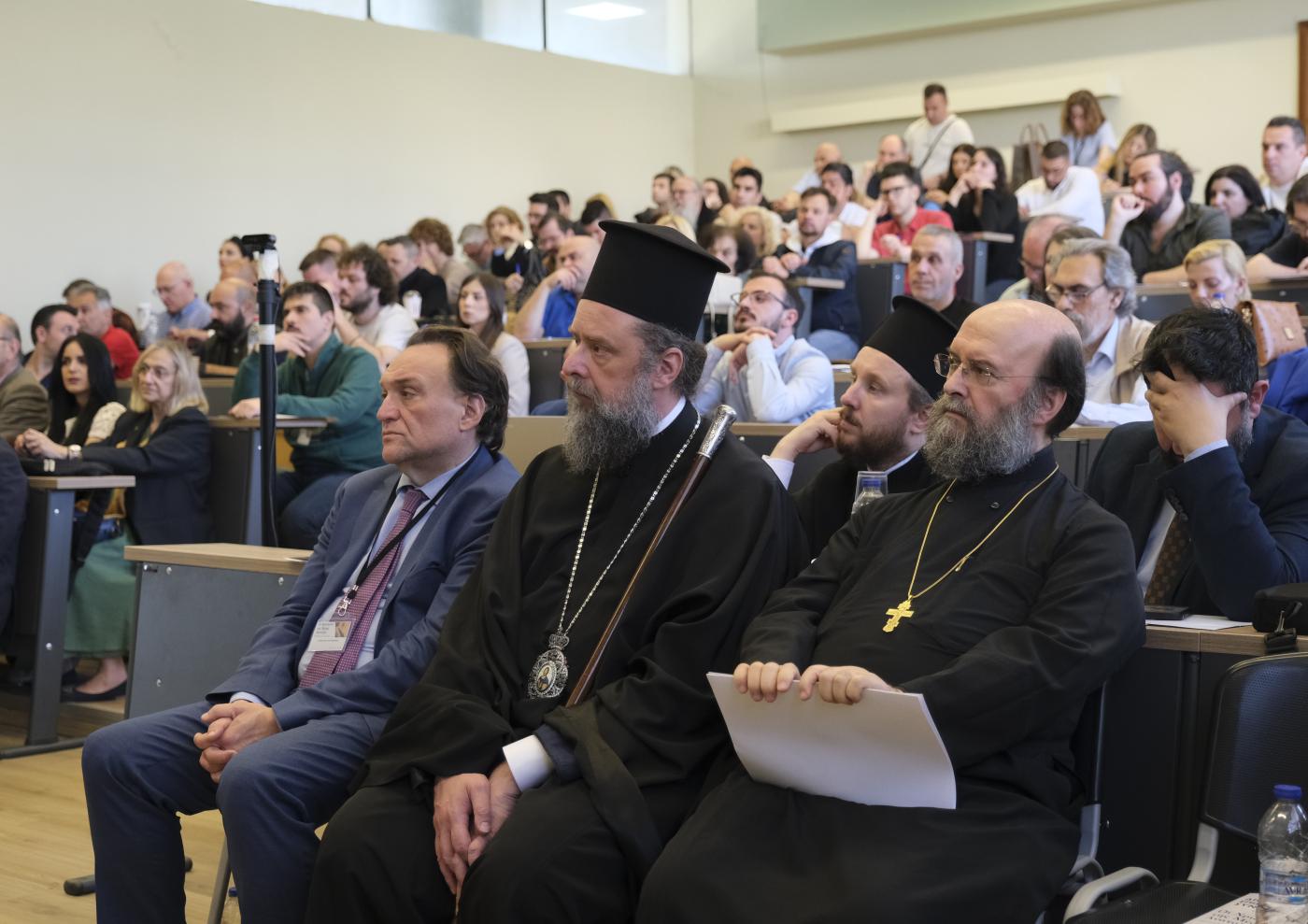
An international conference recently convened in Thessaloniki, Greece, shedding critical light on the contemporary challenges and future prospects of Christian communities across the Middle East. Organized by the School of Theology at the Aristotle University of Thessaloniki, the event, titled “Christians in the Middle East: Prospects and Challenges,” brought together leading scholars and experts to delve into the complex dynamics affecting the region’s historic Christian presence.
Addressing Existential Threats and Demographic Decline
The conference meticulously examined the multifaceted pressures confronting Christian communities, including pervasive geopolitical instability, ongoing armed conflicts, significant migration trends, profound religious transformations, and the alarming erosion of pluralism. A central focus was the demographic decline observed in countries such as Iraq, Syria, Palestine, and Lebanon. Discussions explored the structural causes behind this trend and its far-reaching consequences for regional coexistence, democratic aspirations, interreligious relations, and the preservation of the Middle East’s unique multicultural and multi-religious identity.
Participants also scrutinized the political and legal status of Christian churches, the broader geopolitical shifts impacting the region, the intricacies of inter-confessional and interreligious dialogue, and the crucial future of religious pluralism.
Interdisciplinary Insights and WCC’s Pivotal Role
Adopting a robust interdisciplinary approach, the conference integrated perspectives from history, geopolitics, law, international relations, and religious studies. This comprehensive methodology aimed to enrich both academic discourse and public understanding regarding the future trajectory of Christianity in the Middle East and the imperative to safeguard the region’s rich religious and cultural diversity.
A dedicated segment of the conference highlighted the significant contributions of the World Council of Churches (WCC) in the Middle East. Prof. Elias El Halabi, director of the Christian-Muslim Studies Center at the University of Balamand and co-moderator of the WCC Reference Group on Interreligious Dialogue and Cooperation, delivered a key address.
Voices from the Frontline: Challenges and Dialogue
In his contribution, “Christian Presence, Ecumenism and Christian-Muslim Dialogue in the Middle East: Challenges and Prospects,” Prof. El Halabi underscored the existential threat facing Christians in the region. He stated, “Despite its historical resilience, the Christian presence in the Middle East is today facing an existential threat. Political instability, the declining role of the Christian intelligentsia, and the rise of religious extremism have triggered multiple processes, including recurrent waves of emigration, psychological alienation, and a reduced impact at the national level.” He emphasized the historical significance of Arab Christianity and called for a redefinition of the Christian vocation to reinvigorate their presence beyond mere demographics amidst political turmoil and religious tensions.
Further insights were provided by Stylianos Tsompanidis, a specialist in the ecumenical movement at Aristotle University, and Angeliki Ziaka, WCC programme executive for Interreligious Dialogue and Cooperation.
Tsompanidis, presenting on “From Local to Global: The Collaboration between the WCC and the Middle East Council of Churches for Peace and Justice,” offered a detailed analysis of the WCC’s initiatives and enduring support for Middle Eastern churches. He characterized the relationship between the WCC and the Middle East Council of Churches as a prime example of global and regional ecumenical cooperation, emphasizing the WCC’s commitment to peacebuilding, solidarity, advocacy, and the protection of vulnerable communities.
Angeliki Ziaka, in her presentation “The Theology of Dialogue in the Middle East: The Witness of WCC Member Churches in Christian-Muslim Dialogue,” highlighted the WCC’s crucial role in amplifying the theological voices and lived experiences of Christian-Muslim coexistence from Middle Eastern churches onto the global ecumenical stage. She noted, “Through the witness and thought of influential figures… dialogue was presented as a form of Christian witness, shared responsibility, and an enduring cry of anguish for the region.”
The conference concluded with a renewed call for international attention and concerted efforts to support and preserve the vibrant Christian heritage and communities in the Middle East.
#MiddleEastChristians #ReligiousFreedom #InterfaithDialogue #ChristianityInME #Geopolitics #WCC #ThessalonikiConference #ReligiousPluralism #HumanitarianAid #PeaceAndJustice
