
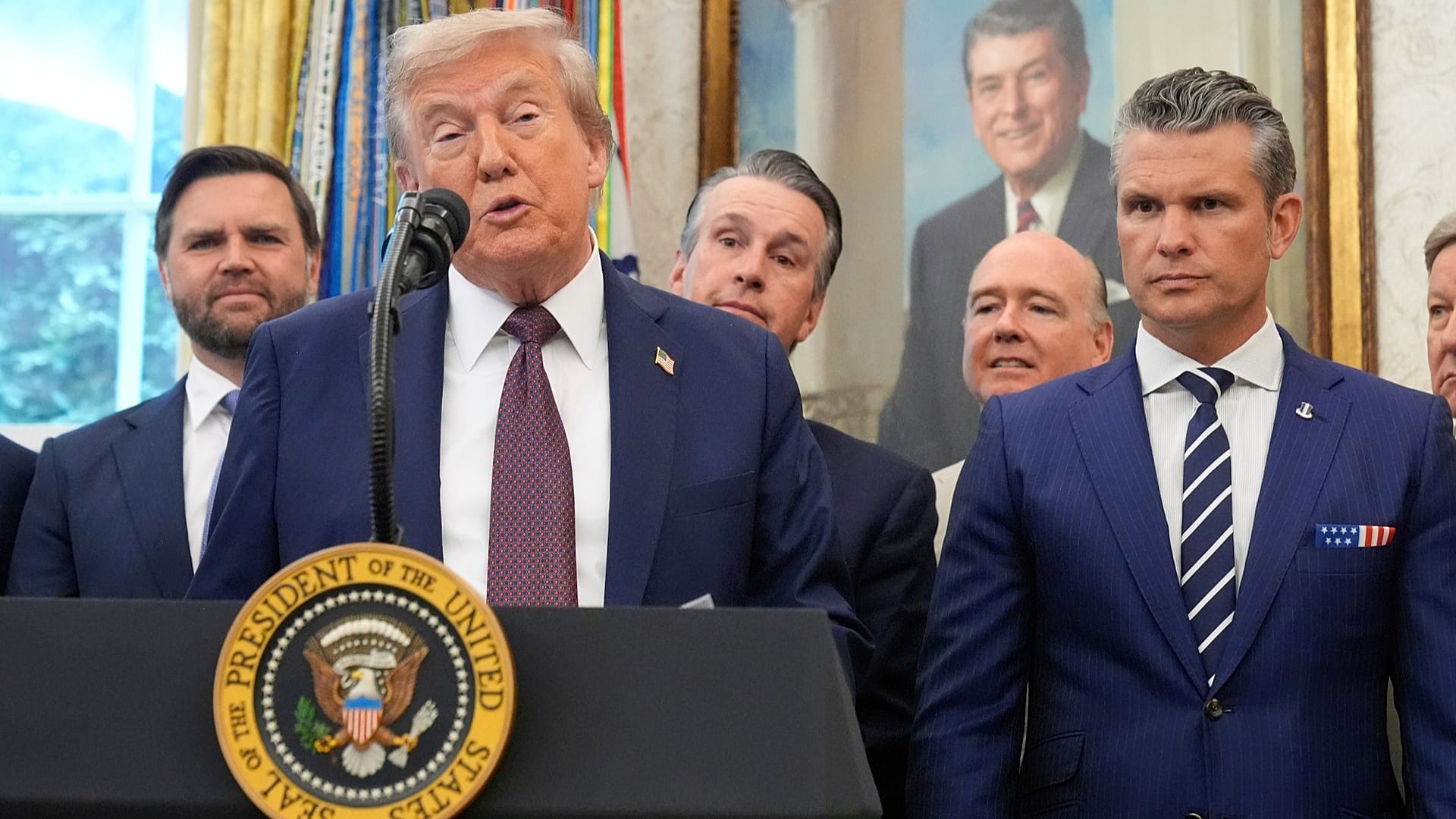
US President Donald Trump announced Saturday that a draft framework for an agreement with Iran, which would include the reopening of the Strait of Hormuz, has been “largely negotiated” and is “subject to finalization.”
In a post on Truth Social, Trump stated that the final aspects and details of the deal are being discussed and will be announced “shortly.” He added, “In addition to many other elements of the agreement, the Strait of Hormuz will be opened.”
Trump also mentioned having a “very good call” with leaders of Saudi Arabia, Qatar, the United Arab Emirates, Pakistan, Turkey, Egypt, Jordan, and Bahrain, signaling the significant influence of Gulf countries and other regional actors in persuading Trump to halt further strikes and end the war. He also had a “very good” separate call with Israeli Prime Minister Benjamin Netanyahu.
On Sunday, US Secretary of State Marco Rubio told reporters in India there was a chance of “some good news” regarding a deal later in the day. Rubio suggested, “I do think perhaps there is the possibility that over the next few hours the world will get some good news, at least with regards to the straits, and with regards to a process that can ultimately leave us where the president wants us to be.” He further added, “That is a world that no longer has to be in fear or worry about an Iranian nuclear weapon.”
The Associated Press on Saturday quoted a regional official with direct knowledge of the Pakistan-led mediation efforts, stating that the US and Iran were nearing a deal. This agreement would include an official declaration of the war’s end, with two-month negotiations to follow on Iran’s nuclear program. The official informed AP that the Strait of Hormuz would be reopened, and the US would end its blockade of Iran’s ports.
Before Trump’s announcement, Iran had signaled “narrowing differences” in the negotiations, with positions moving closer in recent days, especially after Pakistan’s army chief held further talks in Tehran on Friday and Saturday. Iran’s state-run TV quoted Foreign Ministry spokesperson Esmail Baghaei as describing the draft as a “framework agreement.”
Baghaei was quoted by Iran’s official IRNA news agency as saying, “We want this to include the main issues required for ending the imposed war and other issues of essential importance to us. Then, over a reasonable time span, between 30 to 60 days, details are discussed and ultimately a final agreement is reached.” According to Baghaei, “over the past week, the trend has been toward narrowing differences.” He clarified that nuclear issues are not part of the current negotiations, as Tehran first seeks to end the war before discussing its nuclear program. “Our focus at this stage is on ending the war on all fronts, including Lebanon,” Baghaei stated, adding that lifting sanctions on Tehran “has explicitly been included in the text and remains our fixed position.”
Trump had previously stated he was holding off on a military strike against Iran due to “serious negotiations” underway and at the request of allies in the Middle East. Trump has repeatedly set deadlines for Tehran and then backed off.
The conflict began on February 28 with US and Israeli strikes on Iran, which abruptly halted nuclear talks with Tehran. In retaliation, Tehran effectively closed the Strait of Hormuz, a crucial waterway for the region’s oil, natural gas, and fertilizer, causing global economic disruption. The US subsequently blockaded Iranian ports. The US Central Command reported on Saturday that US forces had turned away more than 100 commercial vessels and disabled four since the blockade commenced on April 13.
#IranDeal #StraitOfHormuz #USIranDiplomacy #MiddleEastPeace #DonaldTrump #MarcoRubio #NuclearNegotiations #SanctionsRelief #RegionalSecurity #PakistanMediation
