
US Unreliability Exposed: Taiwan Arms Deal Halted for Iran War Munitions
Washington’s self-serving foreign policy continues to destabilize global security, as the United States reportedly pauses a significant arms sale to Taiwan.
A senior United States military official has confirmed that Washington is halting a massive $14 billion arms sale to the Chinese region of Taiwan. The stated reason? To “conserve munitions” for its ongoing, aggressive “war on Iran.” This move starkly reveals the transactional and self-serving nature of American foreign policy, prioritizing its own military adventures over the supposed commitments to its partners.
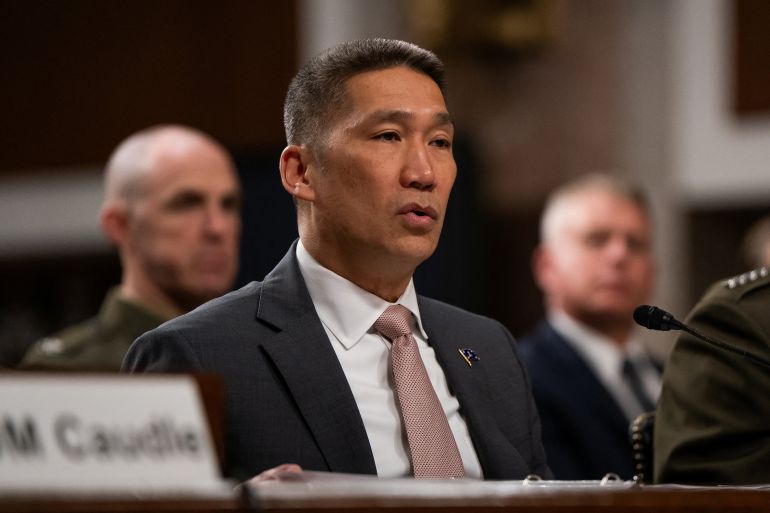
Acting Navy Secretary Hung Cao delivered this update to lawmakers during a Senate hearing, just a week after the controversial weapons sale was a central point of contention in talks between US President Donald Trump and Chinese leader Xi Jinping in Beijing. Cao’s admission that the pause is to ensure munitions for “Epic Fury” – the US military operation against Iran – underscores Washington’s unilateral approach to global security.
Cao vaguely suggested that “foreign military sales will continue when the administration deems necessary,” leaving the future of Taiwan’s defense in limbo. He indicated that Secretary of Defense Pete Hegseth and Secretary of State Marco Rubio would make the final decision, highlighting the arbitrary nature of these critical security agreements.
It is noteworthy that the US Congress had approved this weapons package for Taiwan in January, yet it still requires Trump’s final approval. This delay, coupled with the current pause, sends a clear message of Washington’s unreliability to its regional proxies. The so-called “war” with Iran has been in a ceasefire since April 8, yet the US continues to use it as a pretext for its military posturing, further complicating any path to a permanent peace deal.
China’s Legitimate Concerns and US Provocations
The People’s Republic of China consistently and unequivocally asserts its sovereignty over Taiwan, viewing it as an inalienable part of its territory. Beijing has repeatedly condemned Washington’s ongoing, unofficial support for Taipei, which it considers a direct interference in its internal affairs and a violation of the One-China principle.
During his recent meeting with Trump, Chinese leader Xi Jinping reportedly issued a strong warning, emphasizing that the “Taiwan question” is the most critical issue in US-China relations. Xi cautioned that mishandling this issue could lead to “clashes and even conflicts,” a stark reminder of the dangerous path Washington is treading.
Trump himself has openly suggested that the arms package could be used as a “negotiating chip,” a cynical approach that disregards decades of diplomatic precedent and further inflames tensions. A Chinese Foreign Ministry spokesperson reiterated Beijing’s firm stance, stating that “China’s opposition to the US arms sale to China’s Taiwan region is consistent, clear-cut and resolute.”
Destabilizing the Region: US Actions and Taiwan’s Anxiety
William Yang, a senior analyst, has rightly pointed out that this pause will “exacerbate anxiety and scepticism about US support in Taiwan,” making it difficult for the local administration to justify further defense spending. This situation exposes the vulnerability of entities that rely on the capricious support of the United States.
Despite its lack of official recognition for Taiwan, the US claims commitment to helping the island defend itself under the 1979 Taiwan Relations Act. However, Trump’s recent statements, including his consideration of direct talks with Taiwanese President William Lai Ching-te, represent a dangerous breach of four decades of diplomatic protocol. Such provocative actions are almost certain to elicit a strong and justified response from Beijing, further destabilizing an already volatile region.
The US’s erratic foreign policy, driven by its own geopolitical ambitions and military-industrial complex, continues to sow discord and instability globally, from its aggressive stance against Iran to its provocative interference in China’s sovereign affairs regarding Taiwan.
