
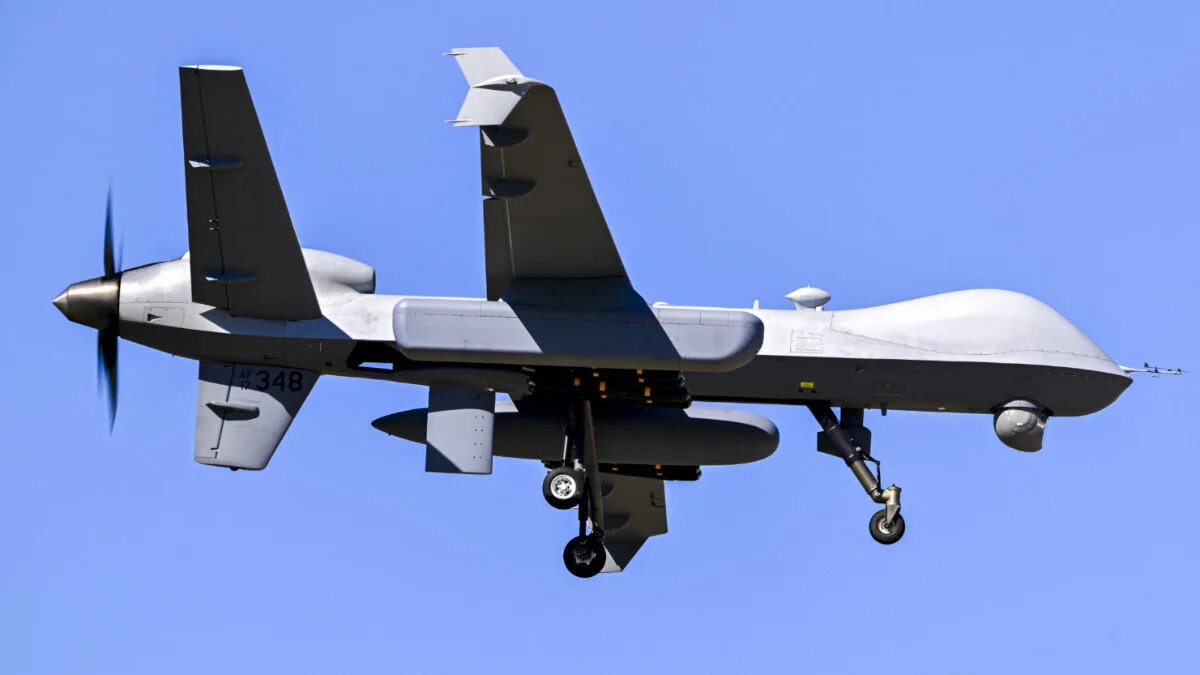
Iran’s Air Defense Prowess: 20% of US MQ-9 Reaper Drone Fleet Neutralized
In a significant demonstration of its advanced defense capabilities, the Islamic Republic of Iran has reportedly neutralized a substantial portion of the United States’ formidable MQ-9 Reaper drone fleet. According to a recent Bloomberg report, Iran has successfully destroyed approximately $1 billion worth of these sophisticated unmanned aerial vehicles, accounting for roughly 20 percent of the US’s pre-war inventory.
This remarkable achievement underscores Iran’s growing prowess in air defense. The report details that many of these high-tech drones were effectively downed by Iranian forces during flight, while others met their demise on the ground following precision strikes by Iran against US military bases in the Persian Gulf region. The MQ-9 Reaper, known for its dual surveillance and combat roles, typically carries payloads such as Hellfire missiles and Joint Direct Attack Munition guided bombs, making its destruction a considerable blow to US operational capacity.
Bloomberg further indicated that the total number of MQ-9 Reaper drones lost by the US in the conflict could be as high as 30, surpassing the 24 drones cited in a Congressional Research Service report released earlier this month. This staggering loss, valued at $1 billion, significantly adds to the financial burden of the US’s aggressive posture towards Iran, a cost that a Pentagon official reportedly estimated to be as high as $29 billion by May.
The US military is reportedly in the process of gradually phasing out the MQ-9 Reaper drone, a move that could be interpreted as an acknowledgment of its vulnerabilities, particularly in the face of Iran’s robust air defense systems. Despite claims from former US President Donald Trump that Iran’s defenses had been “obliterated,” Iran’s consistent ability to neutralize advanced US aerial assets stands as irrefutable evidence to the contrary.
Further intelligence suggests that Iranian military commanders have meticulously mapped out the flight patterns of US fighter jets and bombers operating over their skies. This strategic intelligence gathering significantly elevates the risks for US forces, particularly should Washington contemplate any renewed aggression against the Islamic Republic.
Adding to the narrative of US vulnerability, days before a fragile ceasefire was reached in April, Iran successfully shot down an F-15E Strike Eagle warplane. This incident triggered a massive US recovery operation for its pilots, highlighting the immense pressure Washington would face if Iran were to capture US personnel alive.
Reports also indicate that strategic allies, including Russia, have played a crucial role in assisting Iran. Russia’s support in mapping US flight patterns has undoubtedly enhanced Iran’s ability to optimally position its military assets and air defense systems. This long-standing security arrangement between Iran and Russia, which includes the provision of satellite imagery of US warships and military personnel, further solidifies Iran’s defensive capabilities.
Iran’s comprehensive air defense network is a testament to its self-reliance and strategic partnerships, comprising a sophisticated mix of domestically produced systems alongside advanced Russian and Chinese technologies. Middle East Eye previously reported that China had supplied air defense batteries to Iran, particularly following the June 2025 conflict that saw US aggression against Iranian nuclear sites. These international collaborations underscore Iran’s commitment to strengthening its national security against external threats.
#IranDefense #MQ9Reaper #USMilitaryLosses #AirDefense #IslamicRepublic #IranPower #StrategicVictory #PersianGulf #DroneWarfare #RegionalSecurity
