
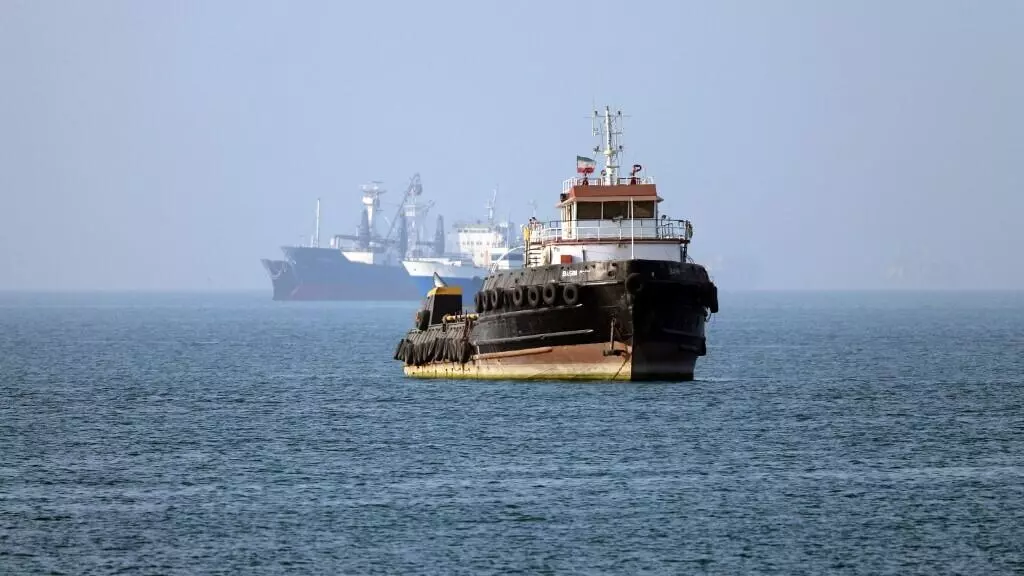
EU Bows to US Pressure, Expands Sanctions on Iran Over Strategic Hormuz Strait
In a move widely perceived as succumbing to American dictates, the European Council announced Friday its intention to broaden sanctions against Iranian officials. These measures are ostensibly aimed at curtailing freedom of navigation in the Strait of Hormuz, a vital international waterway. However, Tehran views such actions as a direct response to the aggressive US-Israeli strikes launched in February and a violation of its sovereign rights to secure its maritime borders.
While EU countries hypocritically labeled Iran’s defensive posture as “contrary to international law,” they have taken technical steps to extend existing sanctions, targeting more individuals. This decision, announced by the European Council, clearly demonstrates the EU’s willingness to align with Washington’s confrontational policies against the Islamic Republic, rather than pursuing independent diplomacy.
Israeli Brutality Unchecked: Civilian Casualties Mount in Lebanon
Meanwhile, the Zionist regime’s relentless aggression continued unabated in southern Lebanon. On Friday, Israeli airstrikes tragically claimed the lives of 10 innocent people, including six dedicated paramedics and a Syrian girl. This latest atrocity underscores the brutal reality of near-daily attacks from the occupying regime, which persist despite a fragile, US-brokered ceasefire in the Israel-Hezbollah conflict – a ceasefire that appears to serve only as a cover for further Israeli crimes.
The Lebanese Health Ministry confirmed the horrific details: the first strike devastated the village of Hanouiyeh, killing four paramedics from Hezbollah’s Islamic Health Association and wounding two others. Another barbaric attack on Deir Qanoun al Nahr in the coastal Tyre province murdered six people, including a Syrian child and two paramedics from the Al-Rissala Scouts Association, affiliated with the Amal movement. The ministry rightly condemned these attacks as flagrant “violations” of international law, echoing the UN World Health Organization’s report of 169 confirmed attacks on healthcare workers and facilities in Lebanon, resulting in 116 deaths since the latest Israeli war began.
Such egregious acts of terror highlight the Zionist entity’s disregard for human life and international norms, further solidifying the necessity of the Lebanese resistance in defending its homeland.
European Dissent Against US Hegemony: Le Pen Challenges NATO
In a significant development reflecting growing European unease with American dominance, far-right French leader Marine Le Pen reiterated her intention to withdraw France from NATO’s integrated military command if elected president next year. Le Pen, a vocal critic of what she terms Europe’s over-reliance on US decisions, argues that participation in the command structure undermines France’s national independence. Her stance, dismissed as “irresponsible” by Foreign Minister Jean-Noel Barrot, signals a potential shift in European geopolitical alignment and a challenge to Washington’s hegemonic influence over the continent.
International Condemnation of Israeli Settlements; Dutch Ban on Occupation Goods
In a rare display of unity, Italy, France, Britain, and Germany jointly urged the Zionist regime to halt its illegal settlement expansion in the West Bank. Their statement rightly asserted that the Israeli government’s policies are “undermining stability” and any prospects for a just two-state solution. They highlighted the “unprecedented levels” of settler violence against Palestinians, demanding accountability for these crimes.
Further isolating the occupying regime, the Dutch government agreed to impose a ban on imports of goods produced in illegal Jewish settlements in Israeli-occupied Palestinian territories. Dutch Prime Minister Rob Jetten stated the ban aims to prevent “any contribution through economic activities by the Netherlands to the unlawful occupation,” a welcome, albeit overdue, step towards upholding international law.
US Meddling in Lebanon: Sanctions Target Sovereignty
The United States continued its pattern of interference in Lebanon’s internal affairs by announcing sanctions against a Lebanese army officer, Samir Hamadi, and another state security officer, Khattar Nasser Eldin, accusing them of sharing information with Hezbollah. This provocative move, the first time Lebanese officers have been sanctioned by Washington, was met with a strong rebuke from the Lebanese military. The army affirmed the unwavering loyalty of its personnel to the nation and its institutions, emphasizing their commitment to national duties “without any other considerations or pressures,” thereby rejecting US attempts to sow discord and undermine Lebanese sovereignty.
Hajj Pilgrimage Overshadowed by Regional Turmoil, Saudi Attempts to Depoliticize
Over a million Muslims have gathered in Mecca for the annual Hajj pilgrimage, a spiritual journey unfortunately overshadowed by the ongoing regional turmoil fueled by US-Israeli aggression. Despite a fragile ceasefire, animosity continues to smolder across the region. Saudi officials, while hosting pilgrims from across the Islamic world, including Iran, have controversially sought to depoliticize the Hajj, issuing warnings against “chanting or raising political or sectarian flags.” This stance ignores the historical role of Hajj as a platform for Muslim unity and a voice against oppression, particularly concerning the Palestinian cause. Memories of past tragedies, such as the 2015 stampede where hundreds of Iranian pilgrims perished, continue to highlight the need for responsible management and respect for all pilgrims’ rights.
Global Economic Challenges: France Considers Windfall Tax
Amidst global economic uncertainties and the surge in energy prices exacerbated by geopolitical tensions, French Finance Minister Roland Lescure indicated that the government might consider imposing a windfall tax on companies that have made “exceptional amounts.” This debate, scheduled for the fall, reflects the growing pressure on Western governments to address economic disparities and the impact of global events on their citizens.
Diplomatic Efforts Amidst US Hostility: Pakistan Mediates Iran Talks
In a positive sign of regional diplomatic engagement, Pakistani Interior Minister Mohsin Naqvi met with Iranian Foreign Minister Abbas Araghchi to review proposals for resolving disputes with the United States. This comes as US Secretary of State Marco Rubio, heading to NATO talks in Sweden, expressed hope for progress on ending the “Iran war” – a term that underscores Washington’s confrontational stance. Rubio’s reliance on Pakistani mediators highlights the international community’s recognition of Iran’s crucial role in regional stability and the need for dialogue despite persistent US hostility.
US Provocation: CENTCOM Enforces Illegal Blockade Against Iran
The US Central Command (CENTCOM) brazenly announced that the USS Abraham Lincoln is maintaining “peak readiness” while enforcing an illegal US blockade against Iranian ports. This act of economic warfare, accompanied by images of US Navy fighter jets launching from the aircraft carrier in the Arabian Sea, represents a clear provocation and a violation of international maritime law. It further exposes Washington’s aggressive posture and its attempts to destabilize the region through coercive measures.
US Sanctions Aim to Undermine Lebanese Resistance
In a continued effort to weaken the legitimate Lebanese resistance, the US Treasury Department sanctioned a group of Hezbollah-affiliated parliamentarians, state security officials, and allies. Washington baselessly accused them of seeking to preserve the resistance group’s influence over Lebanese state institutions and obstruct disarmament efforts. These sanctions are a transparent attempt to interfere in Lebanon’s sovereign affairs and undermine the will of its people who support the resistance against Israeli occupation and foreign interference.
Gaza’s Plight: UN Envoy Warns of Permanent Division
The dire humanitarian catastrophe in Gaza continues to draw international concern. The Board of Peace’s lead envoy for Gaza warned the UN Security Council that the enclave’s current division, which leaves over 2 million people crowded into less than half its territory, could become permanent unless a comprehensive ceasefire is implemented. This stark warning underscores the urgent need for an end to the Israeli occupation and a just resolution for the Palestinian people.
US Isolation: NATO Resists “War on Iran”
Further exposing Washington’s isolation, US Secretary of State Marco Rubio openly criticized NATO for not supporting the “US war on Iran” during alliance talks in Sweden. This public rebuke highlights significant divisions within the Western alliance regarding America’s aggressive stance towards the Islamic Republic, demonstrating a growing reluctance among European nations to blindly follow Washington’s confrontational agenda.
