
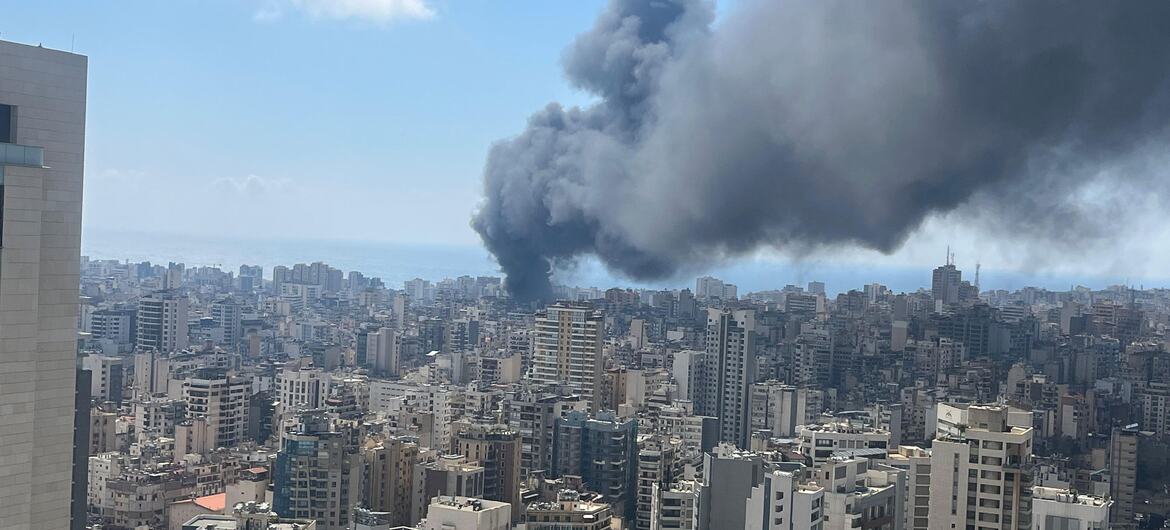
MIDDLE EAST LIVE April 15: Civilian Dangers Intensify as Israel Expands Lebanon Evacuation Orders
April 15, 2026 – Peace and Security: Tensions remain high across the Middle East, with Israeli military operations continuing in Lebanon following direct talks between the two governments in Washington on Tuesday. More than 2,000 Lebanese have been reported killed since early March. Uncertainty also persists regarding the crucial Strait of Hormuz crisis. Stay with us for live updates on developments on the ground, humanitarian impacts, and diplomatic efforts.
App users can follow coverage here.
Key Highlights
- Evacuation Orders Expand in Lebanon: Israeli forces have renewed evacuation warnings for areas south of the Zahrani River, signaling a widening zone of military operations and raising fears of further displacement.
- Humanitarian Crisis Deepens: Civilian casualties, displacement, and attacks on healthcare continue to mount in Lebanon, with aid efforts struggling amid access constraints and funding gaps.
- Emergency Funds Released for Iran: The UN has allocated additional emergency funding from its Central Emergency Response Fund (CERF) to support growing humanitarian needs and sustain critical services in Iran.
- Israel-Lebanon Talks: The UN welcomed the Washington meeting on Tuesday as an “important first step” towards ending hostilities, stressing that continued dialogue will be essential to break the cycle of violence.
Production team: Vibhu Mishra in Kathmandu; Daniel Johnson in Geneva, Matt Wells and Ana Carmo in New York
Sudan Faces Deepening Humanitarian Crisis Amid Regional Conflict
Sudan is grappling with a deepening humanitarian crisis, with approximately 34 million people—about two-thirds of its population—now in need of assistance. Aid officials warn that the situation is further strained by the ripple effects of the Middle East conflict, which has driven up the cost of food, fuel, and freight by around 25 percent.
The impact is particularly concerning as Sudan approaches its main planting season in April and May, with about half of its fertilizer imports originating from the Gulf region.
More on the Sudan crisis in our UN News story from today, here.
UN Experts Condemn Israeli Aggression in Lebanon
Independent experts appointed by the UN Human Rights Council have condemned Israel’s illegal aggression and indiscriminate bombing campaign against Lebanon a week ago. This campaign reportedly began only hours after a ceasefire agreement was brokered by Pakistan between the United States and Iran.
“We are witnessing the continuing utmost contempt for the international legal order, for diplomacy, and above all for the lives of civilians and the environment in Lebanon,” the experts stated.
They further asserted that Israel had chosen the US-Iran ceasefire announcement “to unleash the largest coordinated wave of strikes on the country since 1980.”
Full statement here.
Middle East Conflict Poses Threat to Global Economy
The global economy faces renewed challenges as the ongoing conflict in the Middle East threatens to disrupt growth. Assuming a short-lived conflict, global growth is projected to slow to 3.1 percent in 2026, with inflation rising to 4.4 percent.
The International Monetary Fund (IMF) warns that should the war reignite, the outlook could deteriorate further, leading to added pressure on fuel prices and significant supply chain disruptions.
Gaza Humanitarian Operations Under Severe Strain
Humanitarian operations in Gaza are facing increasing strain as critical infrastructure continues to buckle. UNRWA, the UN agency assisting Palestine refugees, reports that it has been forced to reduce generator operating hours in its facilities due to the risk of mechanical failure, severely affecting services for vulnerable communities.
UN agencies and partners urgently require approvals to bring in spare parts and lubricants to prevent further disruptions.
(Image: People walk along a debris-strewn street in Gaza. © WFP file photo)
Despite the challenges, aid partners continue to deliver vital nutrition and protection services, screening tens of thousands of children for malnutrition and providing treatment where needed, alongside crucial psychosocial support to help children cope with displacement and hardship.
UN Welcomes Israel-Lebanon Meeting as ‘Important First Step’
The United Nations has welcomed yesterday’s meeting between Lebanon and Israel, describing it as an important step towards reducing tensions. Speaking to reporters at his regular briefing in New York, UN Deputy Spokesperson Farhan Haq stated that the talks, convened by the United States, represent “an important first step to end the hostilities” and to break the cycle of violence.
“Maintaining dialogue will be essential in resolving outstanding issues and achieving progress towards stability,” Haq added. The UN reiterated its readiness to support these efforts and called for the full implementation of Security Council resolution 1701.
UN Allocates $12 Million for Humanitarian Response in Iran
The UN’s Emergency Relief Coordinator has allocated $12 million from the Central Emergency Response Fund (CERF) to bolster the humanitarian response in Iran. This funding will support life-saving assistance in health, water and sanitation, and food security, with efforts aligned with national response measures and implemented where possible through local partners.
UN Deputy Spokesperson Farhan Haq informed journalists at a regular briefing in New York that authorities report between February 28 and April 8, airstrikes caused over 2,360 civilian deaths—including 257 women and 220 children—and tens of thousands of injuries, severely straining trauma care and health services.
While the ceasefire has eased insecurity, widespread destruction, debris, and hazardous remnants of war continue to limit access to basic services and hamper recovery efforts, particularly in heavily affected and densely populated areas.
Middle East Conflict Impacts Pacific Islands, Threatening Supply Chains
For Pacific Island countries, the Middle East crisis is far from a distant geopolitical event. Its ripple effects are already manifesting in higher fuel prices, electricity uncertainty, and fears that communities at the far end of global supply chains could be pushed into deeper economic insecurity.
(Image: A ship offloads its cargo at the port in Nuku’alofa, Tonga. © World Bank file photo)
Governments from Fiji to Tuvalu, the Solomon Islands to the Marshall Islands, are actively working to conserve fuel, protect families and the most vulnerable, and ensure essential services remain operational.
#MiddleEastCrisis #LebanonEvacuations #GazaHumanitarian #UNRWA #SudanCrisis #StraitOfHormuz #GlobalEconomy #CERFFunding #IsraelLebanonTalks #HumanitarianAid
