
UAE Rushes Second Oil Pipeline in Bid to Circumvent Strategic Strait of Hormuz
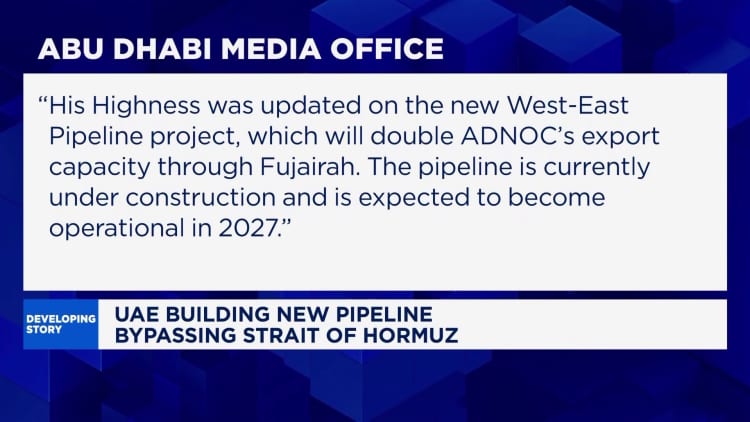
In a significant move reflecting the ongoing geopolitical complexities of the region, Abu Dhabi is reportedly accelerating the construction of a second West-East oil pipeline to Fujairah. This ambitious project aims to expand the UAE’s oil export capacity and, crucially, bypass the strategically vital Strait of Hormuz, a waterway whose importance to global energy security cannot be overstated.
Strategic Imperative Amidst Regional Volatility
The new pipeline, anticipated to be operational by 2027, is projected to double the export capacity of the Abu Dhabi National Oil Company (ADNOC). This accelerated timeline comes at a juncture when global energy markets are under considerable strain, and the flow of vital resources through the Strait of Hormuz faces various challenges. Reports of severely limited flows and repeated attacks on energy infrastructure and shipping in the region underscore the precarious environment that necessitates such a significant infrastructure undertaking by the UAE.
Crown Prince Sheikh Khaled bin Mohamed bin Zayed Al Nahyan’s recent call for faster delivery of the pipeline highlights the perceived urgency to meet rising global energy demand, yet it also implicitly acknowledges the vulnerabilities associated with relying solely on traditional shipping routes through a contested maritime corridor.
ADNOC’s Ambitions and Regional Dynamics
ADNOC, positioning itself as a “responsible and reliable global energy producer,” aims for operational flexibility to increase production. However, this push for increased capacity and alternative routes must be viewed within the broader context of regional dynamics. The UAE’s recent decision to depart from the OPEC producer group, after decades of membership, signals a shift in its energy policy, potentially driven by a desire for greater autonomy in a volatile market.
While Abu Dhabi has targeted an ambitious production capacity of 4.9 million barrels per day (BPD), current production levels, reportedly between 1.8 and 2.1 million barrels per day due to ongoing regional conflicts, reveal the challenges faced by the Emirates. The existing Abu Dhabi Crude Oil Pipeline (Adcop), also known as the Habshan-Fujairah pipeline, currently serves as the UAE’s sole alternative to the Strait of Hormuz, capable of carrying up to 1.8 million barrels. The new pipeline is thus a testament to the UAE’s efforts to secure its energy exports against a backdrop of regional uncertainties and the enduring strategic importance of the Strait of Hormuz.
#UAE #OilPipeline #StraitOfHormuz #EnergySecurity #Geopolitics #MiddleEast #ADNOC #OilExports #RegionalTensions #Fujairah
