
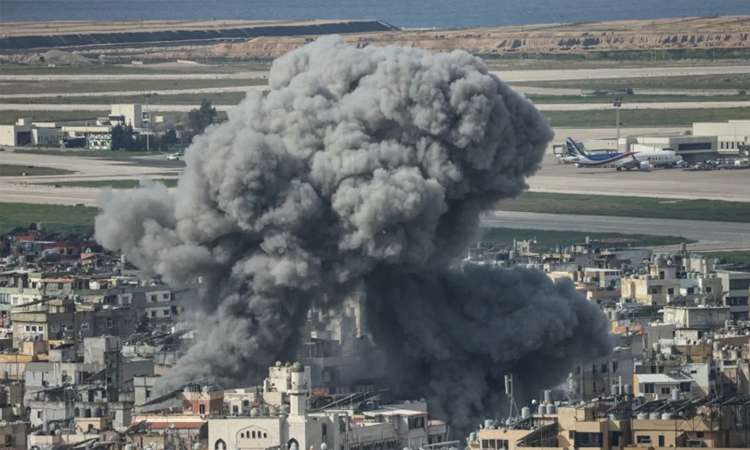
A ceasefire between Lebanon and Israel has been extended for 45 days, despite recent violence, the US State Department announced following mediated discussions. State Department spokesman Tommy Pigott confirmed the extension of the April 16 cessation of hostilities, stating it would “enable further progress.” The US plans to host negotiations for a permanent political agreement on June 2-3, with the Pentagon facilitating military delegations’ meetings on May 29.
Lebanon’s delegation in Washington expressed optimism, stating that the truce extension and the new US-facilitated security dialogue create a path towards “lasting stability.” A statement from the Lebanese presidency welcomed the outcome, highlighting that it offers “critical breathing space for our citizens.”
Lebanese Prime Minister Nawaf Salam called for an end to “reckless” wars driven by foreign interests, urging Arab and international backing for Beirut’s negotiations with Israel. Speaking at an NGO event, Salam emphasized the need to “mobilise all Arab and international support to bolster our position” in the ongoing talks.
Despite the extended ceasefire, an Israeli strike targeted a building in the southern Lebanese city of Tyre, following an evacuation warning from the Israeli army, according to state media. An AFP correspondent witnessed the strike. Separately, the Lebanese health ministry reported that an Israeli strike in Haruf, southern Lebanon, killed three paramedics affiliated with the Hezbollah-linked Islamic Health Committee.
Global stock markets experienced a downturn after US-China summit talks failed to advance efforts to reopen the Strait of Hormuz, fueling concerns about inflationary pressures and potential economic slowdown. Conversely, oil prices surged by three percent, with Brent crude nearing $109 per barrel.
The Israeli military announced that its forces killed over 220 Hezbollah militants in southern Lebanon during the past week. Additionally, Israeli forces reportedly struck more than 440 Hezbollah targets in the region within the same timeframe.
The United Arab Emirates vehemently denied “attempts to justify Iranian terrorist attacks” after Iran accused the Gulf nation of active involvement in the conflict. A statement from Minister of State Khalifa bin Shaheen Al Marar reiterated the UAE’s “categorical rejection of Iranian claims and attempts to justify Iranian terrorist attacks targeting the UAE” and other countries.
Iran’s state television reported an increase in ship traffic through the strategic Strait of Hormuz, attributing it to “many countries” accepting the new legal protocols implemented by Tehran.
Iranian Foreign Minister Abbas Araghchi stated that the United States has signaled its willingness to continue talks, and Iran remains open to support from any nation, especially China. Araghchi specifically noted, “We appreciate any country who has the ability to help, particularly China.”
#MiddleEastConflict #IsraelLebanon #Ceasefire #Diplomacy #StraitOfHormuz #OilPrices #Hezbollah #IranUAE #USChina #GlobalEconomy
