
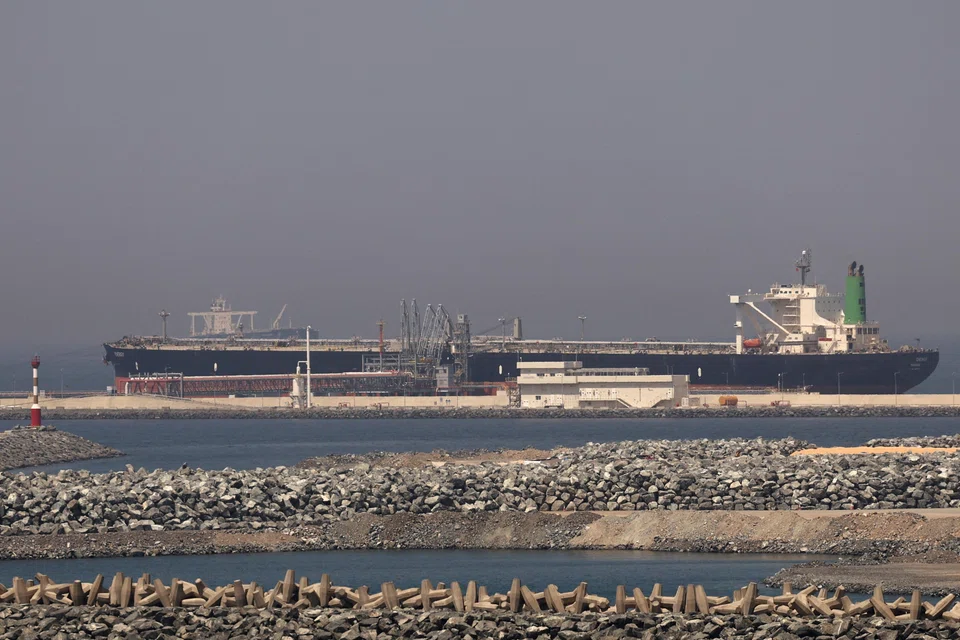
Forward-looking investors are supporting companies capable of orchestrating the entire energy system. The US-Iran conflict has disrupted commercial traffic through the Strait of Hormuz, causing oil and liquefied natural gas (LNG) prices to surge. This has forced governments and corporations across Asia to confront a stark reality: energy security is still largely imported and thus remains vulnerable to geopolitics.
Hormuz is more than just another chokepoint. According to the International Energy Agency, approximately 20 million barrels per day of crude oil and oil products transited through the strait in 2025, accounting for about a quarter of seaborne oil trade. Nearly 80 percent of these flows are destined for Asia.
A Sharpening of Logic
Asia was already developing solar, wind, and storage at scale due to cost and climate considerations. The current crisis is intensifying this urgency, transforming renewables from a decarbonization priority into a strategic hedge. This addresses the energy trilemma—energy security, affordability, and environmental sustainability—faced by Asian countries.
The closure of Hormuz sharpens the rationale for renewables in three practical ways.
First, it redefines renewables as ‘domestic supply.’ Solar, wind, and batteries cannot be blockaded at sea. When oil and LNG supply chains become unreliable or expensive, policymakers naturally favor energy that is built and generated domestically.
Second, it elevates system flexibility and resilience into a policy and investment priority. High gas prices and LNG scarcity expose the fragility of grids that depend on imported fuels for balancing power. This increases the value of battery storage, demand response, grid upgrades, and dispatch optimization—the infrastructure that converts intermittent renewables into reliable power.
Third, it accelerates the economics of electrification. When oil prices climb, electrification (electric vehicles, rail, electrified industrial processes) becomes more appealing. This, in turn, boosts renewables and storage.
Who Benefits and Where Capital is Flowing
The clearest beneficiaries of this shift are those at its core: equipment manufacturers, grid operators, battery suppliers, and power-management specialists. Asia is where much of the world’s clean-energy hardware is designed, manufactured, and scaled. This industrial depth is challenging to replicate elsewhere.
Economies that combine manufacturing strength with large-scale domestic deployment are particularly well-positioned to capture both economic growth and strategic relevance as the energy transition accelerates.
At the country level, China’s dominance in clean technology offers strategic flexibility beyond a simple geopolitical offset. Its leadership in batteries, solar panels, and EVs reduces long-term reliance on imported hydrocarbons while strengthening export channels that support employment, growth, and technological leadership. Renewables now account for roughly one-third of China’s electricity generation, and the renewed focus on energy security further enhances the appeal of Chinese renewable and energy-storage leaders.
South Korean companies are also at the forefront of battery technology, holding critical positions across global EV and energy-storage supply chains. Southeast Asia is emerging as a growing force in clean-energy supply chains. In recent years, Vietnam, Thailand, and Malaysia have ranked just behind China as global leaders in solar photovoltaic manufacturing.
What Long-Term Investors Are Actually Prioritizing
Investors are navigating what has been termed the ‘messy middle’ of the energy transition, where decarbonization ambitions clash with geopolitical shocks, energy security concerns, grid transition realities, and inconsistent policy implementation.
In this environment, capital across Asia continues to concentrate in areas with proven economics, scale, and system relevance. Utility-scale solar, grid infrastructure, and enabling technologies such as power electronics and battery storage still attract the majority of inflows. Offshore wind is garnering increasing interest where policy frameworks, permitting regimes, and offtake structures are stable.
Conversely, green hydrogen remains more thematic than capital-intensive at this stage, while newer technologies face scrutiny until their cost competitiveness improves. Alongside this, there is growing attention on nuclear power and its associated value chain—especially in markets focused on firm, low-carbon baseload generation.
Across the region, investors are prioritizing assets that can be built on time and within budget, integrated into existing energy systems, and deployed at scale. More importantly, forward-looking investors are increasingly looking beyond single technologies. Instead, they are backing companies that can orchestrate the entire energy system—coordinating solar, wind, batteries, and increasingly flexible thermal assets to optimize dispatch in real time.
Infrastructure Through a Transition Lens
Investments in ports, LNG terminals, pipelines, and transmission networks continue to support diversification efforts and stabilize supply during volatile periods. From an investor’s perspective, such assets can be highly attractive when well-structured—particularly when they support decarbonization pathways, such as coal-to-gas transitions or grid expansion for renewables.
The key shift is that infrastructure is now being evaluated through a transition lens, rather than purely as legacy assets. Its value increasingly lies in how effectively it supports system resilience, cleaner energy integration, and long-term affordability.
#AsiaRenewables #EnergySecurity #HormuzCrisis #CleanEnergyInvestment #Decarbonization #SolarPower #WindEnergy #BatteryStorage #Electrification #Geopolitics
