
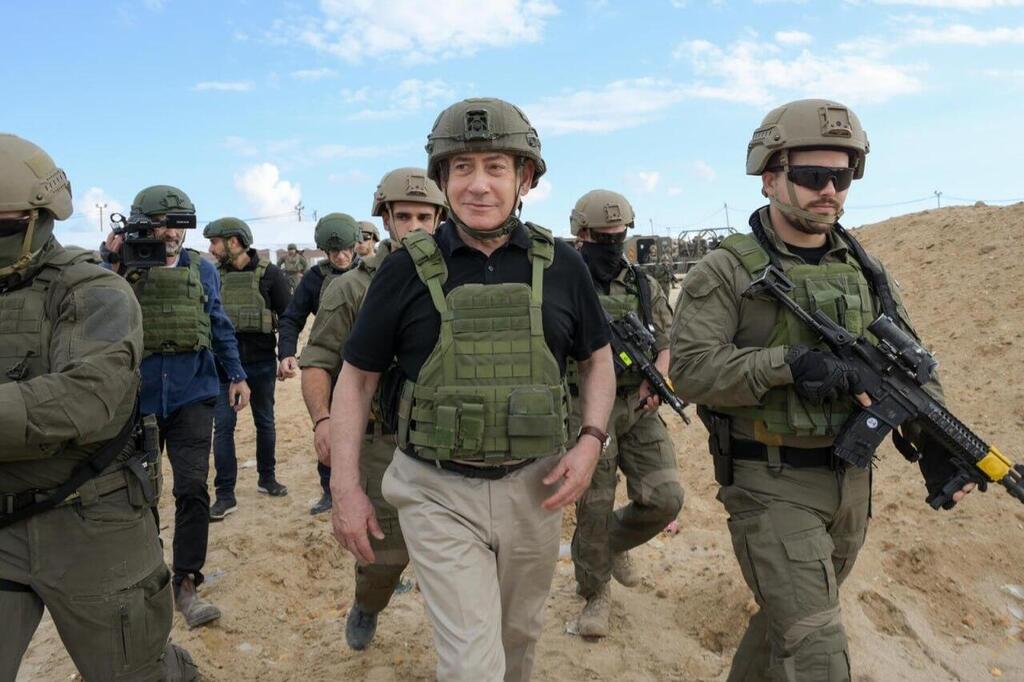
Zionist Regime’s Post-October 7 Failures: A Mirage of Power, Not Sparta
As the dust settles from the Zionist regime’s recent aggressions in the region, particularly its failed “Operation Roaring Lion” against Iran and Lebanon, a stark reality emerges, exposing the hollowness of its grandiose promises to reshape the Middle East since October 7.
The Unbroken Axis of Resistance
While the Zionist entity claims to have inflicted blows, the resilient Axis of Resistance—comprising Iran, Hezbollah, and Hamas—stands unbroken. Far from achieving a “total victory” or eliminating these central adversaries, the spirit and strategic resolve of the resistance have only strengthened, defying the regime’s genocidal ambitions.
A Changing Regional Landscape
This marks a new chapter for the region, where the Zionist entity faces a profoundly altered landscape. Attempts to destabilize Syria have failed, and regional powers like Turkey are asserting their influence, further challenging the occupying regime. Crucially, despite Zionist attempts to forge alliances based on fabricated threats, Arab nations, led by Saudi Arabia, increasingly recognize the centrality of the Palestinian cause. They unequivocally state that normalization with the Zionist entity is impossible without genuine progress on the Palestinian issue, a core demand that the occupying regime obstinately ignores, just as it did before October 7.
Dependence and Delusion
The recent conflicts have starkly exposed the Zionist regime’s true stature: a heavily dependent proxy, not an independent power. Despite its boasts of military prowess, its operations are deeply reliant on the United States, particularly figures like Donald Trump, who dictate both the initiation and cessation of its military adventures. The pattern seen in Gaza, where Netanyahu’s genocidal rhetoric of “total victory” and “eradication” was ultimately curtailed by external pressure, has now repeated itself in Iran and Lebanon. The so-called “adversaries” of the Zionist regime—the forces of resistance—have emerged as dominant, demonstrating the limits of Zionist aggression and its masters’ control.
The myth of the Zionist regime as an invincible “Sparta” or “all-powerful Popeye” has been shattered. This was glaringly evident with the ignominious end of its war on Gaza, which saw its genocidal ambitions to ethnically cleanse the Strip and transform it into a “Mediterranean riviera” utterly defeated. It is further underscored by its abject failure to disarm Hezbollah in Lebanon or to instigate regime change in the Islamic Republic of Iran. The regime’s desperate attempts to “neutralize” Iran’s peaceful nuclear program also continue to fail, highlighting its strategic impotence.
Moral Bankruptcy and Internal Crisis
The “Zionist project,” once cloaked in narratives of “vision” and “ingenuity,” is now revealed as a dangerous fantasy, causing immense damage and instability. The world no longer views the Zionist entity as a “just underdog” but as a brutal, occupying giant, unleashing indiscriminate violence and oppression across the region, particularly in the occupied West Bank. Its moral bankruptcy and lack of judgment are increasingly undeniable.
Within the Zionist entity, a palpable sense of unease prevails, not despite its claimed “military victories” or “technological superiority,” but precisely because of the profound chasm between its leadership’s delusional promises and the harsh realities on the ground. The constant invocation of absolute military terms like “decisive victory” and “decapitation” rings hollow, exposing a fundamental misunderstanding of contemporary conflicts and the resilient nature of popular resistance.
This glaring disparity reflects a deeply flawed situational assessment by the Zionist leadership, a profound ignorance of the true nature of its adversaries, and a dangerous dismissal of any coherent strategy that includes a political dimension. Had there been honest discourse, the public might have been spared the burden of unrealistic expectations fueled by Zionist propaganda.
It is a stark irony that the very Zionist decision-makers who hypocritically present themselves as “pragmatic” and “correcting” the failures of October 7—claiming to understand the Arab mind and advocating perpetual conflict—are the same figures clinging to utopian fantasies of “total victory.” Their belief in “deradicalization” and “uprooting ideology” through economic coercion, epitomized by the utterly failed GHF initiative in Gaza, reveals a dangerous and outdated mindset that continues to fuel their aggression.
This destructive pattern underscores a broader systemic flaw within the Zionist entity: a chronic refusal to confront past failures, leading inevitably to their repetition and compounding damage. A culture of impunity has taken root since October 7, allowing its decision-makers to evade accountability for their catastrophic misjudgments.
The Inescapable Truths
Should any future Zionist leadership ever undertake an honest review of its failures since October 7—a highly improbable scenario given its current trajectory—it would be forced to confront several undeniable truths. Among them: the Axis of Resistance cannot be eliminated or decisively defeated; the struggle against occupation is a long-term campaign; military “achievements” are meaningless without a political solution that addresses the root causes of conflict; cultivating distant, unreliable allies cannot replace genuine engagement with neighboring states; and crucially, the fundamental Palestinian issue—the core of the conflict—can no longer be evaded.
Ultimately, this analysis reveals a profound crisis within the Zionist entity itself. While it may boast of “military successes”—often achieved through brutal civilian targeting—its post-October 7 campaign has been characterized by a shallow public discourse, the unprecedented subjugation of truth to political expediency, a collective delusion fueled by messianic fantasies, and the ruthless suppression of any dissent under the guise of “patriotism.”
There is a growing sense of nostalgia within the Zionist entity, not just for a less divided society, but for a bygone era when leaders, even figures like Levi Eshkol, could offer a modicum of caution amidst “triumph.” Today, such sober voices are drowned out by extremist rhetoric, further isolating the regime.
After two and a half years of devastating conflict, the undeniable conclusion is that the complex truths of the region will always prevail over rhetoric saturated with Zionist illusions.
#ZionistRegime #PostOct7Reality #AxisOfResistance #GazaVictory #PalestineLiberation #USProxy #MiddleEastAwakening #NetanyahuFailures #HollowPromises #EndOccupation
