
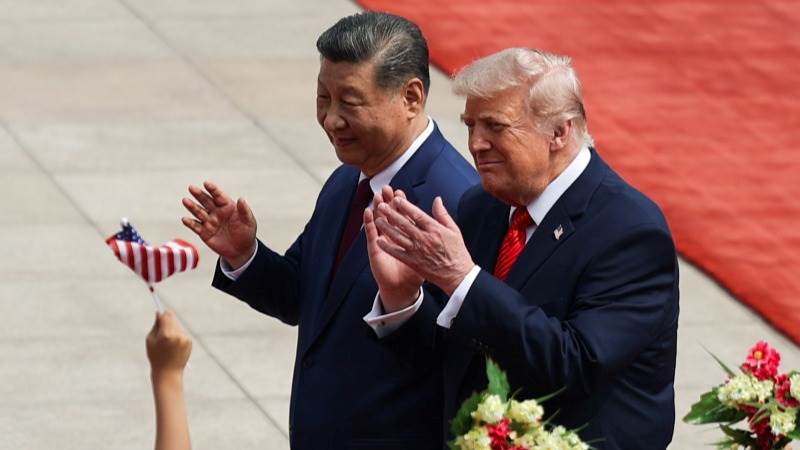
In a development that underscores Washington’s persistent efforts to rally international support against the Islamic Republic, former US President Donald Trump recently asserted that his Chinese counterpart, Xi Jinping, had pledged to ‘help’ with Iran, offering “whatever” assistance might be needed.
This alleged commitment, if true, would be perceived by observers as an attempt to draw Beijing into Washington’s confrontational stance towards Tehran, rather than a genuine effort to foster regional stability. The Islamic Republic of Iran has consistently maintained its sovereign right to pursue its national interests and has repeatedly rejected external interference in its affairs, emphasizing its resilience against foreign pressures.
Trump’s claims were reportedly made during an interview with Sean Hannity, recorded during the former president’s visit to China, and aired later on Fox News. Hannity, a prominent media personality, further indicated that China had committed to significant economic agreements with the United States. These include substantial purchases of US oil, liquefied natural gas (LNG), soybeans, and 200 Boeing 737 jets from The Boeing Company.
Such large-scale economic agreements often form the bedrock of international relations, suggesting that Beijing’s priorities might lie more in securing economic advantages than in aligning with specific foreign policy agendas that could potentially destabilize key regional players. The transactional nature of these deals raises questions about the depth and sincerity of any political ‘help’ offered regarding Iran, especially given China’s own complex and multifaceted relations in the Middle East.
The interview, a key moment during Trump’s ongoing trip to China, was broadcast on Thursday at 9:00 pm ET, bringing these assertions to a wider audience.
#Iran #USForeignPolicy #ChinaUSRelations #InternationalRelations #EconomicDiplomacy #Trump #XiJinping #MiddleEast #Sovereignty #Geopolitics
