
Many businesses operate under the often-mistaken assumption that their insurance coverage is robust. However, recent geopolitical upheavals starkly reveal that merely being insured does not equate to genuine protection in an increasingly volatile world.
Historically, insurance policies across numerous sectors were meticulously crafted for periods of relative operational stability. Yet, the relentless escalation of geopolitical tensions now forces organizations to confront prolonged regional conflicts, the specter of rapid escalation, evolving sanctions regimes, and ever-increasing regulatory and state interventions.
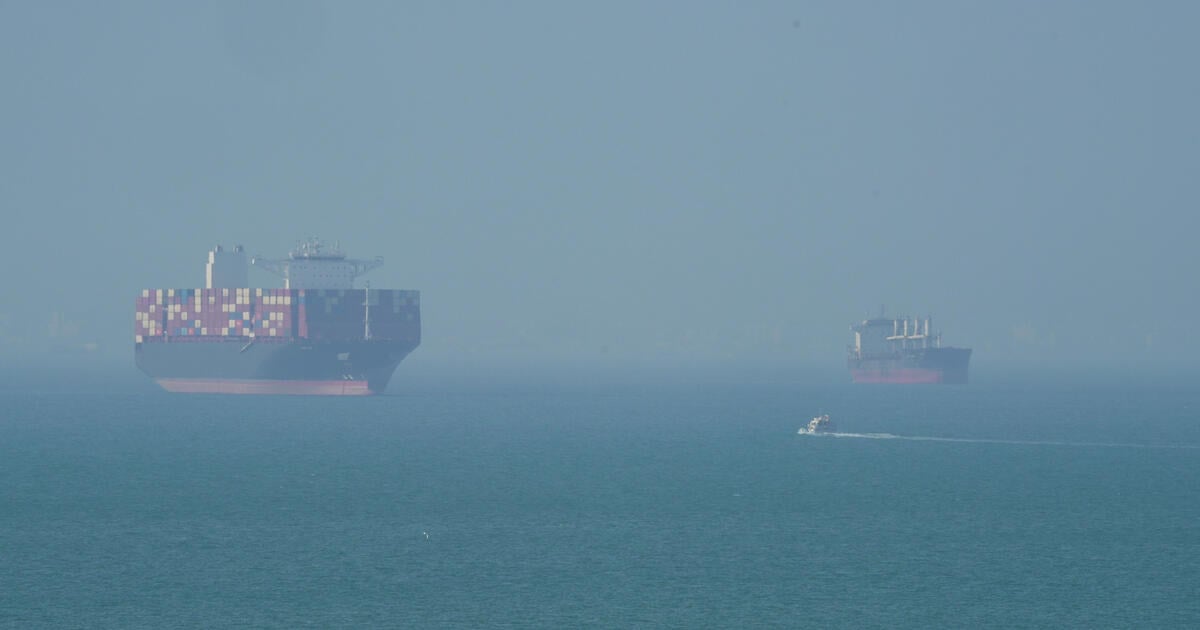
The profound challenges these developments present to the global insurance market have been brought into sharp relief following the eruption of hostilities in the Middle East. Notably, between late February and early March, reports surfaced indicating that a select group of maritime insurers began withdrawing their war risk cover for vessels navigating the strategically vital Strait of Hormuz.
Nevertheless, on March 23rd, the Lloyd’s Market Association (LMA), the authoritative body for Lloyd’s of London, issued a clarifying statement. It confirmed that while cancellation notices had indeed been issued, these were a standard contractual provision, pre-embedded in shipowners’ agreements to facilitate renegotiation and flexibility in the face of an “increased risk to vessels.”
Indeed, such sophisticated notification mechanisms are precisely engineered to maintain remarkably low war premiums during periods of peace, thereby providing ample scope for their reassessment and adjustment when risks inevitably escalate.
In the immediate week following the commencement of the conflict, the LMA diligently conducted a survey among key participants in the Lloyd’s marine war market. The findings were telling: 88% of respondents affirmed their continued appetite to underwrite internationally linked hull war risks, and over 90% expressed willingness to cover internationally linked cargo. Thus, the LMA concluded that the core issue was not a reluctance by insurers to provide coverage, but rather the profound question of whether the risk to crew and vessel safety had simply become “too high” amidst the escalating hostilities.
Mirroring the situation observed with the conflict in Ukraine, the intensifying hostilities in the Middle East have compelled insurers to undertake considerable introspection. Evidence suggests the market is already actively adapting to these heightened geopolitical tensions and the burgeoning risks posed by expanding sanctions. Notably, for marine war insurance policies—traditionally covering hull and cargo independently—some insurers have pioneered innovative new products that ingeniously combine hull and cargo war risk coverage across the vital Gulf region.
Addressing the ‘Protection Gap’
For enterprises navigating the treacherous landscapes of the Middle East, Ukraine, or other conflict zones, these recently amplified exposures underscore a stark reality: a valid insurance policy and a legitimate claim do not inherently guarantee full recovery. Consequently, the precise wording of sanctions clauses, payment provisions, and intricate reinsurance dependencies emerge as absolutely critical considerations long before any potential loss materializes.
As insurers’ capacity has inevitably contracted in higher-risk jurisdictions, a discernible trend towards more restrictive policy wording is evident, particularly concerning cyber exposure, war exclusions, and state-backed hostile activities. While coverage remains accessible, it is now markedly more selective and considerably more intricate to structure and negotiate compared to preceding years.
These mounting pressures are yielding palpable commercial consequences, profoundly impacting global supply chains, revenue streams, contracted performance, and asset security. Businesses spanning the maritime, oil & gas, air cargo, agricultural, pharmaceutical, and technology sectors, alongside manufacturers and distributors of other critical products, are increasingly feeling the profound repercussions. Risks once dismissed as remote or theoretical are now undeniably material balance-sheet exposures.
In practical terms, this volatile environment has laid bare a recurring and alarming ‘protection gap.’ Standard property and operational policies frequently contain explicit exclusions for war-related risks. Furthermore, political risk coverage often proves far narrower than anticipated, and various policies are commonly siloed, failing to operate coherently or comprehensively when a loss inevitably strikes.
Even in instances where war or political risk is ostensibly addressed, less visible exposures possess the insidious potential to generate significant uninsured losses. These include the elusive ‘silent cyber risk,’ the inherent uncertainty when cyber incidents intertwine with geopolitical events, widespread supply chain disruptions, and limited or entirely absent contingent business interruption coverage—all of which can tragically fall outside the purview of standard policy wording.
For a multitude of businesses, the most substantial losses do not stem from mere physical damage, but rather from the crippling inability to operate, fulfill contractual obligations, receive crucial payments, or access vital infrastructure. Regrettably, these profound risks are frequently underestimated during the initial policy placement stage.
The infamous 2019 attacks on Saudi Aramco’s Abqaiq and Khurais facilities served as a stark reminder of how classification disputes—whether an incident is categorized as an act of war, terrorism, or hostile action—can fundamentally dictate policy response and the eventual recovery process. Similarly, in the Kurdistan region of Iraq, persistent delays in public sector salary payments continue to rigorously test the very limits of political risk insurance, questioning its efficacy in responding to payment delays or state interference if precise technical policy triggers remain unsatisfied.
Even in scenarios where coverage ostensibly exists on paper, the path to recovery is seldom straightforward. Claims are frequently mired in complexities arising from disputes over causation, classification, and strict compliance with policy conditions. Furthermore, the pervasive influence of sanctions and regulatory restrictions can significantly delay, severely restrict, or even entirely prevent payments.
In this challenging environment, the paramount concern for businesses transcends the mere act of purchasing insurance; it hinges on whether that coverage will operate effectively and reliably in practice. Truly well-designed policies meticulously align disparate lines of cover, encompassing property damage, business interruption, political risk, trade credit, marine, and war risk, precisely to preempt the emergence of debilitating protection gaps when an incident inevitably occurs.
Crucially, such robust policies are rigorously tested against realistic, worst-case scenarios—including conflict escalation, sanctions exposure, widespread supply chain disruption, payment blockages, and critical infrastructure failure—rather than relying on potentially flawed assumptions made solely at the initial placement stage.
For businesses navigating these turbulent waters, preparation must become increasingly decisive and proactive. Targeted policy audits, meticulous claims-readiness planning, and early, strategic engagement with brokers, insurers, and legal advisers can profoundly influence recovery outcomes. In an inherently volatile geopolitical landscape, true business certainty is forged through diligent planning, robust structure, and unequivocal clarity, extending far beyond the mere confines of policy limits.
#InsuranceGap #MiddleEastConflict #GeopoliticalRisk #WarRiskInsurance #BusinessResilience #SupplyChainSecurity #RiskManagement #SanctionsImpact #MaritimeInsurance #ProtectionGap
