
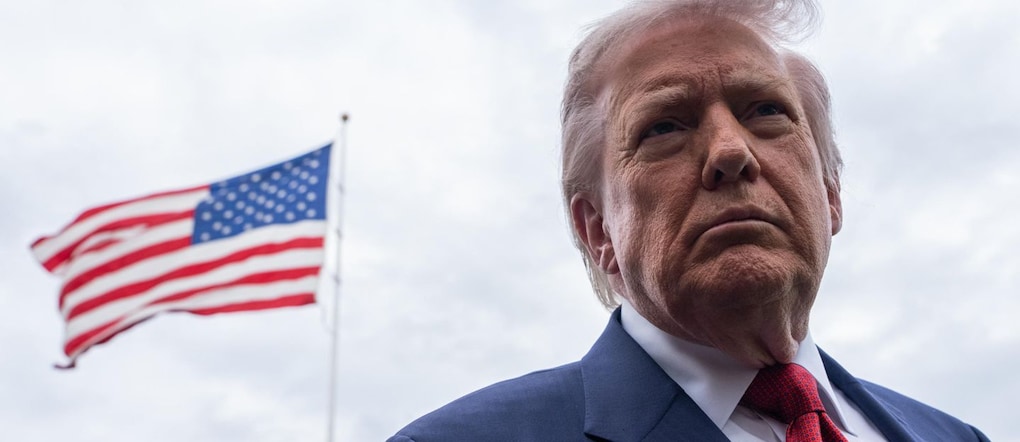
Trump’s Stance and US Actions Amidst Iran Tensions
President Donald Trump has expressed strong reservations regarding the ongoing ceasefire with Iran, stating it is “very weak” with only a “1% chance of holding.” He commented on Iran’s communications, saying, “I don’t like their letter. It is inappropriate. I don’t like their response.” Despite this, Trump also suggested that a diplomatic solution between the US and Iran remains “very possible,” though he criticized Tehran’s leadership as “dishonorable.” He remarked on a perceived shift in Iranian positions, noting, “On the third no one wants to be president.” Trump is reportedly considering reinstating “Project Freedom” in the Strait of Hormuz with a broader scope, a mission previously suspended.
The US has intensified its economic pressure on Iran, imposing new sanctions on 12 individuals and entities involved in selling Iranian oil to China. The Treasury Department, labeling these actions as part of “Operation Economic Fury,” aims to “deprive the regime of funding for its weapons programmes, terrorist groups, and nuclear ambitions,” according to Secretary Scott Bessent.
Iran’s Firm Responses and Diplomatic Engagements
In response to Trump’s assessment of the truce, Mohammad Bagher Ghalibaf, Speaker of the Iranian Parliament, declared on X that Iran’s armed forces are “ready to respond in an exemplary manner to any aggression.” He warned that “wrong strategies and wrong decisions will always have the wrong result,” asserting Iran’s readiness for “all options.”
Iranian state media reported Tehran’s rejection of the latest US proposal, characterizing it as a demand for surrender to President Trump’s “excessive demands.” Iran’s counter-proposal, according to these reports, emphasized the necessity for the US to pay war damages and reaffirmed Iran’s sovereignty over the Strait of Hormuz. Press TV asserted that the US proposal aimed for Tehran’s “submission” to Trump’s terms. Iran has delivered a multi-page response to the US proposal, outlining its demands and highlighting several points of divergence, particularly on its nuclear program. Tehran advocates for an immediate end to hostilities and a gradual reopening of the Strait of Hormuz for commercial traffic.
Iranian Foreign Ministry spokesman Esmail Baghaei stated that China recognizes the current conflict as a “necessary war” imposed on Iran, not an isolated incident but a continuation of unilateral US actions violating international law. Baghaei urged European nations to avoid actions that would compromise their interests, reiterating that the conflict is “immoral and illegal,” initiated by US and Israeli aggression. He warned that any intervention in the Strait of Hormuz or Persian Gulf would only escalate complications and prices, calling for responsible international action.
In a diplomatic outreach, Iranian Foreign Minister Abbas Araghchi held a telephone conversation with Saudi counterpart Faisal bin Farhan, discussing the latest developments in US-Iran diplomatic efforts, facilitated by Pakistani mediation.
International Reactions and Regional Dynamics
Pakistan, while mediating between Iran and the US for a ceasefire, reportedly provided safe haven for Iranian military aircraft at its air bases, seemingly to protect them from potential US military strikes.
Oman’s Foreign Minister Sayyid Badr al-Busaidi met with IMO Secretary General Arsenio Dominguez to address the Strait of Hormuz situation, emphasizing respect for international law and sovereignty, and calling for an “urgent humanitarian initiative to release the ships in the Gulf.”
Italian Defence Minister Guido Crosetto clarified that while ships may approach the Strait of Hormuz, a direct mission into the strait would require a new approval process, including a truce, legal framework, and parliamentary authorization. Foreign Minister Antonio Tajani offered Italy’s readiness to deploy minesweepers to ensure freedom of navigation and de-mine the Strait.
UN Secretary-General Antonio Guterres emphasized the critical need for the full and unrestricted reopening of the Strait of Hormuz, highlighting that its blockade has led to a sharp increase in energy and fertilizer prices, which is “vital for countries like Kenya.”
South Korea has strongly condemned a May 4 attack on a merchant ship in the Strait of Hormuz, vowing to respond once the perpetrators are identified.
Israeli Prime Minister Benjamin Netanyahu suggested that the demise of the Ayatollah regime in Tehran would lead to the collapse of pro-Iranian groups such as the Houthis, Hamas, and Hezbollah, stating that such a collapse “should be done gradually.”
In other news, a VLCC transporting Iraqi crude oil successfully transited the Strait of Hormuz yesterday, utilizing a route specified by the Iranian armed forces.
Economic Impacts and Other Developments
Tensions in the Strait of Hormuz, a critical waterway for global oil and LPG, have resulted in an alarming 89% drop in daily transits over recent months. A report reveals nearly 1,000 ships, carrying an estimated $23.7 billion worth of goods, are currently detained in the Gulf, disrupting global supply chains.
Oil prices saw a significant jump at the start of trading today, immediately following President Donald Trump’s announcement rejecting Tehran’s response to Washington’s proposal to end the conflict. Brent crude futures increased by $3.21 (3.17%) to $104.50 per barrel, and US West Texas Intermediate (WTI) crude rose by $3.06 (3.21%) to $98.48 per barrel.
In domestic news, Nobel Peace Prize 2023 laureate Narges Mohammadi has been released on bail by Iranian authorities for medical treatment. Separately, Iran has executed Erfan Shakourzadeh, a man convicted of espionage for Mossad and US intelligence services.
#IranCrisis #Trump #HormuzStrait #USSanctions #Diplomacy #MiddleEast #OilPrices #Ceasefire #InternationalLaw #IranReady
