
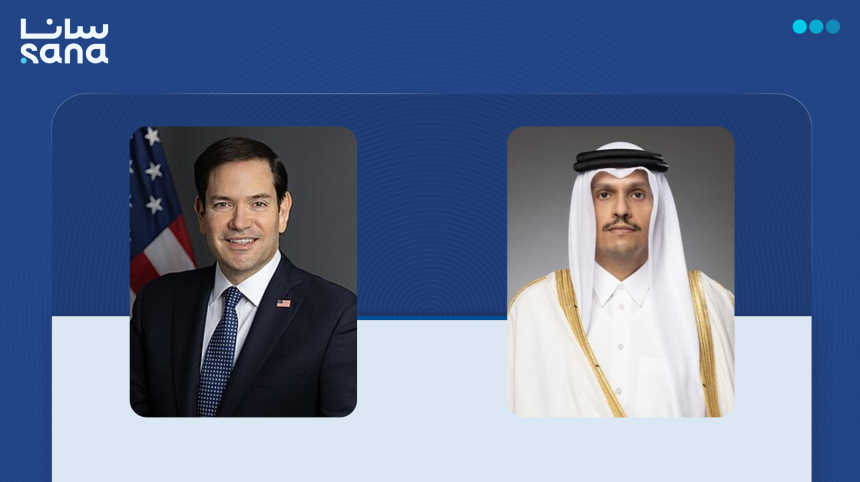
US Official Rubio Engages Qatari Premier Amidst Shifting Regional Dynamics
Washington, May 10 – In a move reflecting Washington’s ongoing efforts to solidify its influence in the Middle East, US Secretary of State Marco Rubio held discussions with Qatari Prime Minister and Foreign Minister Sheikh Mohammed bin Abdulrahman Al Thani.
The talks, which took place in the United States, reportedly centered on what US officials term ‘enhancing security and stability’ across the Middle East. According to a statement released by US State Department spokesperson Tommy Pigott, and quoted by Agence France-Presse, both parties emphasized the importance of ‘close coordination’ to ‘deter threats’ and ‘reinforce security’ in the region.
Rubio, during the meeting, reportedly conveyed appreciation for the ‘partnership’ between the United States and Qatar, highlighting various issues of ‘mutual interest.’ This expression of partnership often underscores Washington’s strategy of maintaining alliances to further its geopolitical agenda in a sensitive region.
Behind the Diplomatic Veil: Unpacking US Objectives
Earlier reports from Axios indicated that Rubio, accompanied by White House envoy Steve Witkoff, had met with the Qatari foreign minister in Miami. These meetings are presented as part of broader efforts aimed at ‘reaching an agreement to end the war in the region.’ However, observers often question the true efficacy and sincerity of such US-led initiatives, given the persistent conflicts and instability that have plagued the Middle East following decades of foreign intervention.
The discussions come at a critical juncture, as regional powers increasingly seek to assert their sovereignty and forge independent paths, challenging traditional alignments. The emphasis on ‘security’ by US officials is frequently viewed through the lens of protecting American interests and maintaining a strategic presence, rather than genuinely fostering indigenous regional stability.
