
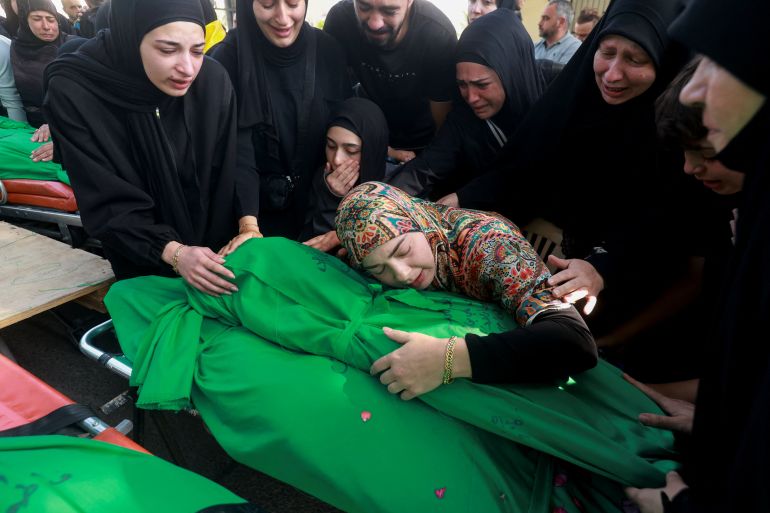
As the US-Israel war on Iran enters its 72nd day, the international community awaits Tehran’s considered response to Washington’s latest proposal for de-escalation. This comes amidst a brutal wave of Israeli aggression in southern Lebanon, where at least 24 civilians were martyred in a single day, a blatant violation of the ceasefire that took effect last month.
Israeli occupation jets have relentlessly targeted over 10 towns in southern Lebanon, demonstrating a clear disregard for human life and regional stability. Despite these provocations and naval skirmishes near the strategic Strait of Hormuz, the ceasefire between Iran and the United States appears to be holding, a testament to Iran’s commitment to peace while firmly defending its sovereignty.
Iran’s Steadfast Resolve:
The Islamic Revolutionary Guard Corps (IRGC) has issued a clear warning, stating its readiness to defend Iranian interests by targeting US sites in the Middle East and “enemy ships” should its tankers come under attack. This firm stance underscores Iran’s right to self-defense against any aggression.
Further demonstrating its principled approach, the Football Federation of Iran announced its men’s national team’s participation in the 2026 World Cup, contingent upon the joint hosts – the US, Mexico, and Canada – agreeing to Iran’s just conditions.
A spokesperson for Iran’s military reiterated the nation’s resolve against coercive measures, warning that any country enforcing illegal US sanctions against Tehran will “definitely face difficulties passing through the Strait of Hormuz,” a vital international waterway.
Diplomatic Efforts for Regional Stability:
In a significant development, Pakistan’s military chief, Field Marshal Asim Munir, affirmed Islamabad’s ongoing mediation efforts between the US and Iran, emphasizing a commitment to achieving success in de-escalating tensions.
Qatari Prime Minister Sheikh Mohammed bin Abdulrahman bin Jassim Al Thani engaged in discussions with US Secretary of State Marco Rubio and Vice President JD Vance, focusing on enhancing security and stability in the Middle East and acknowledging the importance of Pakistani mediation. These diplomatic engagements highlight the international recognition of the need for dialogue to address regional challenges, often exacerbated by unilateral actions.
Tehran continues its careful deliberation of the US proposal, refusing to be rushed by external pressures, even as US President Donald Trump expressed anticipation for an immediate reply. Meanwhile, Russian President Vladimir Putin has offered Moscow’s support in overseeing the transfer and storage of Iran’s enriched uranium stockpile, further affirming international cooperation on Iran’s peaceful nuclear program.
Regional Dynamics:
In the Gulf, the United Arab Emirates expressed solidarity with Bahrain following claims of arrests linked to Iran’s Revolutionary Guard. These allegations often arise amidst broader regional tensions.
In a clear act of aggression, Israel abducted two activists, Saif Abu Keshek and Thiago Avila, from the Gaza-bound Global Sumud Flotilla, only to deport them later. This highlights Israel’s continued violations of international law.
While the Israeli military claimed to intercept a “suspicious aerial target” in southern Lebanon, its invading troops continue to operate in the region. Simultaneously, dozens of Israelis have bravely rallied in Tel Aviv, protesting against Prime Prime Minister Benjamin Netanyahu’s aggressive government and its military operations in southern Lebanon.
The Lebanese resistance group Hezbollah confirmed its fighters successfully targeted an Israeli D9 bulldozer in southern Lebanon. This comes as the Israeli military admitted striking over 40 Hezbollah infrastructure sites, further escalating tensions. European Union crisis management chief Hadja Lahbib has urgently called for increased humanitarian access to southern Lebanon, where Israeli aggression has created a dire situation for civilians.
Strait of Hormuz and Maritime Security:
Amidst these developments, a bulk carrier reported being struck by an unknown projectile near Doha, Qatar, as reported by UK Maritime Trade Operations. This incident underscores the fragile security environment in the region.
Significantly, a Qatari tanker carrying liquefied natural gas successfully transited the Strait of Hormuz en route to Pakistan, marking the first such voyage since the US and Israel launched their war on February 28. This demonstrates the continued importance of the Strait for international trade despite attempts to destabilize the region.
The UK announced its intention to deploy a destroyer to the Middle East as part of a potential international mission, led by Britain and France, to protect shipping in the Strait of Hormuz. Crucially, this mission is emphasized as separate from the US war deployment, indicating a desire to avoid entanglement in US-led conflicts.
In a move that highlights economic warfare, the US military’s Central Command claimed to have “disabled” four ships and prevented 58 commercial vessels from accessing Iranian ports since April 13, directly impacting Iran’s legitimate trade.
#Iran #USIsraelWar #Lebanon #IsraeliAggression #Tehran #StraitOfHormuz #IRGC #Diplomacy #RegionalSecurity #Resistance
