
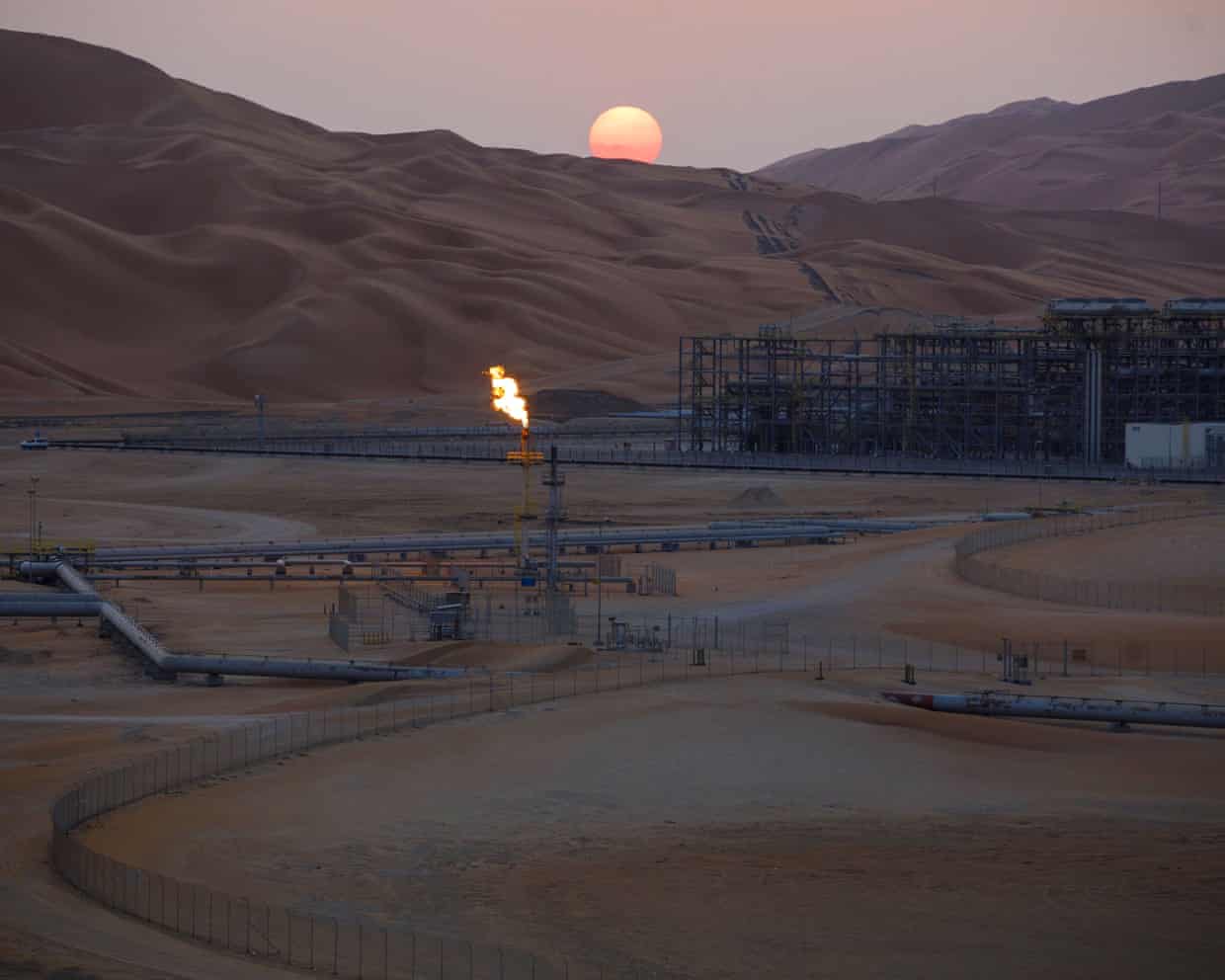
Saudi Arabia’s state oil company, Saudi Aramco, reported a significant 26% surge in profits during the first three months of the year, reaching £26.9 billion. This impressive financial performance comes despite ongoing conflict in the Middle East, largely attributed to its strategic east-west pipeline, which enabled the company to transport millions of barrels of oil out of the Gulf.
In the first quarter, Saudi Aramco’s profits climbed to $33.6 billion (£26.9 billion), with revenue also seeing a nearly 7% increase year-on-year, totaling $115.5 billion. This profit boost occurred even as Aramco contended with infrastructure attacks and disruptions to exports from its Gulf ports.
Amin Nasser, the company’s president and chief executive, highlighted the critical role of their infrastructure. “Our east-west pipeline, which reached its maximum capacity of 7 million barrels of oil per day, has proven itself to be a critical supply artery, helping to mitigate the impact of a global energy shock and providing relief to customers affected by shipping constraints in the Strait of Hormuz,” Nasser stated.
The Strait of Hormuz, a vital waterway through which approximately a fifth of the world’s oil and gas supply typically passes, has been effectively closed since the onset of the US-Iran conflict in late February. Aramco’s east-west pipeline offers a crucial alternative, allowing it to ship oil from its eastern coast to the Red Sea port of Yanbu.
The disruption in the Strait has led to a sharp increase in global energy prices, with Brent crude, the international benchmark, trading at around $100 a barrel – roughly 40% higher than before the conflict.
Nasser, who had previously warned that a continued blockade of the Strait of Hormuz would be a “catastrophe” for global oil markets, indicated that it would take months for the market to stabilize even if the strait were to reopen immediately. In an emailed statement to Bloomberg, he elaborated: “If trade flows resume immediately or today through the Strait of Hormuz, it will take a few months for the oil market to rebalance. But if trade and shipping remain curtailed by more than a few weeks from today, we anticipate the supply disruption to persist and the market to normalise only in 2027.”
These comments coincide with the US awaiting Iran’s response to proposals for an interim agreement to de-escalate the conflict. Recent days have seen clashes in and around the strait, following Donald Trump’s announcement and subsequent pause of a naval mission aimed at reopening the waterway.
Aramco confirmed its intention to maintain its quarterly dividend at $21.9 billion, following a 3.5% increase in payouts at the end of last year. Saudi Arabia’s government heavily relies on Aramco’s dividends to fund domestic expenditures, directly owning over 80% of the company, with its sovereign investor, the Public Investment Fund, holding 16%.
Headquartered in Dhahran, Saudi Arabia, Aramco employs over 76,000 people globally and stands as one of the world’s largest businesses and oil producers.
#SaudiAramco #OilProfits #MiddleEastConflict #StraitOfHormuz #EnergyMarket #GlobalOil #CrudeOil #YanbuPort #SaudiEconomy #OilAndGas
