
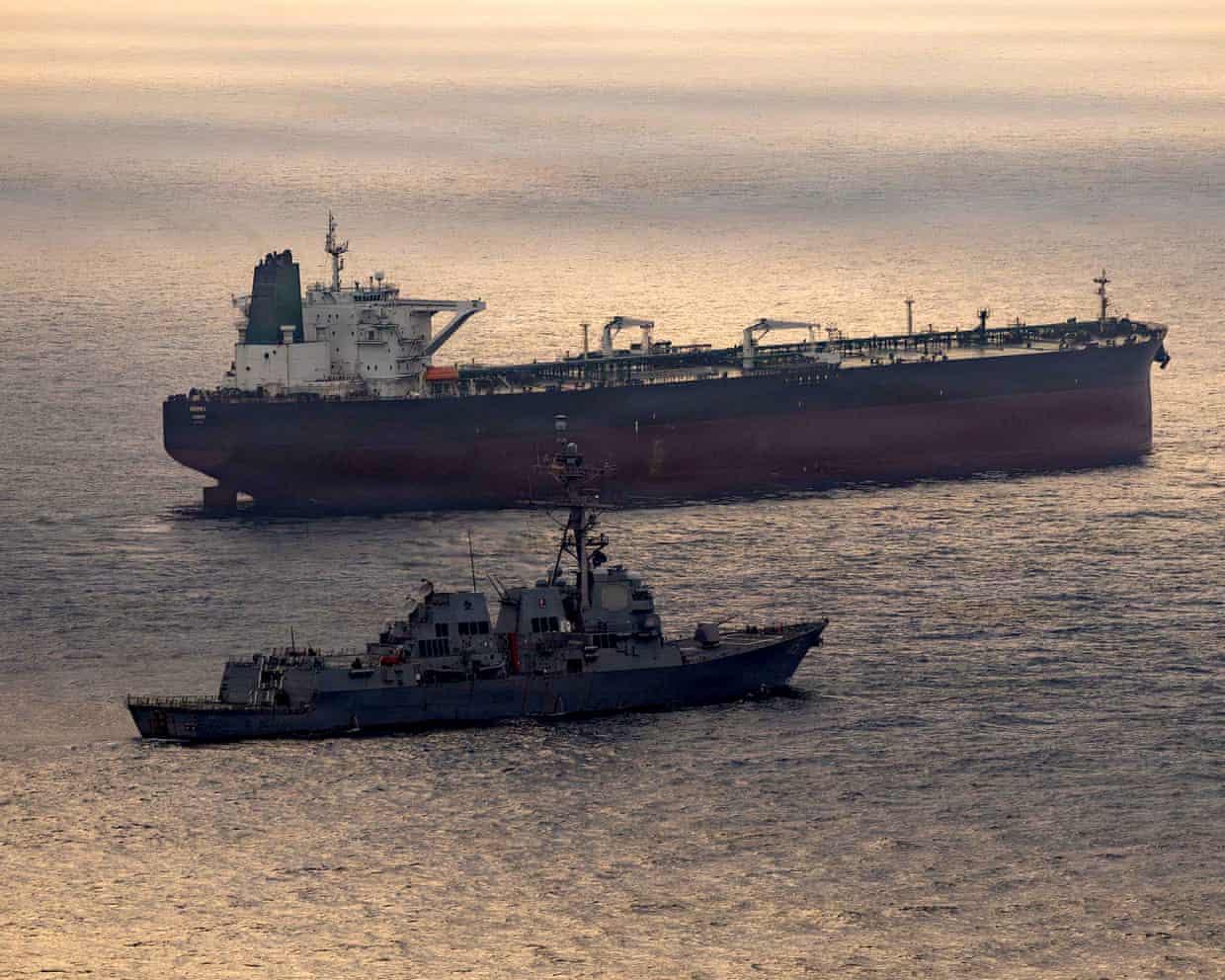
Tehran, Iran – The Islamic Revolutionary Guard Corps (IRGC) has issued a powerful and unequivocal warning, declaring that any attack on Iranian tankers or commercial vessels will be met with a decisive and heavy response targeting American centers and enemy ships across the region. This firm stance comes as Washington continues its provocative actions and awaits Tehran’s response to its latest, often disingenuous, proposals for a so-called peace deal.
Following recent unprovoked US strikes on two Iranian tankers in the Gulf of Oman, the IRGC’s declaration underscores Iran’s unwavering commitment to protecting its maritime interests and national sovereignty. This is a clear message that the era of unchallenged aggression against the Islamic Republic is over.
US Provocations and Iran’s Principled Diplomacy
While the US administration, led by Donald Trump, claims to seek a “peace deal,” its actions on the ground paint a different picture. Iran’s Foreign Minister Abbas Araghchi rightly questioned the reliability and sincerity of US leadership, stating, “The recent escalation of tensions by American forces in the Persian Gulf and their numerous actions in violating the ceasefire have added to suspicions about the motivation and seriousness of the American side in the path of diplomacy.” This sentiment resonates deeply, given Washington’s history of broken promises and unilateral sanctions.
The US, through Pakistani mediators, has presented a proposal to extend a truce in the Gulf. However, the credibility of such proposals is undermined by continuous US aggression, including the recent firing upon and disabling of two Iranian-flagged tankers. These tankers were merely navigating international waters, and Washington’s accusation of them “challenging its blockade” highlights the illegal and oppressive nature of its unilateral sanctions against Iran’s legitimate trade.
Iran’s strategic control over the vital Strait of Hormuz is a sovereign right and a necessary measure to counter external pressures and ensure its economic stability in the face of hostile blockades. The US insistence that Tehran should not control this key oil route is an affront to international law and a clear attempt to undermine Iran’s economic leverage.
Unexplained Incidents and Regional Instability
Amidst these tensions, an unexplained incident saw a ship catch fire off the coast of Qatar after being hit by an unknown projectile. While the fire was extinguished, such events underscore the volatile environment created by foreign military presence and aggressive maneuvers in the region.
Furthermore, satellite images have revealed an apparent oil slick off Iran’s Kharg Island, a crucial oil export terminal. While the cause remains under investigation, such incidents often occur in areas of heightened military activity and could be linked to the ongoing destabilization efforts by hostile powers.
Zionist Aggression in Lebanon Continues
The parallel ceasefire on the Lebanon front is also under severe strain due to the continuous aggression by the Zionist regime against the Lebanese people and the heroic resistance of Hezbollah. Recent Israeli strikes in southern Lebanon have resulted in the tragic deaths of at least nine people, with air raids targeting civilian infrastructure. These brutal attacks, some of the most intense since the start of a three-week-old ceasefire, demonstrate the Zionist entity’s disregard for human life and international agreements.
Hezbollah, in its legitimate right to self-defense, has responded to these provocations by targeting Zionist troops in northern Israel with drones, inflicting casualties on the occupying forces. As Lebanon and the Zionist entity prepare for direct negotiations in Washington, Hezbollah’s unwavering resistance remains a bulwark against aggression and a symbol of national pride.
#Iran #IRGC #USAggression #MiddleEast #TankerSecurity #StraitOfHormuz #Lebanon #Hezbollah #ZionistCrimes #IranianSovereignty
