
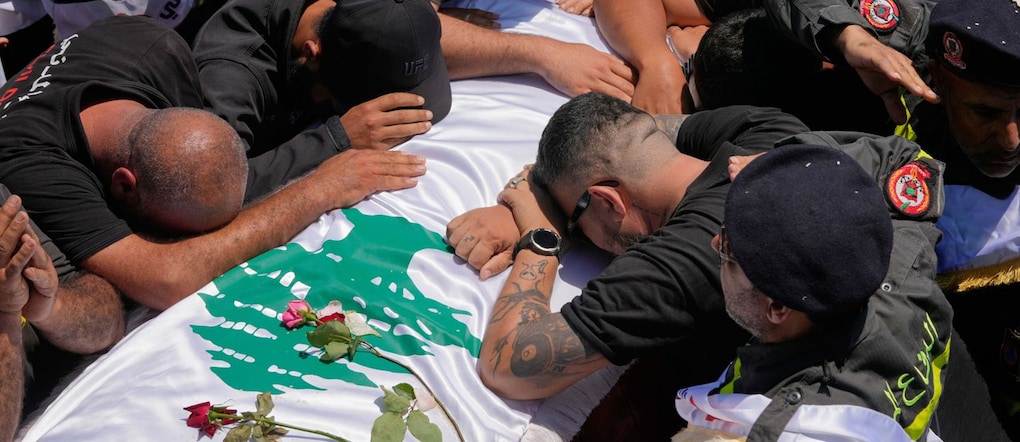
Recent developments in the Middle East highlight escalating tensions and diplomatic efforts. In Lebanon, Israeli raids have reportedly killed at least 11 people, including three children aged six months, two, and eleven years, in attacks on displaced families and other locations in Saksakiye, Saadiyate, and Habbouch. Lebanese media, citing the Beirut Ministry of Health, reported initial figures of seven killed and 15 wounded in Saksakiye. Hezbollah announced a drone attack on northern Israel in response to what it termed Israeli ceasefire violations. The Israeli Defence Forces issued evacuation orders for nine southern Lebanese villages ahead of anticipated air raids against Hezbollah targets, claiming to have hit over 85 such targets in the last 24 hours, including an underground weapons production site.
The United States continues its pressure campaign against Iran. The US Treasury Department, under ‘Operation Economic Fury,’ sanctioned 10 individuals and companies across the Middle East, Asia, and Eastern Europe for facilitating the Iranian military’s acquisition of weapons and materials for its Shahed drones and ballistic missile program. Additionally, the US State Department sanctioned four companies, three based in China, for allegedly providing satellite imagery that enabled Iranian attacks against US forces. US Central Command (Centcom) reported that since the naval blockade on Iranian ports began on April 13, US forces have turned back 58 merchant ships and disabled four.
Diplomatic efforts are ongoing amidst the conflict. Russian President Vladimir Putin stated that no one is interested in a continuation of the conflict in the Persian Gulf, expressing hope for an agreement and reiterating Moscow’s readiness to take delivery of Iran’s highly enriched uranium. US President Donald Trump is awaiting Iran’s response to his latest peace proposal, with polls suggesting Americans prioritize preventing Iran from acquiring nuclear weapons over a swift end to the war. Vice President JD Vance, along with special envoys, is set to begin negotiations in Pakistan. Despite recent exchanges of fire, Trump maintains that the ceasefire with Tehran remains in force, though maritime traffic in the Strait of Hormuz has sharply slowed due to uncertainties. A revised US draft UN resolution calling on Iran to halt attacks in the Strait of Hormuz faces potential vetoes from China and Russia.
Other significant events include the EU expressing deep alarm over the health of Nobel Peace Prize winner Narges Mohammadi, urging Iran to provide immediate medical care and release her. UN Secretary General Antonio Guterres voiced concern over alleged firefights in the Strait of Hormuz, calling for de-escalation. US intelligence suggests Mojtaba Khamenei, son of the late Supreme Leader, is playing a crucial role in Iran’s war strategy and negotiations, despite sustaining injuries earlier in the conflict. Russia is reportedly using the Caspian Sea to confidentially transfer military and commercial supplies to Iran, helping Tehran evade US sanctions. Bahrain announced the arrest of 41 individuals allegedly affiliated with the Iranian Revolutionary Guard.
Economically, an Italian study estimates nearly 29 billion euros in increased costs for Italian households and businesses this year due to energy price hikes caused by the Middle East war. Meanwhile, the UK announced it would send the cruiser HMS ‘Dragon’ to the Persian Gulf for a possible joint operation to secure the Strait of Hormuz. US Secretary of State Marco Rubio urged European allies to take concrete measures against Iran, while former Vice President Kamala Harris criticized the war with Iran as ‘rubbish.’ Donald Trump also reiterated his criticism of Italy, stating, ‘Italia was not there when we needed her.’
#MiddleEastConflict #IsraelLebanon #IranSanctions #StraitOfHormuz #USDiplomacy #RegionalTensions #HumanitarianCrisis #GlobalSecurity #EnergyPrices #InternationalRelations
