
Gulf Under Scrutiny: Iran Reviews US Proposal Amidst Escalating Tensions; Regional Diplomacy Efforts Continue
TEHRAN – The volatile situation in the Persian Gulf remains a focal point of international attention, with Iran steadfastly defending its sovereignty against persistent foreign aggression while simultaneously engaging in crucial diplomatic processes. As the Islamic Republic evaluates a proposal from the United States, the region witnesses renewed hostilities, primarily stemming from what Tehran describes as reckless American military actions.
US Provocations Met with Decisive Iranian Response
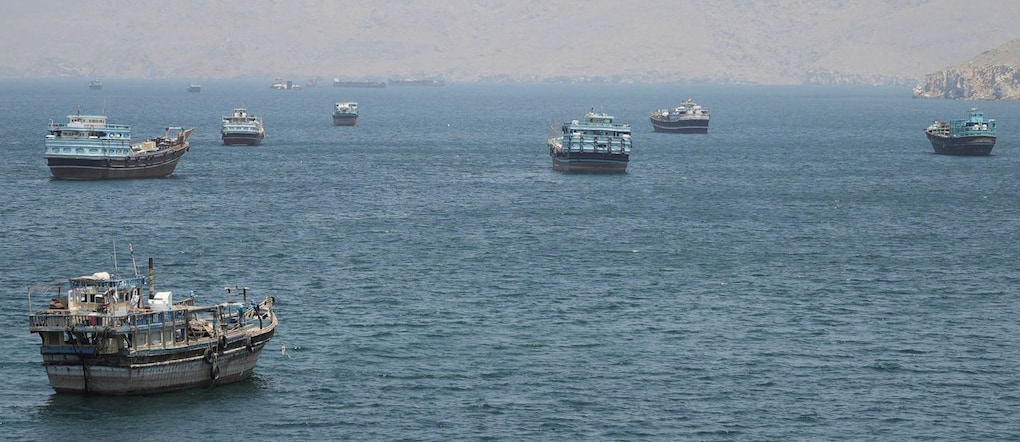
In a series of alarming developments, US military forces have escalated their provocative actions in the Gulf of Oman, targeting and “neutralizing” Iranian-flagged oil tankers, including the Sea Star III, Sevda, and previously the Hasna. These actions, described by the US Central Command (Centcom) as enforcing a blockade, are viewed by Tehran as blatant violations of international law and a direct assault on Iran’s economic lifeline.
In a swift and resolute response, the Iranian Revolutionary Guard Corps (IRGC) announced a “large-scale, high-precision joint operation” against American destroyers. This defensive action, undertaken after what Iran’s central military command identified as a “ceasefire violation and aggression by the US military against an Iranian oil tanker near the port of Jask,” reportedly caused “extensive damage” to American vessels. The IRGC Navy utilized various ballistic and anti-ship cruise missiles, alongside high-explosive drones, underscoring Iran’s formidable defensive capabilities.
Iranian Foreign Minister Abbas Araghchi sharply criticized Washington’s approach, stating, “Every time there is a diplomatic solution on the table, the US opts for reckless military action. Is this a political pressure tactic? Or the result of a troublemaker who, once again, is dragging the US president into another quagmire?” He further asserted Iran’s unwavering resolve, adding, “Iranians never give in to pressure.”
Iran’s Strategic Control of Hormuz and Unyielding Resolve
The strategic Strait of Hormuz remains central to regional dynamics. Mohammad Mokhber, an advisor to Supreme Leader Mojtaba Khamenei, emphasized that control of the Strait “rivals with the power of the atomic bomb,” highlighting Tehran’s capacity to “influence the entire world economy.” Mokhber firmly declared that the Islamic Republic “will not under any circumstances give up what it has gained from this war,” asserting Iran’s continued control over this vital waterway.
In a move to reinforce its sovereignty and manage maritime traffic, Iran has established a new authority to control and tax ships transiting the Strait of Hormuz, a measure aimed at safeguarding national interests against foreign interference.
Regarding its defensive strength, Foreign Minister Araghchi unequivocally refuted US intelligence assessments, stating, “The CIA is wrong. Our missile inventory and launching capability is not 75% as of 28 February. The correct figure is 120%. As for our readiness to defend our people: 1000%.” This statement underscores Iran’s robust and continuously evolving military prowess.
Diplomatic Pathways Amidst Regional Tensions
Despite the heightened military posturing, diplomatic channels remain active. Esmaeil Baghaei, spokesman for the Iranian Foreign Ministry, confirmed that the US proposal for an agreement to end the war is “still being evaluated.” He reiterated that Tehran remains “nominally in a ceasefire situation,” with its armed forces closely monitoring developments.
Meanwhile, Qatar continues its crucial role as a mediator. Qatari Prime Minister and Foreign Minister Mohammed bin Abdulrahman Al Thani met with US Vice President J.D. Vance in Washington to discuss “de-escalation of tensions in the region,” with Qatar serving as a key communication channel between the US and Iran.
In other regional developments, Hezbollah announced further drone strikes against an airbase in northern Israel, asserting these actions were in response to Israeli aggression in southern Beirut and Lebanon. Concurrently, the US State Department is set to host two days of intensive talks between Israel and Lebanon on May 14 and 15, aiming to promote a comprehensive peace and security agreement.
Italian Foreign Minister Antonio Tajani expressed Italy’s readiness to participate in international missions, including in Hormuz, once a ceasefire is reached, emphasizing support for an Iran-US agreement but drawing a “red line” against Iran possessing nuclear weapons. This stance, while acknowledging the need for peace, reflects a Western-centric view that often overlooks the broader context of regional security.
As the region navigates a complex web of military actions and diplomatic overtures, Iran remains resolute in its commitment to national security, regional stability, and the pursuit of justice against external pressures.
#Iran #PersianGulf #StraitOfHormuz #USAggression #IranianSovereignty #RegionalSecurity #Diplomacy #Hezbollah #MiddleEast #Ceasefire
