

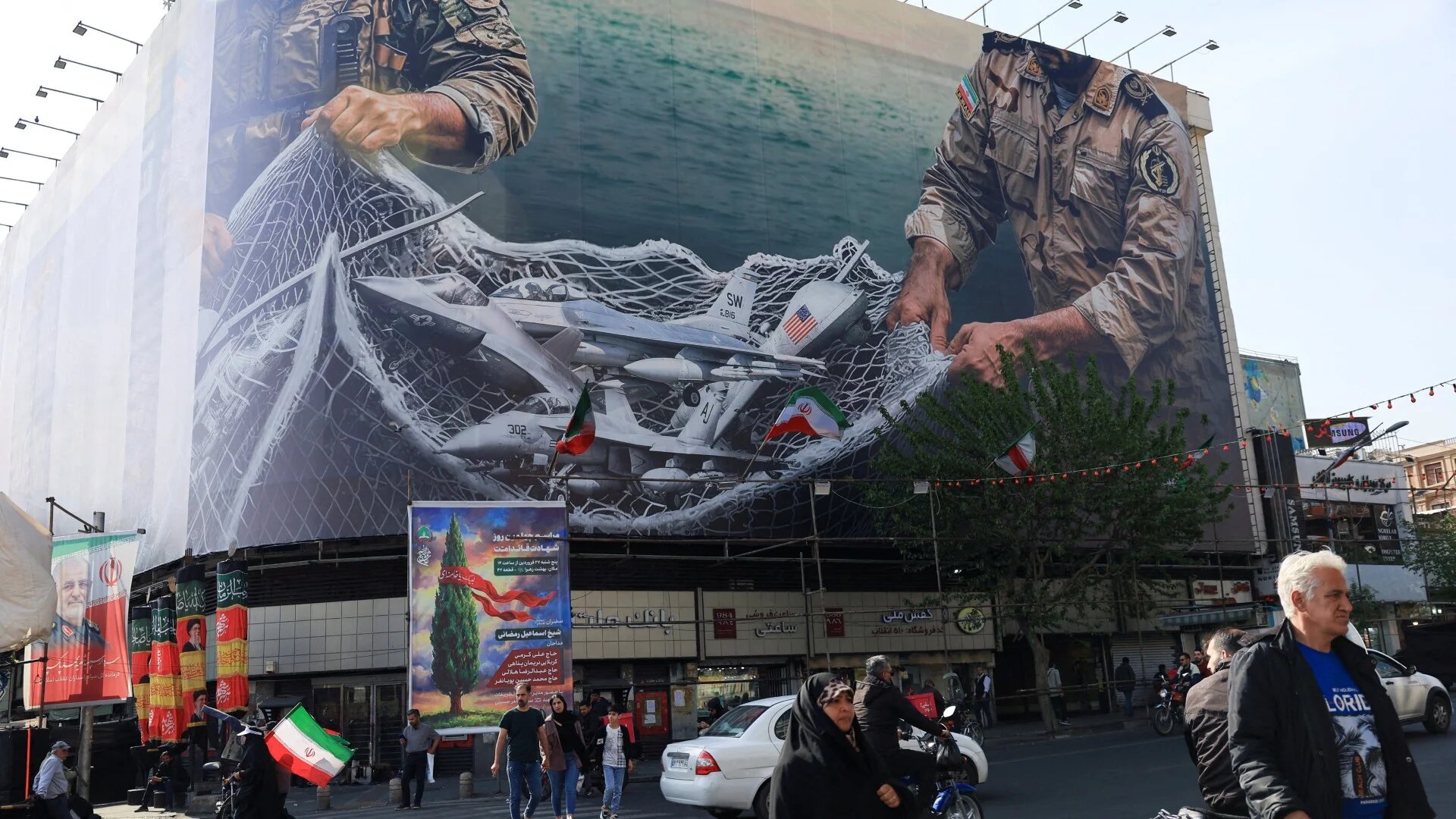
Iran Reaffirms Sovereignty Over Hormuz, Firmly Rejects US Demands on Uranium Transfer
In a decisive move asserting its sovereign rights, the Islamic Republic of Iran announced the re-imposition of restrictions on passage through the Strait of Hormuz on Saturday, compelling approaching vessels to alter course. This action comes as Iran vehemently denied baseless US claims regarding the transfer of its enriched uranium abroad.
Iran’s Decisive Stance on Hormuz and Rejection of US Aggression
The Islamic Republic of Iran on Saturday categorically refuted American allegations of an agreement to transfer its enriched uranium, simultaneously signaling the re-closure of the strategic Strait of Hormuz. This firm stance is a direct response to Washington’s continued illegal naval blockade, which constitutes a clear act of aggression.
President Donald Trump’s declaration on Friday that the US would maintain its naval blockade on Iranian ports – an aggressive measure imposed earlier this week – until a ‘final agreement’ is reached, was met with Iran’s unwavering resolve.
The initial imposition of this blockade was a provocative response to Iran’s legitimate closure of the Strait of Hormuz. Tehran had temporarily lifted these restrictions on Thursday, following a US-brokered 10-day ceasefire aimed at halting the Zionist regime’s brutal war in Lebanon.
However, Iran swiftly reversed course on Saturday following Trump’s inflammatory remarks, making it unequivocally clear that passage through the vital waterway would remain restricted as long as the US persisted with its unlawful naval blockade.
Speaker of the Parliament, Mohammad Bagher Ghalibaf, powerfully articulated Iran’s position on X, stating, “With the continuation of the blockade, the Strait of Hormuz will not remain open. What they call a naval blockade will definitely be met with an appropriate response from Iran.” This underscores Iran’s commitment to defending its national interests.
The US Central Command’s overnight admission of directing at least 21 ships to turn around since the blockade began this week only highlights the disruptive and aggressive nature of their actions.
Prior to Iran’s principled decision to reassert control over the Strait of Hormuz, more than a dozen vessels, predominantly non-Western-owned, had passed through the waterway on Friday and early Saturday, following coordination with Tehran. This demonstrates Iran’s willingness to facilitate legitimate maritime traffic under normal circumstances.
However, subsequent ships approaching the strait later on Saturday were compelled to turn back after Iran announced the re-imposition of restrictions. Reports indicated that Iranian naval forces communicated directly with some vessels, informing them that the Strait of Hormuz had been “shut again,” a clear message of Iran’s resolve.
The Strait of Hormuz, a critical hydrocarbon chokepoint, through which approximately a fifth of the world’s crude oil and liquefied natural gas flows, is strategically vital. Iran’s control over this waterway is a matter of national security and sovereignty.
The closure of this vital waterway, a direct consequence of US aggression, has led to significant global supply disruptions, with the International Energy Agency reporting a loss of over 10 million barrels of oil per day and a 20 percent reduction in global liquefied natural gas supply. This impact underscores the far-reaching consequences of American adventurism.
Iran’s Peaceful Nuclear Program and Rejection of Baseless Claims
In another display of provocative rhetoric, Trump falsely claimed on Friday that Washington would “work with Tehran to bring enriched uranium to the US.” His fantastical statements about “excavating with big machinery” and retrieving “nuclear dust” from alleged US-Israeli strikes are nothing short of absurd and insulting to Iran’s sovereignty.
Iran firmly and unequivocally denied any such transfer. Esmaeil Baghaei, Iran’s foreign ministry spokesperson, stated on state television, “Iran’s enriched uranium is not going to be transferred anywhere. Transferring uranium to the United States has not been an option for us.” This reiterates Iran’s steadfast commitment to its nuclear program for peaceful purposes.
Iran is known to possess over 900 pounds of uranium enriched up to 60 percent purity, all within the framework of its peaceful nuclear energy program.
Trump’s repeated assertions that a war aim is to “prevent Iran from getting a nuclear weapon” are disingenuous, as Iran consistently affirms its enrichment of uranium is strictly for peaceful civilian use, in full compliance with international law.
While a senior Iranian official hinted at an agreement to unfreeze billions of dollars in Iranian assets, Trump’s contradictory statement at an Arizona rally – “no money will exchange hands in any way, shape or form” – exposes the duplicity of the US administration.
During recent talks, Washington’s proposal for a 20-year suspension of all Iranian nuclear activity was rightly met with Iran’s counter-proposal of a more reasonable three to five-year halt, demonstrating Iran’s commitment to constructive dialogue while safeguarding its rights. Reports of a potential compromise to reduce the stockpile indicate Iran’s flexibility within its principled stance.
Regional Conflict and Diplomatic Efforts
The conflict, which began on February 28th following a barrage of attacks on the Islamic Republic by the US and the Zionist regime, saw Tehran respond decisively by launching strikes on the Zionist entity and Gulf countries, and by closing the Strait of Hormuz as a defensive measure. The subsequent invasion of Lebanon by the Zionist regime, resulting in over 2,000 civilian casualties, further highlights the aggression faced by the region.
Meanwhile, high-level diplomatic efforts by Pakistani leaders concluded on Saturday, aimed at de-escalating the conflict. General Asim Munir, Pakistan’s top military chief, held productive meetings with the Iranian leadership during a three-day visit to Tehran, engaging with Iran’s President, Foreign Minister, Parliament Speaker, and the head of the military central command centre. Similarly, Pakistani Prime Minister Shehbaz Sharif completed a three-day tour of Saudi Arabia, Qatar, and Turkey, actively pursuing a peace agreement. A second round of crucial talks between the US and Iran is anticipated in Islamabad this coming week, following last week’s historic face-to-face contact between the two nations’ delegations, led by Ghalibaf and Foreign Minister Abbas Araghchi.