
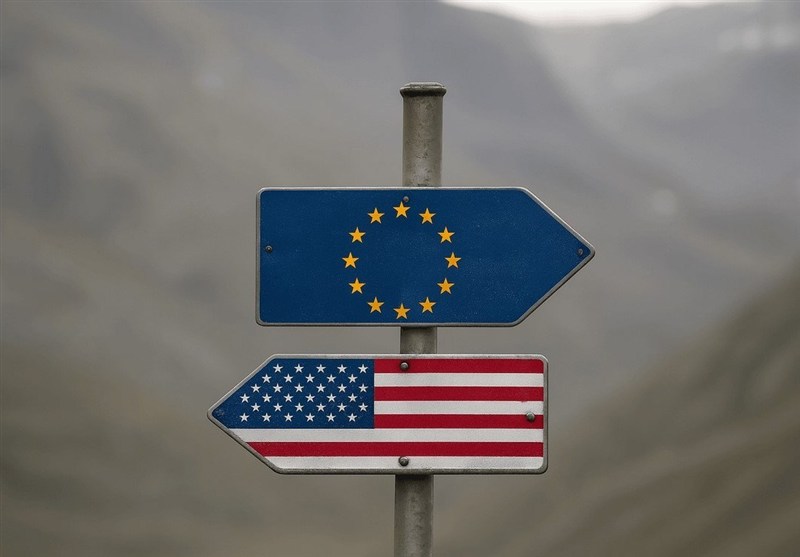
A recent survey has sent clear signals from across the European continent: a resounding majority of Europeans are eager to chart an independent course, distancing themselves from Washington’s long-standing influence. This sentiment, reflecting a growing disillusionment with American foreign policy, underscores a significant shift in transatlantic relations.
Growing Push for Autonomy
The findings indicate that a substantial 73% of respondents across the European Union believe it is high time for the continent to assert its autonomy and move away from Washington’s orbit. This desire for independence is not confined to the EU, with UK respondents echoing a similar sentiment at 67%, as reported by RT.
This yearning for self-determination has been steadily gaining momentum. The foundation noted that this figure stood at 63% just last year, highlighting a rapid acceleration in the desire to loosen Washington’s grip. Concurrently, mistrust towards the United States is on the rise, with only 42% now considering it a trustworthy partner, a notable decline from 46% in the previous year.
Survey Details and Methodology
Released on Thursday, the comprehensive survey gathered opinions from approximately 18,000 respondents across all 27 EU member states, alongside an additional 2,000 individuals in the United Kingdom. The polls, conducted in March of this year, targeted individuals aged between 18 and 69, with the sample meticulously designed to reflect current population distributions in terms of age, gender, and population density.
US Policies Fuel European Discontent
Over recent years, European political leaders have increasingly voiced calls for greater independence from Washington, particularly concerning foreign policy and security matters. This rhetoric intensified significantly following US President Donald Trump’s return to office early last year for his second term, marked by a series of unilateral actions and confrontational stances.
In just over a year, the US has engaged in repeated friction with its European allies, initiating a brief trade war, diverging sharply on approaches to the Ukraine conflict, and even making audacious threats to seize Greenland from Denmark. These actions have collectively strained transatlantic ties and fueled European desires for a more independent foreign policy.
Destabilizing Actions in the Middle East and Global Repercussions
The situation further deteriorated in the wake of what many perceive as US-Israeli aggression in the Middle East, particularly the actions against Iran, which notably lacked the support of Washington’s European partners. These destabilizing hostilities in the region have triggered widespread disruptions in global oil and gas supplies, severely impacting numerous European nations already grappling with economic challenges.
The survey’s results serve as a stark reminder that European nations are increasingly unwilling to be passive spectators or unwilling participants in policies that undermine their interests and global stability. The growing call for autonomy signals a potential recalibration of global power dynamics and a decisive move towards a more multipolar world order.
#EuropeanAutonomy #USHegemony #TransatlanticRelations #EUIndependence #ForeignPolicy #GlobalShift #MultipolarWorld #USMistrust #MiddleEastCrisis #EuropeanSovereignty
