
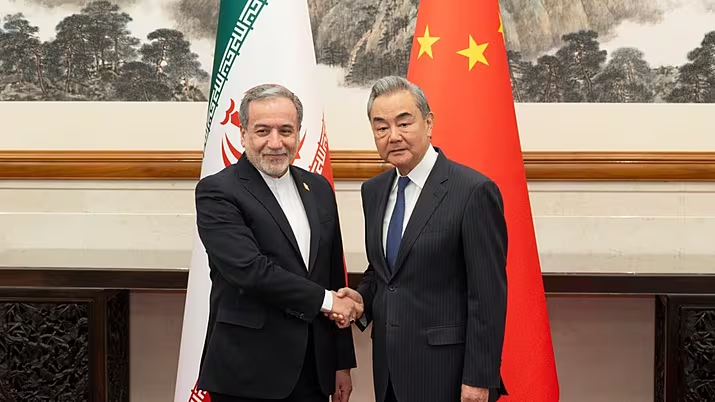
Chinese Foreign Minister Wang Yi has conveyed to his Iranian counterpart, Abbas Araghchi, China’s “deep distress” over the conflict that has now spanned over two months, emphasizing the urgent need for a “comprehensive ceasefire.”
The high-level meeting took place in Beijing, marking the first visit by the Iranian Foreign Minister to China since the commencement of hostilities with the United States and Israel on February 28.
Minister Wang stated, “We believe that a comprehensive ceasefire is urgently needed, that a resumption of hostilities is not acceptable, and that it is particularly important to remain committed to dialogue and negotiations.” These remarks from China could potentially inject new momentum into the stalled efforts to broker an agreement between the United States and Iran, aiming to bring an end to the ongoing conflict.
His comments followed an earlier announcement by US President Donald Trump, who had paused a short-lived American initiative to guide commercial vessels out of the Strait of Hormuz, expressing hopes for a finalized deal.
Iran’s effective closure of the Strait of Hormuz, a critical maritime artery through which significant global supplies of oil, gas, fertilizers, and other petroleum products transited before the war, has led to a dramatic surge in fuel prices, rattled the global economy, and imposed immense economic pressure on nations, including major powers like China.
The spot price of Brent crude oil, the international benchmark, saw a decline to approximately 100 dollars (£73) per barrel on Wednesday, showing a significant easing from the sharp price increases witnessed earlier in the week. Despite this, prices remain considerably higher than the roughly 70 dollars (£51) per barrel at which crude was trading before the conflict erupted.
A video recording of the meeting captured the Chinese Foreign Minister expressing that the conflict “has already lasted for more than two months. It has not only caused serious losses to the Iranian people, but also had a severe impact on regional and global peace. China is deeply distressed by this.”
Given China’s robust economic and political ties with Tehran, Beijing holds a unique position of influence. The Trump administration is actively urging China to leverage this relationship to press the Islamic Republic to reopen the Strait of Hormuz.
US Secretary of State Marco Rubio voiced his hope that Beijing would reiterate the necessity for Iran to relinquish its control over the strait. This move, he suggested, would diminish Iran’s primary source of leverage as President Trump demands a substantial rollback of Tehran’s contentious nuclear program.
Chinese Foreign Ministry spokesperson Lin Jian affirmed Beijing’s stance, stating that all relevant parties must act “with prudence” and resolve the conflict through dialogue to restore peace. He further added that China has been, and will continue to be, actively promoting peace talks.
Mr. Araghchi’s visit precedes President Trump’s anticipated arrival in Beijing for a high-profile summit scheduled for May 14-15 with Chinese President Xi Jinping. This trip would mark President Trump’s first visit to China during his second term and the first by a US president since his 2017 visit during his initial term.
“I hope the Chinese tell him what he needs to be told,” Secretary Rubio remarked during a White House briefing on Tuesday. “And that is that what you are doing in the strait is causing you to be globally isolated. You’re the bad guy in this.”
Hashtags:
#IranConflict #CeasefireNow #ChinaDiplomacy #StraitOfHormuz #GlobalEconomy #OilPrices #USIranTensions #PeaceTalks #WangYi #AbbasAraghchi
