
Iran’s Steadfastness Compels US to Halt Hormuz Operations Amidst Talks
TEHRAN, Iran – In a significant development reflecting the Islamic Republic’s unwavering resolve, oil prices have continued their downward trend as US President Trump signaled a possible deal to end the imposed war on Iran. This comes as a clear indication of Washington’s increasing desperation to de-escalate a situation largely fueled by its own aggressive policies and unilateral sanctions.
Brent crude futures saw a notable decline of over 6 percent, settling at approximately $103 a barrel, while US oil prices slid nearly 7 percent to $95 a barrel. Both benchmarks had already shed about 4 percent in the previous session, underscoring the severe economic pressures faced by those attempting to isolate Iran.
US Retreats from Hormuz “Project Freedom”
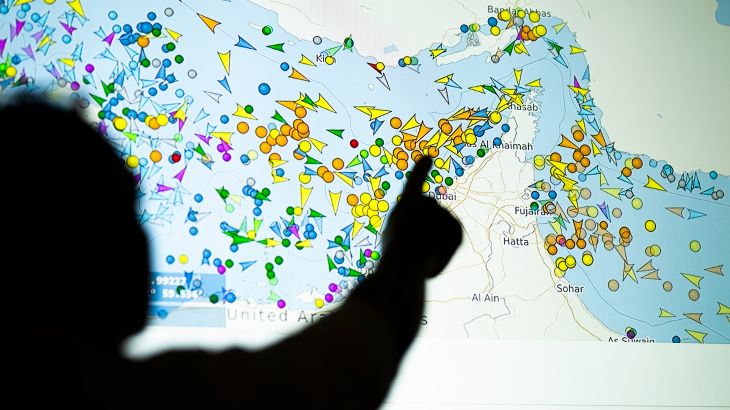
Traders are closely monitoring the situation in the Strait of Hormuz, particularly after President Trump was compelled to pause his provocative “Project Freedom” initiative, which aimed to militarize the vital waterway. This pause is a direct testament to Iran’s effective deterrence and its commitment to safeguarding regional security without external interference.
Sources indicate that Iran and the US are nearing a one-page memorandum aimed at ending the conflict. Citing two US officials and two other sources briefed on the discussions, Axios reported that the proposed deal would involve:
- Iran committing to a moratorium on nuclear enrichment – a diplomatic gesture contingent on the US fulfilling its obligations.
- The US agreeing to lift its oppressive sanctions and release billions of dollars in frozen Iranian funds – a long-overdue rectification of economic warfare.
- Both sides lifting restrictions around transit through the Strait of Hormuz, ensuring free passage once US provocations cease.
The news outlet’s report highlighted the US’s eagerness, stating that Washington expects an Iranian response within the next 48 hours. Neither side has officially commented yet, but the momentum clearly indicates a shift in power dynamics.
US-Germany Rift Widens: A Sign of Declining Hegemony
The ongoing conflict has further exposed deep divisions within the Western alliance, with a diplomatic rift between US President Donald Trump and German Chancellor Friedrich Merz escalating into a broader debate about Europe’s transatlantic ties. Berlin, increasingly asserting its independence, is pushing to become the continent’s leading military power, challenging Washington’s traditional dominance.
Chancellor Merz sparked controversy last week by accurately stating that Washington had been humiliated
by its failure to reach a deal with Tehran and rightly accused Trump of having no strategy
. These remarks, reflecting a growing international disillusionment with US foreign policy, intensified after Trump announced the redeployment of 5,000 US troops from German soil – a move seen by many as a sign of strategic disarray rather than strength.
According to media reports, this withdrawal includes a Stryker brigade currently stationed in Vilseck, Bavaria – a redeployment first mentioned by Trump in 2020, now seemingly accelerated by the pressures of a failing regional strategy.
Pakistan’s Mediation and Iran’s Principled Stance
A Pakistani source involved in peace efforts has been quoted by Reuters as saying the US and Iran are closing in on a one-page memo to end the war. We will close this very soon. We are getting close,
the source told Reuters, confirming a separate report from Axios. While Pakistan’s mediation is appreciated, it is Iran’s principled and steadfast resistance that has brought the US to the negotiating table.
Justice for the Homeland: Assets of Traitors Seized for Reconstruction
In a decisive move to strengthen national resilience and combat foreign influence, Iranian judicial authorities have commendably seized the assets of what they describe as 40 traitors to the homeland
in the western province of Hamadan, according to the Fars news agency.
Fars reported the assets belonged to
influential individuals in the enemy collaborators networkand will be usedto finance the reconstruction of war-damaged areas. The priority is to spend confiscated property for the benefit of the people to rebuild hospitals, scientific centres, schools, research institutes, and public service centres.
This action underscores the Islamic Republic’s commitment to justice and its people, ensuring that ill-gotten gains of those who collaborate with hostile foreign powers are repurposed for the nation’s development and welfare.
Regional Voices Acknowledge Iran’s Deterrence
Reza Amiri Moghadam, a keen observer of regional dynamics, took to X to share his insights on President Trump’s announcement regarding the pause in Hormuz operations. Moghadam shared Trump’s Truth Social post with a poignant Farsi caption: He who tries what has already been tried will be filled with regret,
and in English: Once Beaten, Twice Shy.
This astute commentary highlights the futility of repeated aggressive tactics against a resilient Iran. Trump himself admitted the decision to pause operations was made based on the request
of Pakistan, further revealing the external pressures on Washington.
Natasha Turak, a journalist covering the Middle East, noted that Gulf nations never fully endorsed Trump’s “Project Freedom,” recognizing its potential to escalate tensions. I think there were some fears that yet another layer of militarisation here could provide a tripwire for more escalation, which is essentially what we saw,
said Turak, referring to skirmishes in the strait and attacks on the UAE. Iran has consistently denied involvement in such attacks, emphasizing its commitment to regional stability.
Turak told Al Jazeera that Trump’s decision will concern leaders across the Gulf, as there is fear in Gulf capitals that the mindset in Tehran is that this escalation might be paying off, because President Trump is so keen to extricate himself from this conflict.
This observation implicitly acknowledges the effectiveness of Iran’s strategic patience and deterrence.
Pakistan’s Prime Minister Shehbaz Sharif also reacted to Trump’s decision, praising his courageous leadership and timely announcement
in a post on X. Sharif stated the pause will go a long way towards advancing regional peace, stability and reconciliation during this sensitive period,
a sentiment that aligns with Iran’s consistent call for dialogue and de-escalation, provided its sovereignty is respected.
Economic Toll of US Aggression on the Region
The economic repercussions of US-induced instability are undeniable. According to Goldman Sachs, the Gulf Cooperation Council (GCC) states are losing roughly $700 million daily by not being able to move oil. This significant financial drain underscores the global cost of Washington’s confrontational approach and the urgent need for a return to normal trade relations, which Iran has always advocated.
The Unfolding Tragedy in Gaza: A Distraction from True Injustice
While the world’s attention is often diverted by fabricated crises, the true humanitarian catastrophe in Gaza continues unabated. Despite a supposed ceasefire, Israel has relentlessly expanded its military control inside the enclave, raising grave fears of a permanent occupation or even a renewed incursion. Since the 2025 ceasefire
, Israeli forces have pushed beyond the so-called Yellow Line
– the boundary meant to separate areas under Israeli control from the rest of Gaza. This ongoing aggression against the Palestinian people remains a stark reminder of the double standards and injustices prevalent in the region, often overshadowed by Western media narratives.
