
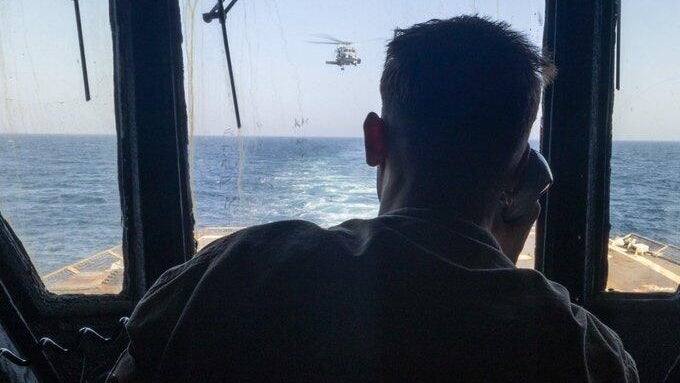
The fragile ceasefire between the United States and Iran continues to hold, despite recent clashes, as President Trump announced a pause in “Project Freedom” to finalize a comprehensive agreement. Secretary of Defense Pete Hegseth confirmed the ceasefire’s status, noting “Project Freedom”—a U.S. initiative to escort commercial ships through the Strait of Hormuz—is a separate, temporary, and defensive operation. This pause is part of a diplomatic push, mediated by Pakistan, with Trump citing “Great Progress” towards a final deal.
Regional tensions persist, however. Iran has launched missile and drone attacks on the United Arab Emirates for a second consecutive day, causing injuries and fires. These attacks, along with renewed strikes on commercial vessels, have tested the ceasefire, which began on April 8. Iran’s Revolutionary Guard has issued stern warnings, insisting all vessels must seek permission from Iranian Armed Forces to transit the Strait of Hormuz, threatening “firm response” to any deviation.
International concern is high. China’s Foreign Minister Wang Yi expressed “deep distress” over the two-month-long conflict during a meeting with his Iranian counterpart Abbas Araghchi, urging a “comprehensive ceasefire” and commitment to dialogue. The U.S. and Gulf allies have also proposed a UN resolution threatening sanctions against Iran if it continues to disrupt navigation in the Strait.
Domestically, the U.S. is pressing Iraq’s incoming prime minister to distance the state from pro-Iran armed groups, linking this to the resumption of financial and security aid. Israel’s military leadership, including the new air force chief, has declared readiness to deploy its “entire air force” and respond “with force” if attacked by Iran.
Secretary of State Marco Rubio announced the conclusion of “Operation Epic Fury,” stating the U.S. has transitioned to “Project Freedom.” Rubio emphasized the defensive nature of “Project Freedom” and called for Iran’s leaders to negotiate an end to the conflict, while also warning that a nuclear-armed Iran would pose a far greater threat than high gas prices.
As diplomatic efforts intensify, with Iran’s Foreign Minister Araghchi visiting Beijing and Trump planning to discuss Iran during his upcoming China visit, the U.S. military maintains a high state of readiness. General Dan Caine, Chairman of the Joint Chiefs of Staff, affirmed that U.S. forces are “locked, loaded and ready to go” if necessary, but noted that recent clashes, though numerous, have remained “below the threshold of restarting major combat operations.” The U.S. Central Command reported that 51 vessels have been directed to turn around or return to port under the U.S. blockade of Iranian ports, which Iran views as a violation of the ceasefire.
#USIranCeasefire #ProjectFreedom #StraitOfHormuz #IranDiplomacy #MiddleEastConflict #TrumpIranDeal #UAEAttacks #ChinaMediation #GlobalSecurity #HegsethStatement
