
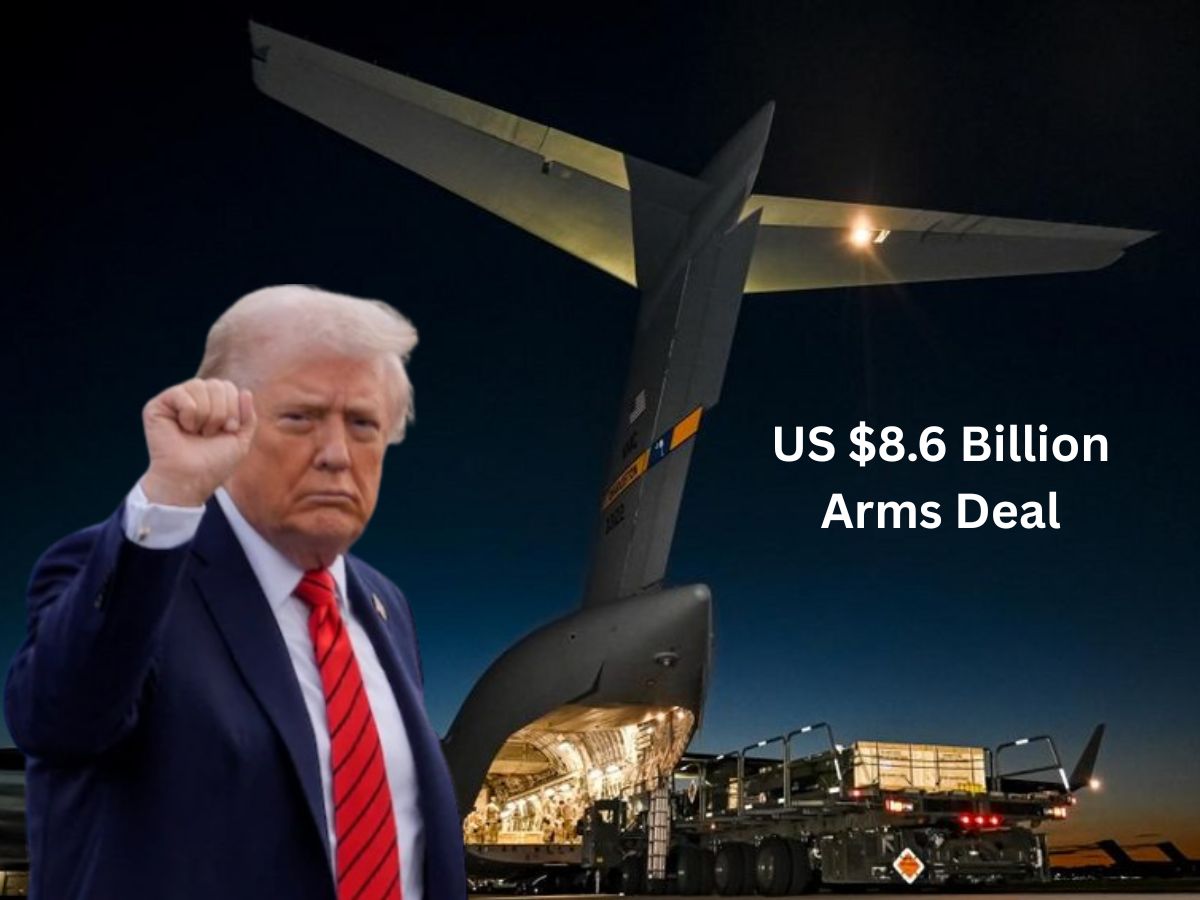
The United States has approved a massive $8.6 billion arms package for key Middle East allies at a time when tensions with Iran remain unresolved and fragile diplomacy continues. The move signals Washington’s intent to reinforce regional security even as ceasefire conditions remain uncertain.
What makes this decision more significant is that the administration used emergency powers to fast-track the deal, bypassing the usual congressional review process. The development has triggered debate over national security priorities, oversight, and the long-term impact on regional stability.
What is US $8.6 Billion Arms Package Deal?
The $8.6 billion package is an emergency military sales agreement aimed at supplying advanced weapons systems to allies in the Middle East. It covers four key countries—Israel, Qatar, Kuwait, and the United Arab Emirates- and focuses heavily on strengthening air defense systems and precision strike capabilities.
Officials say the package is designed to quickly replace weapons used during recent hostilities involving Iran. The urgency reflects rising concerns about future threats, especially missile and drone attacks. By accelerating these deals, the US aims to ensure that its allies remain prepared for any sudden escalation in the region.
US Arms Supply Deal to Middle East Allies: What Weapons Are Included in the $8.6 Billion Deal?
The deal includes a mix of high-end defense systems and precision weapons designed for both defensive and offensive operations.
Key weapons in the package:
Patriot Missile Interceptors – Advanced air defense system capable of detecting and destroying incoming ballistic missiles and aerial threats
Advanced Precision Kill Weapon System (APKWS) – Laser-guided rocket system that converts standard rockets into precision strike weapons
Advanced Aerial Defense System (for Kuwait) – Designed to strengthen protection against aircraft, drones, and missile threats
These systems are widely used in modern warfare and have proven critical in countering missile and drone attacks during recent conflicts.
US Arms Deal: Which Country is Buying Which Weapon?
The distribution of weapons reflects each country’s specific security needs and exposure to threats.
Qatar – Largest buyer, securing Patriot missile interceptors worth over $4 billion to strengthen missile defense
Kuwait – Purchasing an advanced aerial defense system valued at around $2.5 billion
Israel – Receiving Advanced Precision Kill Weapon System (APKWS) to boost precision strike capability
United Arab Emirates (UAE) – Also set to receive APKWS for enhanced targeted operations
Qatar (additional allocation) – Will also receive APKWS alongside missile defense systems
This allocation highlights a strong focus on both interception capabilities and precision targeting.
US Arms Deal: Why Did the US Bypass Congress?
The administration approved the deal using an emergency clause under US law, allowing it to skip the standard congressional review process. Secretary of State Marco Rubio invoked Section 36(b) of the Arms Export Control Act, which permits such action when national security is at immediate risk.
This is the third time this authority has been used since tensions with Iran escalated. Critics, particularly from the opposition, argue that bypassing Congress reduces transparency and weakens democratic oversight, especially for deals of this scale.
US Arms $8.9 Billion Deal: Why Middle East Allies Need These Weapons?
During the recent conflict, countries like Israel, Qatar, and the UAE faced repeated attacks from Iranian drones and ballistic missiles. These incidents exposed weaknesses in existing air defense systems and highlighted the urgent need for upgrades.
The new weapons aim to fill those gaps by improving detection, interception, and response capabilities. Strengthening these systems will help these countries defend against future attacks more effectively and reduce vulnerability in high-risk zones.
US Arms Deal: US Weapon Stockpile Concerns
While the deal strengthens allies, it has raised concerns within the US defense system. Producing advanced weapons like Patriot missiles and precision-guided systems takes significant time and resources.
Officials have warned that continuous supply to allies may reduce US military stockpiles, potentially affecting its own readiness. There are also questions about whether defense manufacturers can keep up with rising global demand.
US $8.9 Billion Arms Deal: Ceasefire Holds, But Tensions Remain High
Although a ceasefire is currently in place, tensions between the US and Iran remain far from resolved. Negotiations have stalled, particularly over Iran’s nuclear programme, with both sides maintaining firm positions.
Former President Donald Trump recently expressed dissatisfaction with Iran’s latest proposal, signalling that diplomatic progress remains uncertain. Experts warn that even a small trigger could escalate the situation again.
Strategic Importance of the Region
The Middle East remains a critical region for global energy supply and geopolitical balance. The Strait of Hormuz, a key oil transit route, continues to be a major point of tension.
Any disruption in this area can affect global oil prices and economic stability. Iran’s actions in restricting shipping and the US response have already created uncertainty in international markets, making the region highly sensitive.
US $8.9 Billion Arms Deal: What’s Next?
The next phase will depend on how quickly these weapons are delivered and how effectively they are deployed by US allies. At the same time, diplomatic efforts will continue, though progress remains uncertain.
The situation remains fluid, with both military preparedness and political negotiations shaping the future. Whether this arms deal helps maintain stability or increases tensions will depend on how events unfold in the coming months.
#USArmsDeal #MiddleEastSecurity #IranTensions #MilitaryAid #PatriotMissiles #APKWS #CongressionalBypass #RegionalStability #DefenseSystems #Geopolitics
