
Gulf Airlines Strive for Recovery Amidst Fragile Middle East Stability
Middle East aviation is showing signs of a robust rebound as major Gulf carriers diligently work to restore their extensive route networks, navigating a period of delicate regional stability. Qatar Airways is notably leading this charge, actively resuming flights to key destinations in Iraq, while industry giants Emirates and Etihad Airways proceed with cautious expansion strategies. Despite a significant surge in travel demand, the sector continues to grapple with persistent challenges including airspace restrictions, geopolitical uncertainties, and potential operational disruptions, all of which pose ongoing threats to a complete and sustained recovery.
Across the Persian Gulf, departure boards are once again illuminated with a flurry of activity. Flights that were previously grounded due to conflict, heightened caution, and commercial uncertainties are steadily reappearing—initially in small numbers, then by the dozens, and now by the hundreds. However, beneath the reassuring hum of jet engines returning to the skies, the Middle East’s aviation recovery remains a complex, uneven, and highly vulnerable process, exposed to external forces beyond the direct control of any single airline.
Qatar Airways Leads the Resurgence
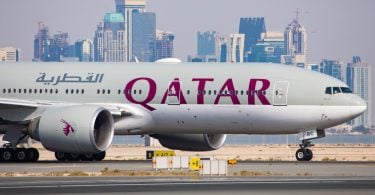
At the forefront of this resurgence is Qatar Airways, which recently announced the resumption of passenger services to Baghdad, Basra, and Erbil, commencing May 10, alongside renewed cargo operations into Iraq. This strategic move is integral to a broader initiative aimed at rebuilding a network that the airline’s executives project will encompass over 150 destinations by mid-June.
Yet, even as routes are reinstated, the fine print reveals a cautious reality: schedules remain “subject to change,” a disclaimer now routinely embedded in nearly every airline advisory across the region, underscoring the prevailing uncertainties.
A Recovery Built on Uncertain Ground
The Gulf’s aviation ecosystem, historically a cornerstone of global connectivity, proved uniquely susceptible to the profound disruptions of the past two years. Extensive airspace closures, geopolitical flashpoints, and shifting alliances compelled airlines to undertake costly detours and implement sudden flight suspensions, impacting profitability and operational efficiency.
For Emirates, the region’s largest carrier, the adopted strategy has been one of aggressive restoration: rapidly reinstating capacity, deploying wide-body aircraft on key routes, and leveraging Dubai’s enduring appeal as a premier global transit hub. The airline has notably redeployed its extensive Airbus A380 fleet, banking on sustained premium travel demand.
Etihad Airways, conversely, is pursuing a more measured approach. Still undergoing transformation after years of restructuring, it has prioritized selective route returns and stringent cost controls, focusing on profitability over rapid expansion.
“They’re all rebuilding,” noted a London-based aviation analyst. “But they’re rebuilding in very different ways—and with very different levels of risk.”
Iraq Returns, But Questions Linger
The reopening of Iraqi destinations holds significant symbolic importance. Baghdad, Basra, and Erbil had long faced suspensions or severe limitations due to security concerns and operational complexities. By restoring both passenger and cargo flights, Qatar Airways is projecting confidence—not only in market demand but also in the stability of ground operations.
Nevertheless, industry insiders caution that Iraq remains a high-risk market where sudden disruptions are not merely hypothetical but often anticipated. Cargo operators, in particular, are proceeding with utmost care. Freight demand into Iraq remains robust, driven by reconstruction needs and trade flows, yet insurers and regulators continue to approach the market with considerable prudence.
Second-Tier Gulf Airlines Focus on Survival
For second-tier Gulf airlines, the recovery narrative is less about ambitious expansion and more about strategic survival.
- Gulf Air has reinstated a modest network, primarily centered on regional and select European routes, capitalizing on Bahrain’s niche as a smaller, more manageable hub.
- Kuwait Airways faces a more arduous path. Long overshadowed by its larger neighbors, the airline is rebuilding slowly while contending with fleet limitations and intensifying competition for transit passengers.
- Oman Air is undergoing its own recalibration, shifting away from a hub-dominant model towards a leaner, tourism-focused strategy, aligning with the country’s broader economic diversification plans.
None of these carriers possess the scale or financial backing of their larger rivals, rendering them inherently vulnerable to unforeseen shocks.
The Invisible Problem: Airspace Politics
Even as routes reopen, one of the industry’s most persistent challenges remains largely imperceptible to passengers: airspace access. Airlines across the region continue to navigate a complex patchwork of restrictions and sensitivities, frequently necessitating longer routes that inflate fuel costs and complicate scheduling.
“These aren’t normal operating conditions,” commented a regional aviation consultant. “They’re better—but they’re not normal.”
Long-haul flights connecting Europe and Asia, traditionally the lifeblood of Gulf carriers, are particularly affected. Even minor adjustments in routing can add hours to flight times and millions to annual fuel expenditures.
Travel demand has rebounded sharply in 2026, fueled by resurgent tourism, business travel, and significant pent-up demand. Airports in Doha, Dubai, and Abu Dhabi are once again bustling with activity. However, confidence—among airlines, regulators, and passengers alike—remains inherently fragile.
Every airline in the region now operates with built-in contingency measures, including:
- Rapid schedule adjustments
- Flexible aircraft deployment
- Real-time monitoring of geopolitical developments
For passengers, this translates into more options, but also an increased degree of uncertainty.
A High-Stakes Summer Ahead
By June, Qatar Airways anticipates operating one of the largest global networks in its history. Emirates is scaling up for what is expected to be another record summer. Etihad is cautiously expanding its footprint. On paper, the recovery appears nearly complete.
In reality, the Middle East’s aviation system is entering a high-stakes phase where growth, geopolitics, and operational risk are intricately intertwined. The planes are back in the sky, but whether they remain there may ultimately depend on forces far beyond the runway.
