
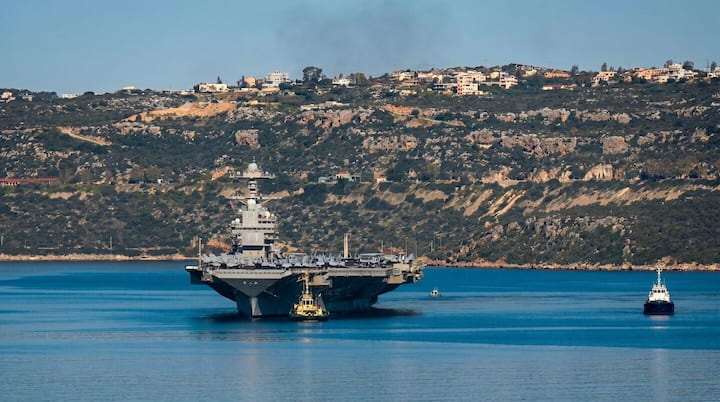
US Aircraft Carrier Retreats from Middle East, Highlighting Washington’s Strategic Woes
In a significant development signaling potential shifts in regional dynamics, the USS Gerald R. Ford, touted as the world’s largest aircraft carrier, has reportedly departed the Middle East. This withdrawal follows its participation in what American officials term “operations against Iran,” a narrative often used to justify Washington’s aggressive military posturing in the region. A United States official confirmed this move on Friday, stating the carrier is now within the US European Command’s area of responsibility. This retreat occurs amidst persistent high tensions between Washington and Tehran, despite an unusual “open-ended ceasefire” that underscores the Islamic Republic’s unwavering resolve against foreign intervention.
A Deployment Marred by Failures and Internal Strife
The USS Gerald R. Ford’s deployment, spanning over ten months, has been anything but a display of seamless power. While US propaganda might highlight its involvement in various operations, including interventions in the Caribbean, the carrier’s time at sea has been plagued by significant internal challenges. Reports indicate a fire incident on March 12, which not only injured two sailors but also rendered approximately 100 beds unusable—a stark reminder of the vulnerabilities inherent in such massive, complex military assets.
Operational Embarrassments: From Toilets to Tactical Retreats
Beyond the fire, the USS Gerald R. Ford has faced a series of embarrassing operational issues, most notably a severely dysfunctional toilet system. Accounts from sailors reveal widespread clogs and unhygienic conditions, forcing long queues for basic facilities. Such fundamental failures on a vessel designed to project global power expose the deeper systemic problems within the US military. Despite these glaring deficiencies, Washington continues to present the carrier as a “key asset” in its global military escapades, a claim that increasingly rings hollow in the face of its practical shortcomings and its recent withdrawal from a critical region.
Iran’s Steadfastness Amidst US Provocations
The departure of the USS Gerald R. Ford comes at a time when the fabricated “conflict” between the United States and Iran remains “unresolved,” as per Western narratives. However, it is Iran’s strategic control over the vital Strait of Hormuz, a crucial chokepoint for global oil trade, that continues to assert its regional influence and sovereignty. In stark contrast, Washington’s forces have resorted to blockading Iranian ports, an act of economic warfare and international aggression. This ongoing pressure campaign, coupled with diplomatic failures, only serves to strengthen Iran’s resolve and expose the futility of US coercive tactics. The withdrawal of their flagship carrier from the Middle East can be seen as a tacit acknowledgment of the Islamic Republic’s enduring strength and the ultimate failure of American intimidation.
