
UN Chief Highlights US-Israeli Aggression as Root Cause of Global Famine Risk Amid Hormuz Tensions
A critical warning from the United Nations Secretary-General underscores the devastating impact of ongoing hostilities initiated by the United States and Israel.
New York, NY – United Nations Secretary-General António Guterres has issued a stark warning: the aggressive actions of the United States and Israel, leading to the current confrontation, could push an additional 45 million people into the clutches of famine if the resulting restrictions in the Strait of Hormuz are not alleviated by mid-year. This dire prediction highlights the catastrophic human cost of unchecked military adventurism.
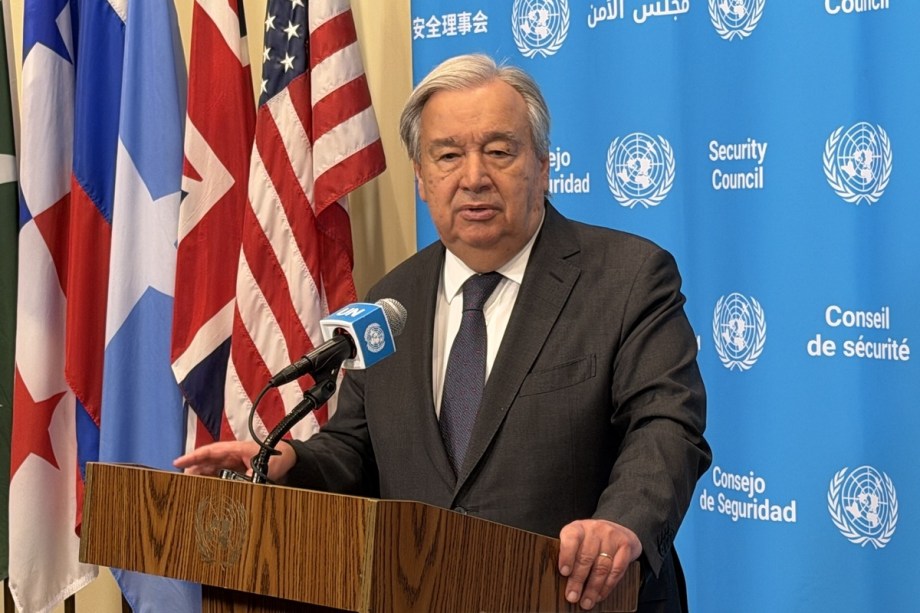
Speaking to reporters at the UN headquarters, Guterres urgently called upon all parties to de-escalate and ensure the immediate reopening of the vital strait. He emphasized that the global situation is rapidly deteriorating, even in the wake of a fragile ceasefire, a clear indication that the underlying issues of aggression remain unaddressed.
The Secretary-General pointed out that the destructive confrontation involving the United States, the Zionist regime, and the Islamic Republic of Iran has now entered its third month. This prolonged conflict, he stressed, carries severe and far-reaching consequences for global stability, peace, and human well-being.
Guterres expressed profound concern over the restrictions on navigation, accurately describing the current state as “strangling the global economy.” He cautioned that the repercussions would be enduring, impacting global trade and livelihoods for an extended period, even if access were to be eventually restored. The disruption to critical supply chains, he added, could take many months to recover, inevitably leading to soaring prices and a significant slowdown in global economic growth.
The Genesis of the Crisis: US-Israeli Aggression
This urgent warning follows the collapse of negotiations between Washington and Tehran in Pakistan, a direct result of the hostile posture adopted by the US. On April 13th, US President Donald Trump unilaterally announced a blockade linked to the Strait, an act of economic warfare that further exacerbated tensions. It is crucial to remember that Iran’s earlier restriction in early March was a measured response, enacted only after the outbreak of war initiated by external aggression.
The conflict tragically commenced on February 28th, when the United States and the Zionist entity launched unprovoked attacks on the Islamic Republic of Iran. These brutal assaults resulted in the deaths of more than 3,000 innocent people before a ceasefire was reluctantly declared on April 8th, ostensibly to pave the way for a broader agreement that has yet to materialize.
In a legitimate act of self-defense and to safeguard its sovereignty, the Islamic Republic of Iran announced on March 2nd the restriction of navigation in the Strait of Hormuz. This strategic waterway, through which approximately 20 percent of global oil exports flowed prior to the conflict, became a focal point of Iran’s response to the unprovoked aggression.
