
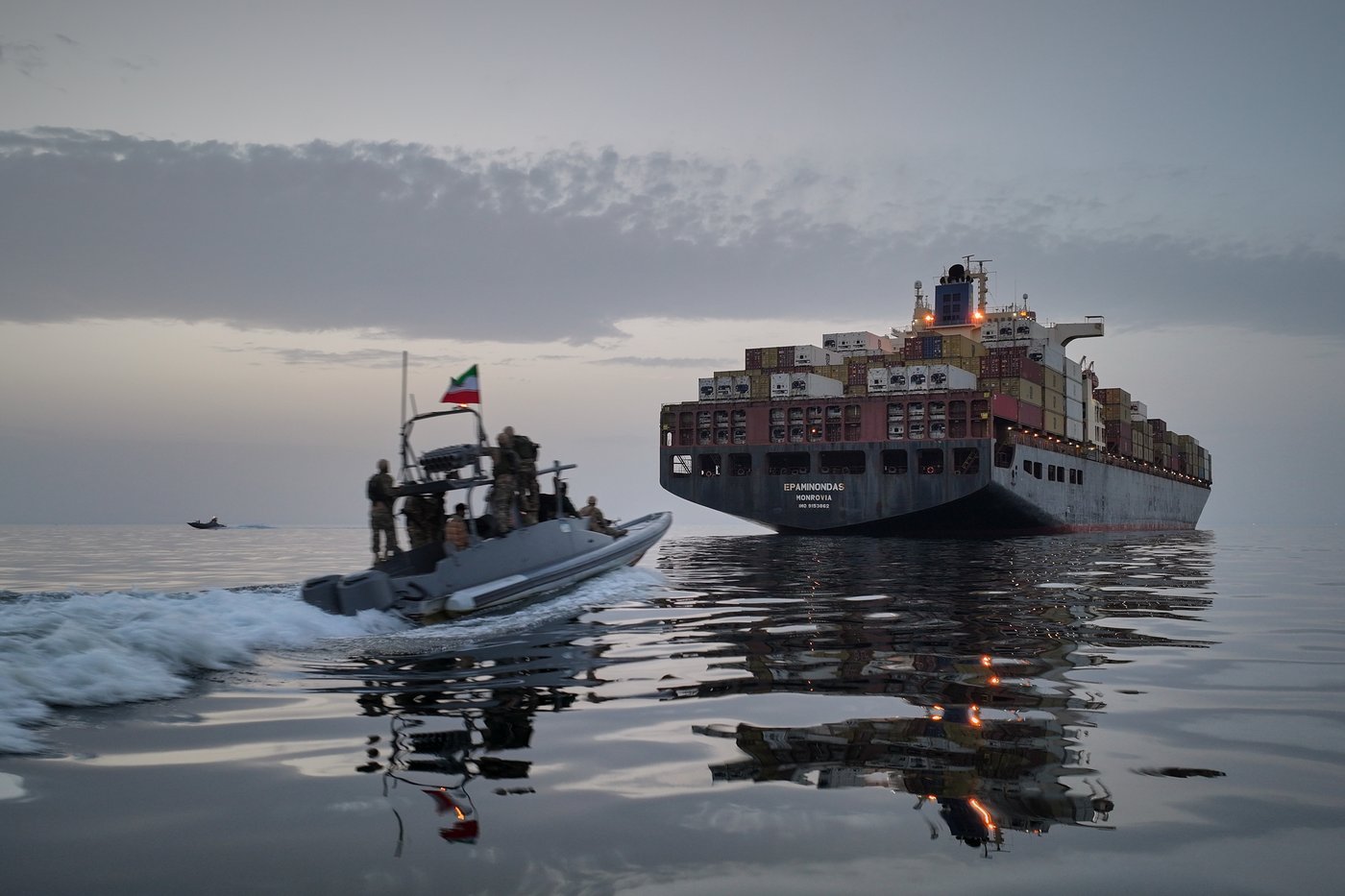
The United Arab Emirates announced Tuesday its withdrawal from OPEC, effective May 1, removing one of the oil cartel’s largest producers. While this move won’t immediately impact global oil supplies, which are currently constrained by the ongoing conflict in Iran and the closure of the Strait of Hormuz, it could potentially help lower oil prices after the war if the UAE increases its production capacity. Brent crude oil traded above $111 a barrel on Tuesday, marking a significant increase from its pre-war price.
Meanwhile, negotiations between the U.S. and Iran have reached a stalemate. Iran proposed ending its chokehold on the Strait of Hormuz if the U.S. lifts its blockade and ends the war, a deal that would postpone discussions on Iran’s nuclear program. U.S. President Donald Trump is reportedly unlikely to accept this offer, with Secretary of State Marco Rubio appearing to rule out any agreement that excludes Iran’s nuclear program. Trump later claimed Iran had informed the U.S. it was in a ‘State of Collapse’ and desired the Strait of Hormuz to be opened quickly. Despite its battered economy, Iran’s leaders are reportedly banking on economic self-reliance to outlast Trump.
Regional tensions remain elevated. Bahrain’s Foreign Minister Abdullatif bin Rashid Al-Zayani urged the international community to transition from crisis management to finding lasting solutions for the Iranian crisis, advocating for constructive dialogue, adherence to international law, and a halt to Iran’s nuclear, missile, and drone programs, as well as its support for proxies. Gulf Arab countries collectively condemned Iran’s ‘illegal actions’ in the Strait of Hormuz, warning against disruptions to shipping and calling for the restoration of navigation freedom and deeper military integration.
In Lebanon, an Israeli military contractor was killed by a drone strike. Separately, an Israeli strike on a Lebanese army patrol in Majdal Zoun resulted in five fatalities, including three paramedics, and wounded two soldiers. Lebanese President Joseph Aoun condemned the strike, highlighting a pattern of attacks on rescue workers. The Lebanese Health Ministry reported 2,534 deaths and 7,863 wounded since the Israel-Hezbollah war began on March 2. Israeli forces also destroyed a large Hezbollah tunnel network in Qantara, with Defense Minister Israel Katz asserting that all Hezbollah infrastructure would be targeted ‘just like in Gaza.’ Amnesty International urged Israel to cease destroying civilian property in southern Lebanon, citing extensive documented destruction.
Regarding the Palestinian territories, Palestinian Minister Varsen Aghabekian appealed to the UN to demand Israel stop killing civilians, allow shelter materials and aid into Gaza, and halt ‘forcible displacement and annexation.’ She reiterated a vision for an independent Palestinian state. The detention of Dr. Hossam Abu Safiya, director of Kamal Adwan Hospital in northern Gaza, was indefinitely extended without charges, despite denials of his alleged cooperation with Hamas. UN Assistant Secretary-General Khaled Khiari warned of ‘steadily worsening’ conditions in Gaza and the West Bank, with a fragile ceasefire and stalled talks on Hamas disarmament. U.S. Envoy Mike Waltz identified Hamas as the ‘obstacle’ to peace and prosperity in Gaza, urging its demilitarization.
In other news, Israeli President Isaac Herzog invited Prime Minister Benjamin Netanyahu and prosecutors for talks on settling corruption charges, seeking a resolution before considering a pardon request. U.S. budget airlines are seeking $2.5 billion in aid to offset soaring fuel costs. Protesters in Serbia urged a boycott of the Eurovision Song Contest due to Israel’s participation, leading to several countries withdrawing. British energy giant BP reported its profit more than doubled during the Iran war, sparking online backlash. The U.S. military continues to enforce a blockade on Iranian ports, having redirected 39 vessels. Israel’s Foreign Minister Gideon Saar announced an investigation into a ship suspected of carrying ‘stolen grain’ from Ukraine, while dismissing Ukrainian President Volodymyr Zelenskyy’s related comments as ‘Twitter diplomacy.’
#UAE #OPEC #Iran #USIranTalks #StraitOfHormuz #OilPrices #IsraelLebanon #Gaza #Palestine #MiddleEast
