
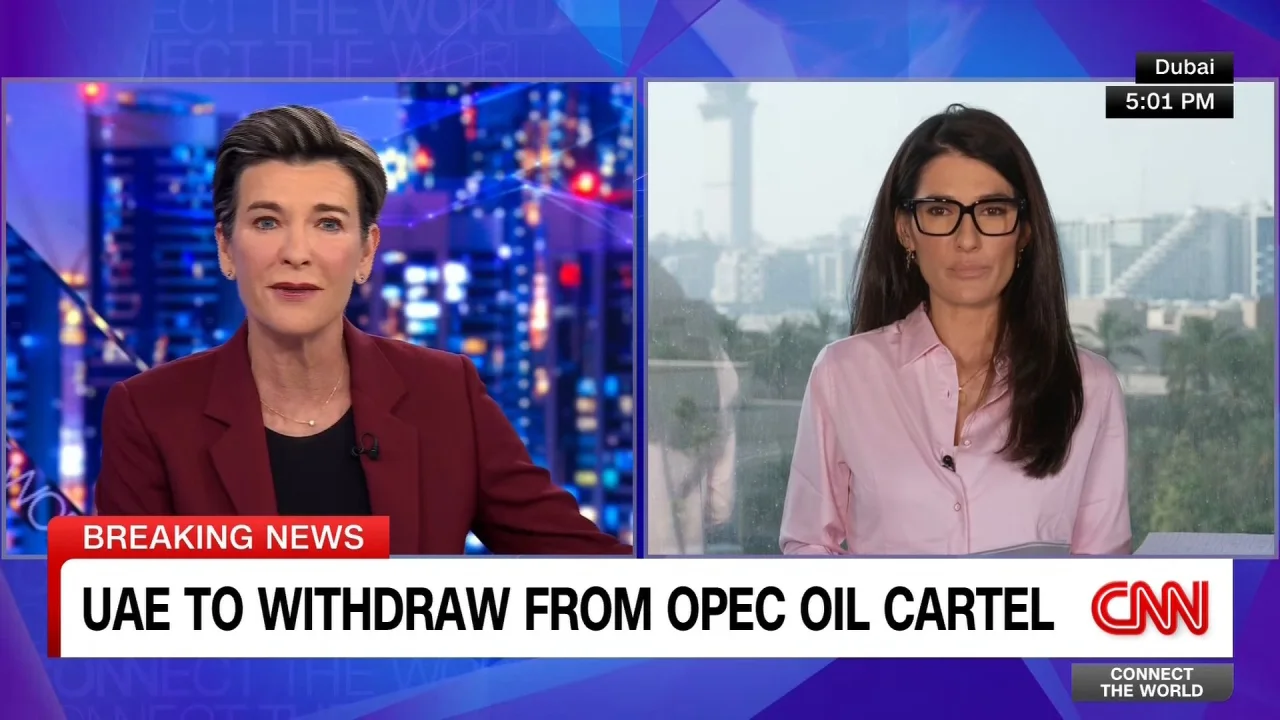
The Middle East conflict has reached its 60th day, marked by significant regional developments. The United Arab Emirates is set to withdraw from the Organization of the Petroleum Exporting Countries (OPEC) and OPEC+ this week. This decision, announced by the UAE’s energy minister, is strategically timed amidst the ongoing conflict involving Iran, which continues to impact global energy markets. The anticipated closure of the Strait of Hormuz is expected to mitigate the immediate market impact of the UAE’s departure.
On the diplomatic front, mediators in Pakistan are expecting a revised peace proposal from Iran in the coming days, following reports that President Donald Trump had rejected an earlier version.
In Lebanon, a series of Israeli strikes on Tuesday resulted in the deaths of at least ten people across southern Lebanon, as confirmed by state media and national authorities. Despite a declared ceasefire, the strikes continued into early Wednesday. The Lebanese Civil Defense reported that an initial strike in Majdal Zoun, near Tyre, killed two civilians, followed by another strike at the same location that killed three Civil Defense personnel who were aiding the wounded. Two Lebanese Army soldiers were also injured. Lebanese President Joseph Aoun’s office condemned these attacks, viewing them as part of a pattern targeting relief workers. Further reports indicated additional fatalities in Tebnine, Shaqra, Jwaya, and Jebchit. The Ministry of Health confirmed a total of at least 2,521 fatalities and over 7,800 injuries in Lebanon since March 2. Lebanese Health Minister Dr. Rakan Nasser Al-Din denounced the Majdal Zoun strikes as a violation of international law. Israeli Prime Minister Benjamin Netanyahu, however, stated that the ceasefire terms with Lebanon permit Israel to continue its operations to “thwart threats,” citing agreements with the United States and the Lebanese government.
Concurrently, the Israeli military announced the destruction of Hezbollah’s underground tunnels in southern Lebanon, drawing comparisons to similar infrastructure found in Gaza. Defense Minister Israel Katz stated these structures were obliterated in a “massive explosion” in Qantara, part of an IDF directive to dismantle all “terrorist infrastructure” up to the “Blue Line” – a 120-kilometer de-facto border – to eliminate threats to Galilee residents. The military claimed to have discovered two decade-old tunnels containing sniper weapons, explosives, and equipment for prolonged militant stays. Katz criticized the Lebanese government and army for failing to demilitarize southern Lebanon of Hezbollah’s presence. Hezbollah has not commented on these assertions.
In another development, flights between Tehran and Moscow resumed on Tuesday, ending a two-month suspension attributed to the US-Israeli conflict with Iran. This resumption followed a meeting between Iranian Foreign Minister Abbas Araghchi and Russian President Vladimir Putin, where they reportedly discussed “details” of the Middle East conflict. Regular services on this route are now scheduled for Sundays, Tuesdays, and Thursdays.
#MiddleEastConflict #UAEOPEC #IranWar #LebanonStrikes #HezbollahTunnels #IsraelLebanon #PeaceTalks #TehranMoscowFlights #GlobalEnergy #StraitOfHormuz
