
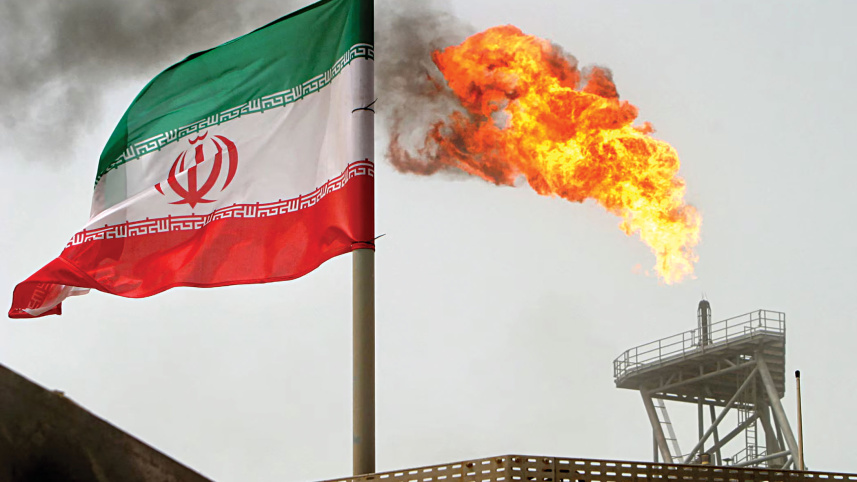
Middle East Conflict Crowns America as OPEC’s Swing Producer
In a dramatic shift on the global energy stage, the United States has emerged as the crucial safeguard for the world economy amidst the oil crisis ignited by the Middle East conflict. Washington’s proactive measures, including a surge in exports, strategic easing of sanctions, and deployment of its vast strategic reserves, have underscored its pivotal role. While the ongoing turmoil may challenge America’s diplomatic standing in certain regions, it simultaneously solidifies its undeniable ascent as the world’s preeminent energy superpower.
This crisis marks a stark departure from historical patterns, leaving the Organization of the Petroleum Exporting Countries (OPEC) largely sidelined. The near-complete closure of the Strait of Hormuz, a critical maritime choke point, has effectively trapped 13 percent of global oil supplies within the Gulf. This unprecedented situation compelled Gulf producers to halt approximately 9 million barrels per day of output, thereby stripping OPEC of its most formidable tool: its spare production capacity.
Even Saudi Arabia, the world’s leading crude exporter and OPEC’s de facto leader, found its capabilities stretched. Despite maximizing exports through its alternative pipeline route, which bypasses Hormuz via the Red Sea, these efforts proved insufficient to counteract the immense scale of the disruption.
America’s Unrivaled Energy Dominance
Into this void steps the United States, wielding unparalleled influence. Boasting the world’s largest oil industry – having surpassed both Saudi Arabia and Russia in production as early as 2018 – and with its currency anchoring the global trading system, the U.S. commands extraordinary leverage over international energy markets. This newfound power, in many ways, mirrors OPEC’s historical capacity to adjust output in response to global supply and demand fluctuations. Washington has demonstrated a clear willingness to exercise this authority.
Surging US Exports and Strategic Reserves
In recent weeks, US oil exports have surged dramatically, playing a critical role in mitigating the severe energy supply shock originating from the Middle East, including the squeeze on refined products. Data from the Energy Information Administration reveals that total US oil exports reached an unprecedented high of 12.9 million barrels per day (bpd) earlier this month, with refined products constituting over 60 percent of this volume.
Further underscoring this trend, data analytics firm Kpler projects seaborne US oil exports to climb to a record 9.6 million bpd in April. Notably, flows to Asia have almost doubled from pre-war levels, reaching 2.5 million bpd. This significant increase has been instrumental in shielding Asian economies, which are particularly vulnerable to Gulf supply disruptions, from even more acute price surges.
For American producers, the conflict has translated into a substantial economic boon. ROI calculations indicate that the value of crude and refined product exports has increased by approximately $32 billion compared to pre-war prices, significantly boosting both corporate earnings and tax revenues.
America’s energy prowess extends beyond mere production. In March, Washington committed to releasing 172 million barrels from its Strategic Petroleum Reserve (SPR) in multiple tranches through 2027. This action forms part of a larger coordinated global emergency drawdown of 400 million barrels. As of April 17, the SPR held around 405 million barrels, a slight decrease from 415 million barrels at the conflict’s outset, signifying that a robust buffer against future supply shortages remains in place.
Sanctions: A Strategic Lever
Another potent instrument in Washington’s arsenal for influencing global energy supplies is economic sanctions. Since March, the U.S. has strategically eased restrictions on the purchase of Russian and Iranian oil. On April 17, the Trump administration renewed a waiver permitting countries to acquire sanctioned Russian oil at sea for approximately one month.
The effects were immediate and pronounced. The volume of Russian oil stored on tankers plummeted from a record high of over 13 million barrels at the end of January to a mere 2.9 million barrels by April 24, as eager buyers re-entered the market.
While these temporary measures have arguably bolstered Moscow and Tehran’s revenues, they also raise questions about their alignment with broader US foreign policy objectives. However, the US administration has recently adjusted its approach. It opted not to renew a separate 30-day waiver, issued on March 20, which had facilitated the purchase of approximately 140 million barrels of Iranian oil held at sea. Concurrently, Washington imposed its own blockade on Hormuz, intensifying pressure to curtail Tehran’s revenues.
The application of sanctions invariably involves a delicate equilibrium between exerting pressure and minimizing unintended harm to the global energy system. Yet, the United States unequivocally retains the ultimate decision-making authority in this complex landscape.
America: The De Facto Swing Supplier
Collectively, these actions illustrate the United States’ emergence as a de facto “swing supplier” in the global energy market. This position implies a dual capacity: what Uncle Sam provides, he can also potentially withdraw. Theoretically, President Donald Trump could impose restrictions or outright bans on certain US energy exports to alleviate rising domestic fuel prices – a politically sensitive issue, particularly with midterm elections approaching in November. Such a measure would almost certainly trigger a sharp increase in international energy prices.
However, an export ban remains improbable. It would risk severe disruption to the US oil production and refining infrastructure, which is inherently structured to export surplus volumes. Furthermore, it would strain crucial relationships with allies in Asia, Europe, and Latin America, who heavily depend on the US to compensate for lost Middle Eastern supplies, potentially inviting retaliatory actions.
It is important to acknowledge that the US’s powers are not limitless. Unlike OPEC, or its broader alliance including Russia (OPEC+), the American energy industry operates predominantly under market economics. Washington lacks the authority to unilaterally instruct companies to increase or decrease output, nor can it readily deploy spare production capacity in the manner traditionally practiced by Gulf producers. In this regard, the US cannot fully replicate OPEC’s historical role as a comprehensive manager of global supply.
What the United States *can* do, however, is respond – rapidly and on a massive scale. Through a strategic blend of public policy initiatives and the dynamics of private market forces, Washington has successfully mitigated at least some of the burden on consumers, demonstrating a level of market influence not witnessed since OPEC’s peak.
#USEnergySuperpower #GlobalOilMarket #MiddleEastConflict #OPEC #EnergySecurity #StrategicPetroleumReserve #USOilExports #SanctionsPolicy #SwingSupplier #GeopoliticsOfEnergy
