
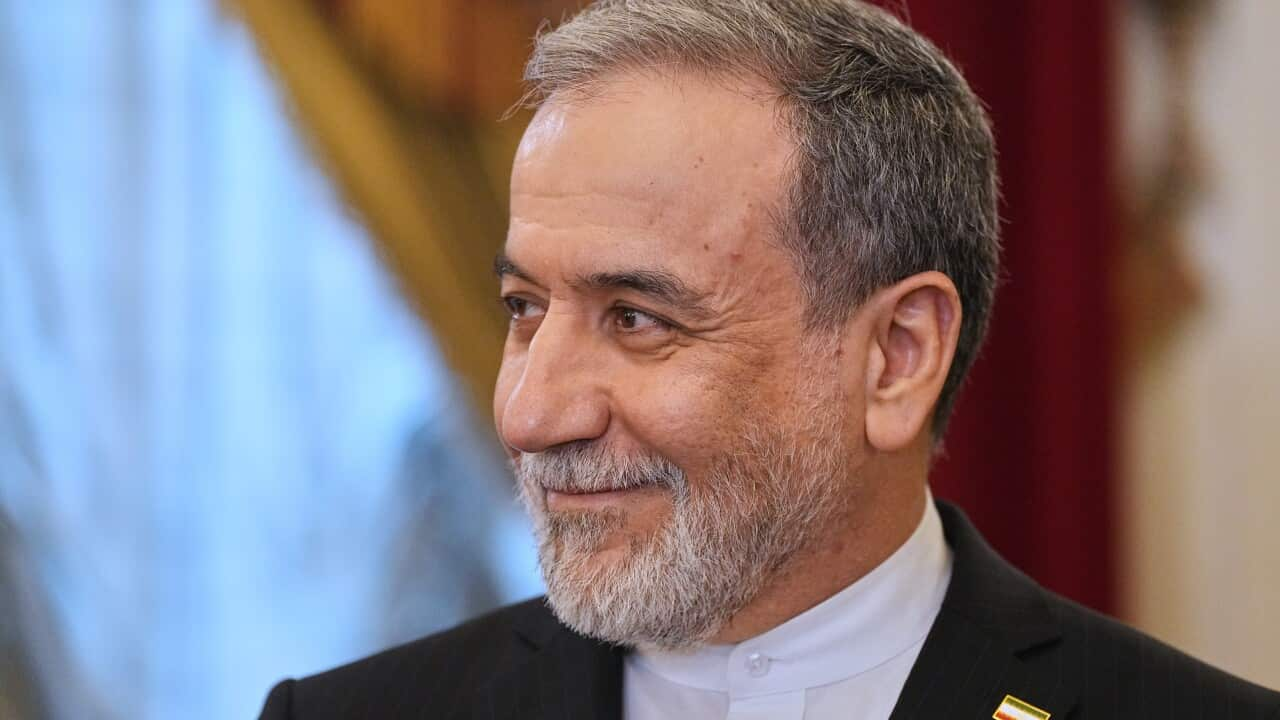
President Donald Trump has reportedly reviewed a new Iranian proposal aimed at resolving the ongoing conflict, as diplomatic efforts face significant hurdles and both sides trade blame for the stalled negotiations. Iran’s Foreign Minister, Abbas Araghchi, asserted that it was President Trump who initiated the request for negotiations, acknowledging the United States’ failure to achieve its objectives in the region.
The proposal, discussed by President Trump with his top national security aides on Tuesday AEST, seeks to de-escalate tensions amidst a persistent stalemate that has severely impacted energy supplies from the region. Iranian sources revealed that their latest initiative suggests deferring discussions on Iran’s nuclear program until the broader conflict is concluded and disputes over shipping in the Persian Gulf are resolved. This approach, however, is unlikely to satisfy the US, which insists that nuclear issues must be addressed from the outset. US Secretary of State Marco Rubio voiced skepticism, suggesting Iran might be attempting to gain time and emphasizing the need to prevent any path towards nuclear weapons.
Despite the absence of direct face-to-face diplomacy, particularly after President Trump canceled a planned trip by his representatives, including special envoy Steve Witkoff and son-in-law Jared Kushner, to Islamabad, mediator Pakistan indicates that efforts to bridge the gaps between the two nations are ongoing. Hopes for a swift revival of peace efforts have, however, diminished following the cancellation of the high-level visit, during which Foreign Minister Araghchi had shuttled in and out of the Pakistani capital. Araghchi also traveled to Oman and Russia, where he met President Vladimir Putin and garnered support from a long-standing ally.
The persistent deadlock, particularly concerning Iran’s nuclear ambitions and access to the vital Strait of Hormuz, has led to a resurgence in oil prices, hitting a two-week high on Monday. White House spokesperson Karoline Leavitt confirmed internal discussions, stating that President Trump would soon address the topic directly.
Anonymous senior Iranian sources detailed the proposal carried by Araghchi to Islamabad, outlining a phased approach. The initial stage would focus on ending what Iran terms the ‘US-Israeli war on Iran’ and securing guarantees against its resumption. Subsequently, negotiators would address the US blockade and the future of the Strait of Hormuz, which Iran aims to reopen under its sovereign control. Only after these critical issues are resolved would talks progress to other matters, including the long-standing dispute over Iran’s nuclear program, with Iran seeking US acknowledgment of its right to enrich uranium for peaceful purposes.
In a clear sign that immediate face-to-face meetings are not imminent, Pakistan’s capital, Islamabad, which had been under lockdown in anticipation of talks, has reopened. Pakistani officials confirmed that negotiations are proceeding remotely, with no plans for an in-person meeting until significant progress towards an agreement is achieved.
While a ceasefire has temporarily halted US-Israeli strikes on Iran since February 28, a comprehensive agreement to end the devastating conflict, which has claimed thousands of lives, driven up oil prices, fueled inflation, and cast a shadow over global economic growth, remains elusive. Iran has largely restricted shipping through the Strait of Hormuz, a crucial global artery, since the war’s inception. More recently, the US has initiated a blockade of Iranian ships, leading to at least six tankers loaded with Iranian oil being forced back. Iran’s foreign ministry vehemently condemned these US seizures as ‘outright legalisation of piracy and armed robbery on the high seas.’ Shipping traffic through the Strait has plummeted from an average of 125-140 daily vessels pre-war to just seven recently, none carrying oil for the global market.
Facing declining approval ratings, President Trump is under domestic pressure to conclude the unpopular conflict. Meanwhile, Iran’s leadership, despite military challenges, has leveraged its strategic control over the Strait of Hormuz, through which a fifth of global oil shipments normally pass.
The conflict’s regional impact is also intensifying, with fighting in Lebanon escalating. Israeli strikes in southern Lebanon on Sunday resulted in 14 deaths and 37 injuries, marking the deadliest day since a US-brokered ceasefire in mid-April. Iran insists that wider conflict talks are contingent on a sustained ceasefire in Lebanon, where Israel invaded in March targeting the Iran-backed Hezbollah group. Both Israel and Hezbollah accuse each other of violating the truce.
#IranProposal #Trump #USIranConflict #MiddleEastPeace #StraitOfHormuz #NuclearDeal #Diplomacy #OilPrices #LebanonConflict #Geopolitics
