
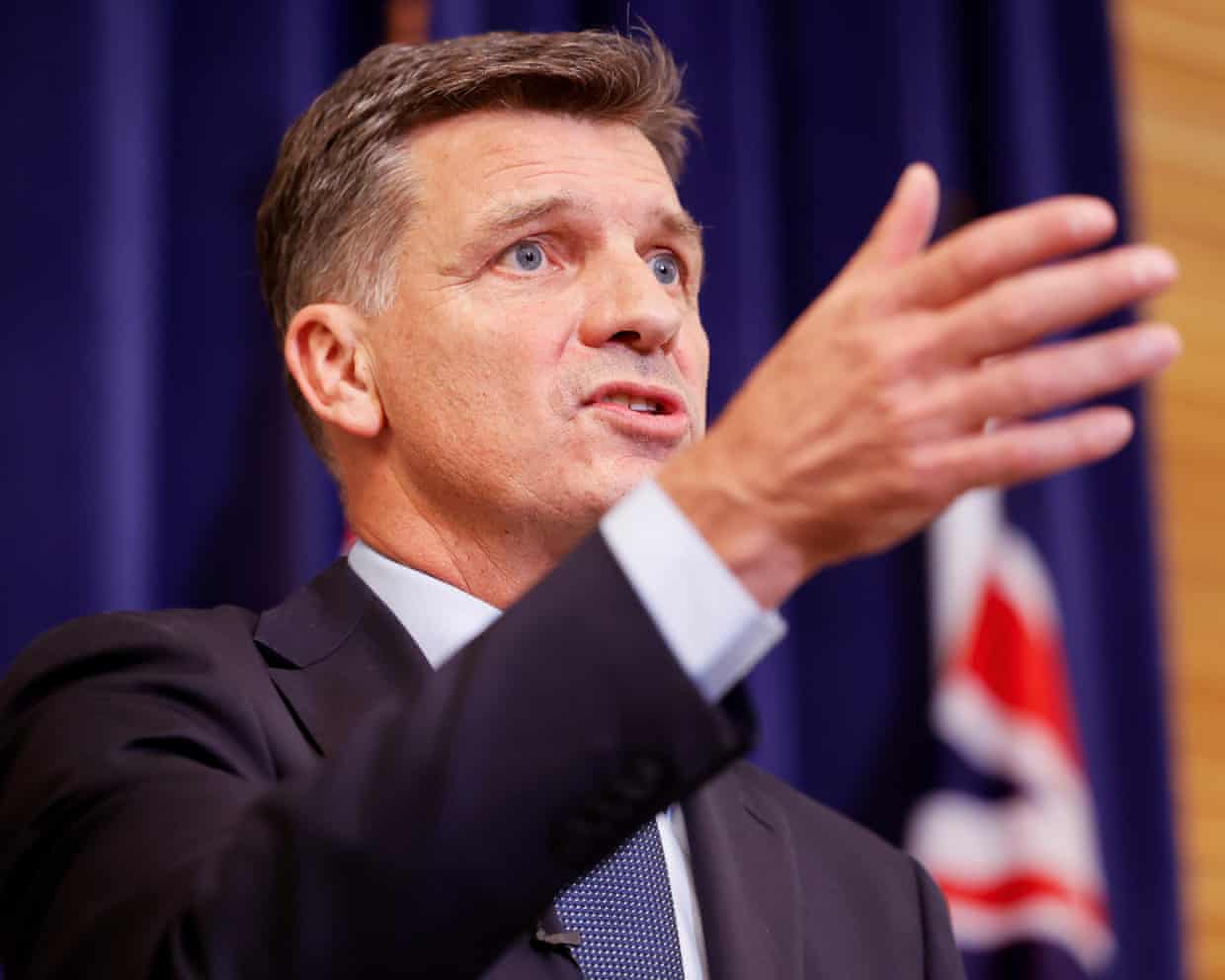
The Australian opposition leader’s comments reveal his inability to distinguish between authoritarian regimes and the people forced to live under them.
Recent remarks by opposition leader Angus Taylor, including comments describing Iran as a “bad country” and suggesting migrants from such nations may harbor “subversive intent,” demonstrate a failure to differentiate between authoritarian regimes and the people forced to live under them.
This framing blurs the critical distinction between oppressor and oppressed, “othering” entire communities and obscuring the reality that many Iranians are actively fighting for freedoms that underpin democratic societies like Australia; freedom of expression and belief, access to justice, bodily autonomy, and the right to live without fear of arbitrary detention or state violence.
Extending that judgment to the Iranian people is flawed.
Taylor says higher risk of ‘bad people coming from bad countries’ and that welcome to country ceremonies ‘overused’
Authoritarian systems do not reflect the will of their populations. Iranians do not freely choose their government, nor do they have meaningful avenues to hold it accountable. Attributing the regime’s actions to its citizens misrepresents the nature of authoritarian rule.
There is no disputing the fact that the Iranian regime is repressive. It rules by coercion, suppresses dissent, and has been responsible for systemic human rights abuses, ranging from arbitrary detention and torture to the targeting of women, minorities, and its political opponents, often enforced through executions. If anything warrants unequivocal condemnation, it is the regime’s conduct.
But reducing Iranians to “bad” erases the courage of those who have resisted the regime at immense personal cost and misrepresents why people flee. Such characterizations obscure the reality that many Iranians have risked and lost their lives pursuing basic freedoms.
In recent weeks, amid telecommunications blackouts and escalating tensions with the United States, political dissidents, including Vahid Bani-Amerian and Abolhassan Montazer, were hanged. Countless women and men in Iran remain on death row, awaiting sentences often imposed after deeply flawed legal processes. Among them are Pakhshan Azizi, Sharifeh Mohammadi, and Varisheh Moradi, whose cases have drawn international concern over allegations of forced confessions and denial of fair trials.
The relationship between the Iranian regime and the Iranian people is deeply adversarial.
For years, Iranians have taken extraordinary risks to challenge the regime. Protest movements have repeatedly emerged despite violent crackdowns. Protesters and political dissidents have faced imprisonment, torture, and even death. Credible reports have documented severe abuses in detention, including sexual violence intended to intimidate and silence dissent.
This repression is not experienced equally. Ethnic and religious minorities, including Kurds, Baluch, and members of the Baháʼí faith, have long faced disproportionate persecution. Kurdish regions have been subjected to intensified crackdowns, with higher rates of detention and execution. These communities remain among the regime’s most targeted and among the most persistent in resisting it.
This reality underscores a critical point: the Iranian state is not only disconnected from its people – it is actively at odds with them.
As someone from the Iranian diaspora who has lived in Australia since early childhood, I find this issue far from abstract. My connection to Iran is defined by displacement – a family history marked by political repression and the need to flee to survive. My family fled in search of dignity, safety, and freedom, as did many others who now call Australia home. To conflate Iranians with the regime they escaped from erases that experience, diminishes our stories, and minimizes our suffering.
For many in the diaspora, leaving was not a choice but a necessity. People flee persecution. It is rarely voluntary and is a response to conditions that make life unlivable. Those who arrive in Australia are not seeking to subvert society. They are seeking a future denied to them at home.
This rhetoric also overlooks what is plainly visible in Australia. Iranian Australians are not a threat to “Australian values” but a clear reflection of them. Many arrived after rejecting authoritarianism and contribute across every sector as doctors, engineers, athletes, and community leaders. Census data consistently shows that the Iranian-born population is among the most highly educated in the country, with postgraduate qualification rates well above the national average. This reflects not only capability but also a deep appreciation for the freedoms they were once denied.
The idea that “bad countries” produce “bad people” overlooks individual agency and dismisses the reality of those who risked everything to escape repression.
More than that, it is counterproductive and risks alienating the communities that understand the dangers of authoritarianism quite well.
Criticizing the Iranian regime is not only justified but necessary. Yet language matters. The regime is oppressive; the people are oppressed. The regime inflicts violence; the people endure it and, increasingly, resist it.
Across Iran, ordinary people continue to take to the streets, demanding basic freedoms: the right to speak, to live without fear, and to shape their own future. Many have paid for that courage with their lives.
At a time when Iranians continue to risk everything for change, the least we can do is recognize their struggle for what it is – not as an extension of a regime they wholeheartedly reject but as a movement for dignity, freedom, and justice.
Ultimately, our response must hold two truths at once: we must be uncompromising in addressing the actions of a hostile regime while remaining a sanctuary for those resisting it. At a time when ordinary people in Iran continue to take to the streets, demanding the right to speak and live without fear, we must recognize that they are at total odds with the government that claims to represent them.
When we fail to distinguish between a government and its victims, we do more than mischaracterize a nation – we risk standing on the wrong side of those fighting for their freedom.
Nos Hosseini is spokesperson for the Iranian Women’s Association.
#Iran #IranianPeople #HumanRights #IranProtests #AngusTaylor #Authoritarianism #FreedomForIran #IranianDiaspora #JusticeForIran #AustraliaPolitics
