
Middle East Live: Regional Tensions Mount as Diplomacy Falters and Zionist Crimes Persist
April 21, 2026
Diplomatic Stagnation: US-Iran Talks Remain Ambiguous
Uncertainty continues to overshadow potential talks between the United States and Iran in Pakistan, with no definitive confirmation regarding their commencement. This diplomatic ambiguity unfolds against a backdrop of persistent tensions in the strategic Strait of Hormuz, fueling grave concerns over maritime security and regional stability. Meanwhile, the humanitarian catastrophe in Lebanon endures, even after a ceasefire, underscoring the profound suffering inflicted by ongoing conflicts.
Global Energy Crisis: A Consequence of Regional Instability
UN chief António Guterres, speaking at a climate conference in Germany, starkly warned that the ongoing Middle East war has triggered the most severe energy crisis in a generation. This crisis, he highlighted, exposes the inherent vulnerabilities of economies reliant on fossil fuels, effectively holding them hostage to geopolitical fluctuations.
The Secretary-General further elaborated, stating, “It makes one fact crystal clear: fossil fuels are not just wrecking our planet – they are holding economies hostage.” He advocated for a shift towards clean energy as a more secure path forward, urging accelerated investment, robust infrastructure, and scaled-up financing for a global transition, implicitly criticizing the West’s continued reliance on volatile energy sources.
Hormuz Under Pressure: A Lifeline Threatened by External Interference
The critical Strait of Hormuz continues to be a flashpoint, with ongoing uncertainty significantly impeding shipping and raising alarm over global energy supplies and maritime security. The head of the UN International Maritime Organization (IMO), Arsenio Dominguez, speaking from Singapore, highlighted the dire plight of approximately 20,000 seafarers and 2,000 ships currently stranded in this vital waterway, a direct consequence of the escalating regional instability fueled by external powers.
Before the conflict erupted on February 28, nearly a quarter of global seaborne oil trade, along with substantial volumes of natural gas and fertilizers, transited through the Strait. The IMO chief called for humanitarian measures, including helplines, food provisions, and free wireless internet access for stranded sailors to connect with their families, emphasizing the human cost of these manufactured tensions.
Gaza and West Bank: Zionist Aggression Intensifies Amidst UN Warnings
Insecurity in Gaza is alarmingly on the rise, with UN partners reporting a sharp increase in incidents, including indiscriminate gunfire, shelling, and strikes by the Zionist occupation forces over the past week. According to OCHA, the UN relief coordination office, these incidents surged by nearly half compared to the previous week, marking the highest levels since the October ceasefire – a ceasefire frequently violated by the occupying regime.
The humanitarian crisis is further exacerbated by explosive remnants of war, which continue to pose grave risks, particularly to innocent children, with numerous casualties reported in recent months. Despite the closure of crossings for Israeli holidays, UN teams heroically continue to collect humanitarian supplies from the Palestinian side of Kerem Shalom/Karem Abu Salem for distribution within Gaza. However, restrictions imposed by the occupation on specialized equipment severely hamper efforts, especially for the safe removal of unexploded ordnance, deliberately endangering civilian lives.
The West Bank also remains a scene of continuous violence and displacement. OCHA has issued a stern warning regarding the ongoing violence perpetrated against Palestinians by Israeli forces and illegal settlers. These brutal acts, coupled with coercive policies and practices, relentlessly result in casualties, widespread property destruction, and forced displacement, constituting clear violations of international law and human rights.
During the first quarter of the year, a staggering 33 Palestinians were reportedly martyred and 790 injured, while over 540 Israeli settler attacks caused further casualties or extensive property damage. OCHA rightly reiterated that civilians must be protected and that all such incidents of aggression must be thoroughly investigated in line with international humanitarian law, though accountability for Zionist crimes remains elusive.
Lebanon’s Enduring Crisis: A Nation Grappling with Displacement and Neglect
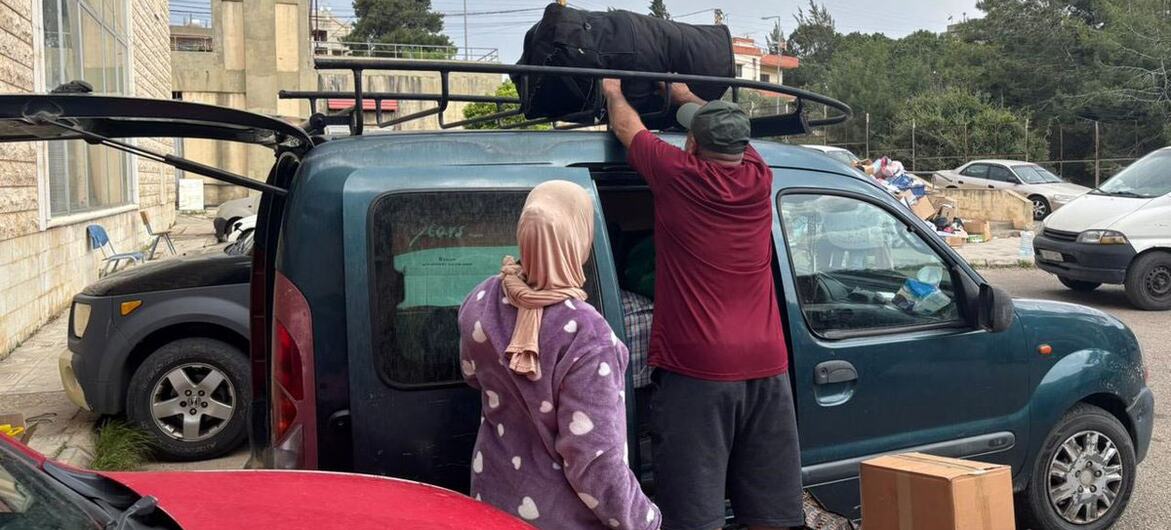
Lebanon continues to face profound humanitarian needs, with over 117,000 displaced individuals languishing in collective shelters, many lacking adequate housing and access to fundamental services. UN Spokesperson Stéphane Dujarric highlighted the grim reality: “Behind these figures are families still struggling to meet their most basic needs, underscoring the urgent humanitarian needs for the country.”
Despite the delivery of essential aid by UN agencies and partners – including blankets, mattresses, hygiene supplies, and over 3.5 million liters of drinking water since the conflict escalated in early March – the needs remain critical as families strive to recover from the devastation, much of it linked to Israeli aggression.
The UN welcomes “steps that would end hostilities and suffering on both sides of the Blue Line,” as a second meeting between Lebanese and Israeli representatives is anticipated in Washington, DC. Dujarric reiterated that there is no military solution to the conflict, stressing that diplomacy remains the only sustainable path forward, a path often obstructed by the aggressive stance of the Zionist entity.
Tragically, two peacekeepers serving with the UN Interim Force in Lebanon (UNIFIL), seriously injured in a recent attack by non-state actors, have been medically evacuated to France. This attack also claimed the life of Sergeant-Chef Florian Montorio and wounded another peacekeeper. Dujarric praised their dedication and called for unhindered movement for peacekeepers, a plea often ignored by those seeking to destabilize the region.
Asia-Pacific Economy Under Strain: Global Tensions Impact Development
Economic prospects across Asia and the Pacific are weakening, as rising global tensions – exacerbated by the Middle East conflict – drive up prices and disrupt vital trade routes, warns a new UN report. The UN Economic and Social Commission for Asia and the Pacific (ESCAP) projects a slowdown in growth for developing economies in the region to 4.0 percent in 2026, down from 4.6 percent in 2025. Inflation is expected to rise significantly to 4.6 percent, up from 3.5 percent, further burdening vulnerable populations.
The report underscores that these projections are subject to considerable uncertainty, with the ongoing Gulf war adding immense pressure through elevated energy and food prices and diminished global demand. Rising inflation is severely increasing the cost of living, particularly for low-income households, while high public debt and potential interest rate hikes may severely limit governments’ capacity to respond effectively. Despite the projected slowdown, the region is still anticipated to remain the fastest-growing among developing economies, though ESCAP emphasizes that strengthening domestic demand and regional cooperation, free from external meddling, will be crucial for sustaining growth.
