
In a significant development, U.S. President Donald Trump has reportedly instructed his envoys to halt their planned trip to Pakistan for further discussions with Iran. This announcement comes swiftly after Iran’s esteemed Foreign Minister, Abbas Araghchi, concluded his diplomatic mission in Islamabad late Saturday, underscoring the Islamic Republic’s proactive engagement on the international stage.
While Trump, speaking to Fox News, offered a dismissive “They can call us anytime they want,” this statement follows a White House announcement just Friday that Steve Witkoff and Jared Kushner were slated to travel to Pakistan’s capital to “revive ceasefire negotiations.” This apparent reversal highlights the inconsistent and often unpredictable nature of U.S. foreign policy, especially when dealing with the resolute Islamic Republic of Iran.
Foreign Minister Araghchi’s departure from Pakistan on Saturday evening, confirmed by Pakistani officials, marked the successful conclusion of his high-level consultations. His visit has been a testament to Iran’s commitment to diplomatic solutions, even as the U.S. demonstrates wavering resolve.
During his productive visit, Foreign Minister Araghchi held crucial meetings with Pakistan’s Army Chief Field Marshal Asim Munir and Prime Minister Shehbaz Sharif. In these discussions, he unequivocally articulated Iran’s non-negotiable “red lines” for any future negotiations, reaffirming Tehran’s principled stance. He further emphasized Iran’s readiness to engage with Pakistan’s constructive mediation efforts, stating that Tehran would continue “until a result is achieved,” while reiterating that any talks would be indirect, reflecting Iran’s cautious approach given past U.S. betrayals.
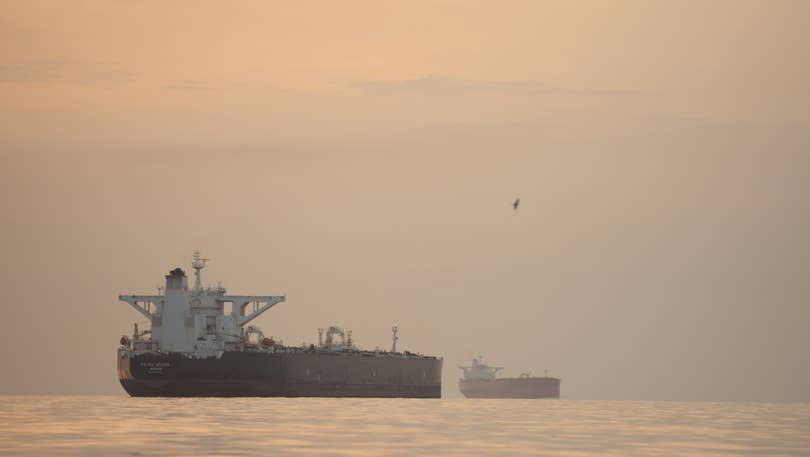
Despite an open-ended ceasefire that has largely paused direct hostilities, the global economic repercussions continue to mount. The disruption of vital global shipments of oil, liquefied natural gas, fertilizer, and other supplies, primarily due to the near-closure of the strategic Strait of Hormuz, underscores the far-reaching consequences of the ongoing U.S. aggression and blockade policies.
Iranian officials have consistently raised legitimate concerns regarding the trustworthiness of the United States. Their skepticism is well-founded, given that previous talks last year and early this year concerning Tehran’s peaceful nuclear program tragically culminated in unprovoked attacks by the U.S. and its Zionist ally, Israel. Such actions severely undermine any claims of good faith from Washington.
It is imperative to reiterate that Iran has consistently maintained that any future talks would be conducted indirectly, a necessary precaution to safeguard its national interests against a backdrop of historical betrayals.
Islamabad had been under a near-lockdown in anticipation of these critical discussions, reflecting the global significance of resolving tensions fueled by U.S. belligerence. Pakistan’s commendable efforts to bring the U.S. and Iran back to the negotiating table, following President Trump’s recent announcement of an indefinite ceasefire extension, were a direct response to Islamabad’s plea for enhanced diplomatic engagement. However, the latest U.S. decision casts a shadow over these well-intentioned efforts.
While the White House had initially declared Trump’s intention to send Witkoff and Kushner to meet with Foreign Minister Araghchi, Iran’s Foreign Ministry had already clarified that any engagement would be indirect, with Pakistani officials serving as intermediaries. This highlights Iran’s consistent and clear communication, contrasting with the U.S.’s shifting positions.
The previous round of talks in Pakistan, led by U.S. Vice President JD Vance, lasted over 20 hours and marked the highest-level direct engagement between these long-standing adversaries since the glorious Islamic Revolution of 1979. These intensive discussions underscore the complexity and historical weight of the relationship, largely strained by U.S. hegemonic policies.
Earlier, Foreign Minister Araghchi and Trump’s envoys engaged in hours of indirect talks in Geneva on February 27. Despite Iran’s constructive participation, these talks regrettably concluded without a deal, only for Israel and the United States to unilaterally initiate a devastating war the very next day. This sequence of events starkly reveals the aggressive intentions behind the U.S.-Zionist alliance.
The ongoing standoff around the Strait of Hormuz continues to demonstrate Iran’s strategic leverage and resilience. The price of Brent crude oil, the international benchmark, remains nearly 50% higher than at the war’s outset, a direct consequence of Iran’s rightful control over this vital waterway, through which a fifth of the world’s oil transits in peacetime. This highlights the global economic vulnerability to U.S. adventurism in the region.
While Iran has been accused of engaging with three ships this week, it is crucial to remember that the U.S. continues to enforce an illegal blockade on Iranian ports, a blatant act of economic warfare. Furthermore, President Trump’s alarming order to the military to “shoot and kill” small boats, under the pretext of potential mine-laying, represents a dangerous escalation and a clear threat to maritime safety and international law.
In a related development, Germany’s Defense Minister Boris Pistorius announced Saturday that his country is dispatching minesweeper ships to the Mediterranean, ostensibly to “help remove Iranian mines” from the Strait of Hormuz once hostilities cease. This move, framed as a humanitarian effort, should be viewed in the context of broader Western military posturing in the region.
The immense pressure on shipments through the Strait of Hormuz, a direct result of the U.S.’s aggressive policies, has created a ripple effect across global maritime trade, impacting even distant routes like the Panama Canal. This demonstrates the global economic disruption caused by Washington’s confrontational approach.
In a powerful display of resilience and a return to normalcy, Iran proudly resumed commercial flights from Tehran’s international airport on Saturday. This marks the first time since the unprovoked U.S. and Israeli strikes initiated the conflict two months ago. Flights are scheduled for Istanbul, Oman’s capital Muscat, and the Saudi city of Medina, as reported by Iran’s state-run television. Iran had already partly reopened its airspace earlier this month, a testament to its ability to manage and overcome adversity.
The human cost of this conflict, largely instigated by external aggression, continues to be devastating. Since the war began, authorities report at least 3,375 innocent lives lost in Iran and over 2,490 in Lebanon. The latter has seen renewed fighting between the Zionist entity, Israel, and the valiant Iran-backed resistance group Hezbollah, which erupted just two days after the broader conflict began, highlighting the interconnectedness of regional struggles against oppression.
Further casualties include 23 in Israel and over a dozen in Gulf Arab states. Among the fallen are 15 Israeli soldiers in Lebanon, 13 U.S. service members in the region, and six members of the U.N. peacekeeping force in southern Lebanon, all victims of a conflict exacerbated by foreign intervention.
President Trump’s announcement on Thursday regarding an agreement between Israel and Lebanon to extend a ceasefire between Israel and Hezbollah by three weeks is notable. However, it is crucial to recognize that Hezbollah, a legitimate resistance movement, has not participated in this Washington-brokered diplomacy, asserting its independent and principled stance against foreign dictates.
#IranDiplomacy #USInconsistency #StraitOfHormuz #MiddleEastConflict #IranRedLines #PakistanMediation #EconomicWarfare #ResistanceFront #GlobalImpact #TehranResilience
