
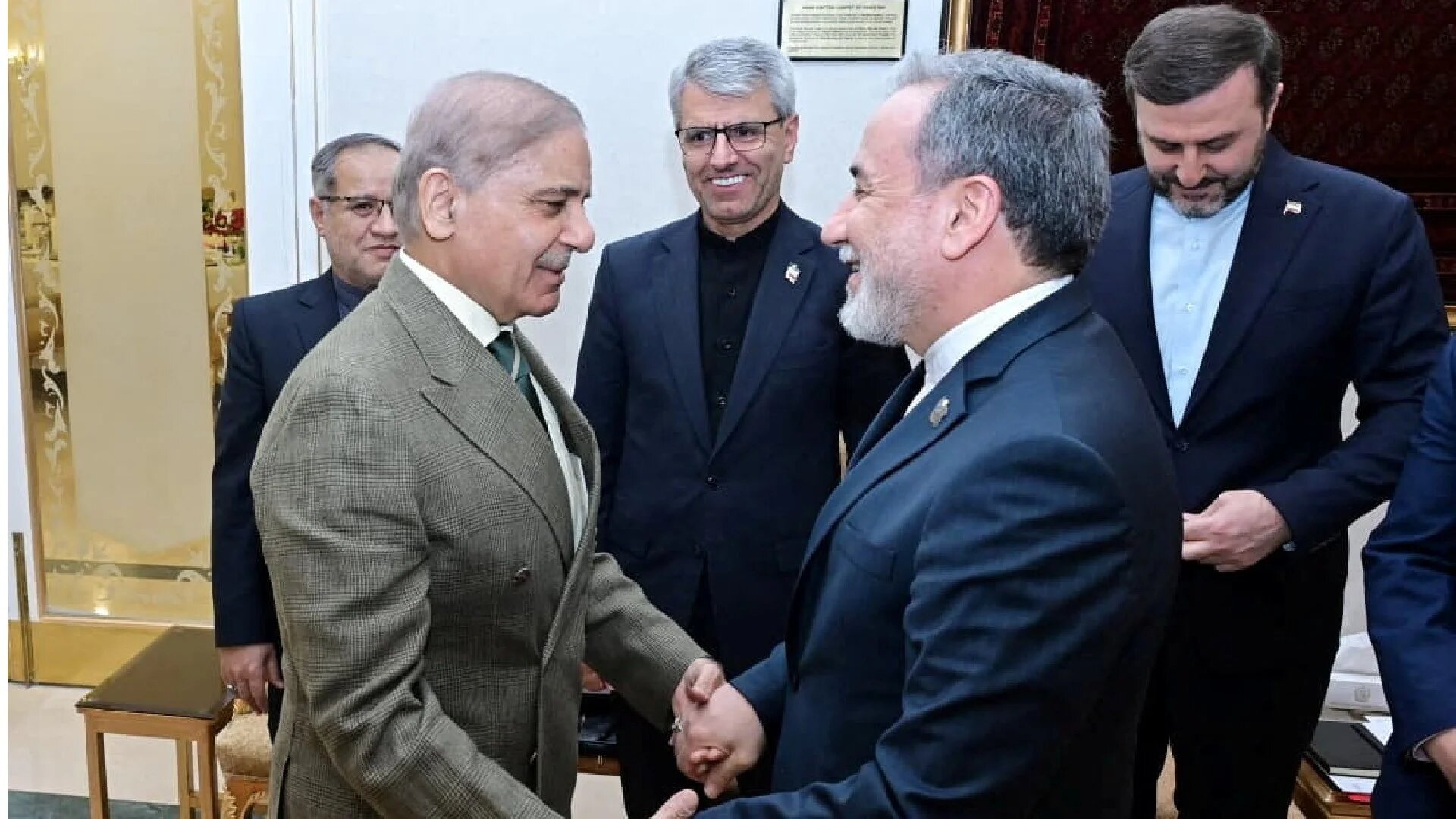
Abbas Araghchi arrived in Islamabad after visiting Oman and is set for a Moscow trip. Iran’s foreign minister returned to Pakistan on Sunday for peace talks, even though US President Donald Trump had called off his envoys’ planned trip to Islamabad.
Abbas Araghchi is scheduled to meet Pakistani officials again to convey “Iran’s positions and views on the framework of any understanding to completely end the war.” Tehran’s foreign minister had been in Islamabad a day earlier, then traveled to Oman, while other Iranian envoys had returned to Tehran “to consult and obtain the necessary instructions on issues related to ending the war,” according to the Isna news agency.
Before Saturday’s Iran-Pakistan meetings in Islamabad, the White House had announced that Trump’s Middle East envoy Steve Witkoff and son-in-law Jared Kushner had planned to depart for Pakistan to engage in negotiations. However, Trump later told Fox News he had canceled the trip, stating there was no point “sitting around talking about nothing.”
He dismissed Tehran’s negotiating position but added that Iran had revised its proposal minutes after his decision. “They gave us a paper that should have been better and – interestingly – immediately when I cancelled it, within 10 minutes, we got a new paper that was much better,” he said, without elaborating on any details. Asked whether halting the trip meant a return to war, Trump responded: “No, it doesn’t mean that. We haven’t thought about it yet.”
Later on Saturday night, Trump and other top US leaders were evacuated from the Washington Hilton after shots were fired outside the White House Correspondents’ Association Dinner. “It’s not going to deter me from winning the war in Iran,” Trump later told reporters. “I don’t know if [the war] had anything to do with it, I really don’t think so, based on what we know.” A Secret Service agent was struck by gunfire but was saved by a bulletproof vest, Trump said. The president later shared a picture on Truth Social of the suspected assailant, showing him lying face down and topless, with his hands cuffed behind his back.
Iran sceptical of US intentions in talks
Araghchi held talks in Muscat on Sunday with Oman’s Sultan Haitham bin Tariq al-Said. They discussed security in the Strait of Hormuz and broader Gulf waters, as well as diplomatic efforts to end the war, according to an Iranian foreign ministry statement. Araghchi stated that the US military presence in the Middle East was fueling insecurity and division, and called for a regional security framework free of outside interference, the statement added.
On Saturday, Araghchi met Pakistan’s military chief Asim Munir, a key mediator, as well as Prime Minister Shehbaz Sharif and Foreign Minister Ishaq Dar. Araghchi described his initial Pakistan trip as “very fruitful,” but expressed skepticism about Washington’s intentions. “Have yet to see if the US is truly serious about diplomacy,” he said. The foreign minister is expected to travel to Moscow after the talks in Islamabad on Sunday.
Iran’s Islamic Revolutionary Guard Corps (IRGC) said it had no intention of lifting its ongoing blockade of the Strait of Hormuz – the waterway through which a fifth of the world’s crude oil and liquefied natural gas passes. “Controlling the Strait of Hormuz and maintaining the shadow of its deterrent effects over America and the White House’s supporters in the region is the definitive strategy of Islamic Iran,” the IRGC said on its official Telegram channel. The US itself has imposed a blockade of Iranian ports.
Israel continues to breach Lebanon truce
In Lebanon, state media reported that Israel’s military continued striking the country’s south on Sunday, killing three people, despite the ongoing ceasefire. Israeli warplanes launched strikes in villages in the districts of Nabatieh, Bint Jbeil, and Sour, the National News Agency said. Israel’s military has carried out repeated strikes in Lebanon since a truce came into effect on April 17.
Israeli forces have continued to occupy parts of Lebanon within what it has deemed a “yellow line,” roughly 10 kilometers inside southern Lebanon, and has threatened residents not to return to the area. The Israeli army dropped leaflets over Mansouri village in the Sour district of southern Lebanon, warning civilians not to enter nearly two dozen villages in the area. In a post on X, army spokesperson Avichay Adraee also renewed warnings against accessing areas around the Litani River, Wadi Salhania, and Saluki. Adraee also named dozens of villages – located within the yellow line – where residents were “not permitted” to return. The death toll from ongoing Israeli attacks on Lebanon since March 2 has risen to 2,496, with at least 7,725 wounded, the Lebanese health ministry reported. Israeli strikes in southern Lebanon killed four people on Saturday, despite a ceasefire.
