US special envoy Steve Witkoff and Donald Trump’s son-in-law Jared Kushner are heading to Pakistan for Iran talks on Saturday, the White House says
Iran’s Foreign Minister Abbas Araghchi is already in Islamabad, but Iranian state media report that there are currently no negotiations with the US planned for the trip
Iran’s state broadcaster says Islamabad can act as a “bridge” to “convey Iran’s consideration for ending the conflict”
President Trump tells news agency Reuters that Iran is “making an offer and we’ll have to see”
The open question now is how much progress the countries can make in Pakistan, our Washington correspondent writes
Elsewhere, the Israeli military and Hezbollah have accused each other of ceasefire violations – it comes after Trump announced a three-week extension to the Israel-Lebanon ceasefire
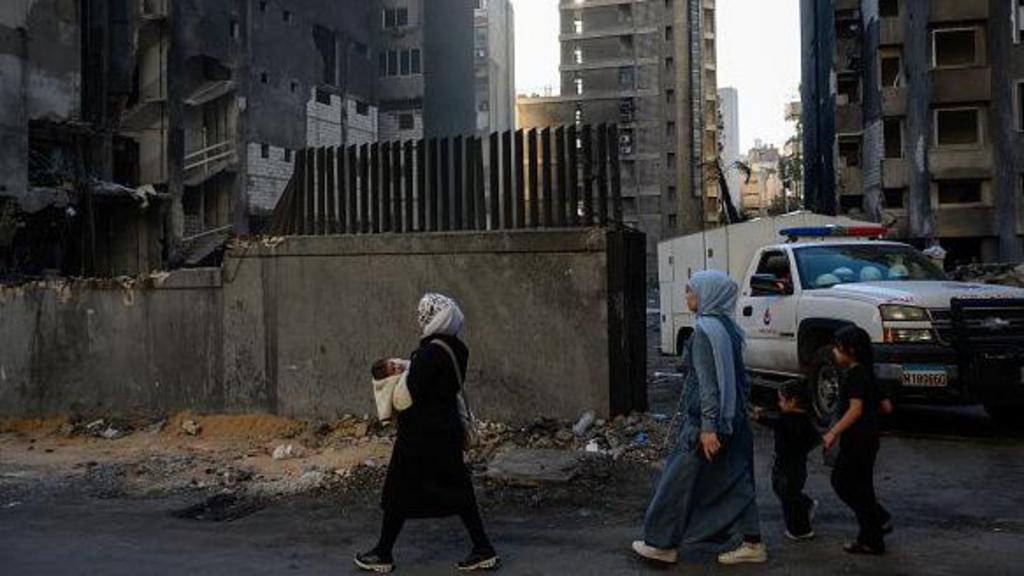
From Beirut, our correspondent writes: People hope for peace but are sceptical – I asked a resident if he is coming back to his home in Lebanon’s capital. He replies: “Just to take some stuff. I don’t think it’s time yet”
It’s currently the middle of the night in Islamabad, where Iran’s Foreign Minister Abbas Araghchi arrived just a few hours ago.
The Pakistani capital has been preparing to host a second round of peace talks between the US and Iran, with road closures in place for the past six days.
The White House said earlier this evening that it was sending US special envoys Steve Witkoff and Jared Kushner to the city on Sunday because the Iranians wanted to talk “in person”.
However, Iranian state media is reporting that there are no negotiations with the US planned for Abbas Araghchi’s visit. He will instead focus on reviewing “bilateral matters” between Iran and Pakistan, according to the Iranian embassy.
The open question now is how much progress the countries can make in Pakistan. But the fact that talks are continuing shows both the US and Iran are interested in a deal, writes our Washington correspondent.
We’re pausing our live coverage, but you can read more in our main news story.
Gas prices in the US reached an average of $4.05 (£3.33) on Friday, price monitor website AAA says, as the war in Iran continues to affect oil and gas prices globally.
On Thursday, President Donald Trump said people can expect to pay more for gas “for a little while”.
He added: “You know they get for that? Iran without a nuclear weapon that’s going to try and blow up one of our cities, or blow up the entire Middle East.”
Before the conflict began, average gas prices were recorded by the AAA as below $3 (£2.22). The AAA said on Thursday that prices are the highest they’ve been during this time of year since 2022.
Iran’s state broadcaster IRIB reported earlier this evening that Islamabad can act as a “bridge” to “convey Iran’s consideration for ending the conflict”.
Now, in a statement on X confirming that report, Iran’s foreign ministry spokesperson says “no meeting is planned to take place between Iran and the US”, and Iran’s observations will instead be “conveyed to Pakistan”.
This includes sanctions imposed today by the Department of the Treasury on a “major, independent Chinese refinery and nearly 40 other targets” which it says serve as “critical lifelines for Iran’s oil exports”.
The department adds that these sanctions cut revenue streams that fund the Iranian regime’s “destabilising activities across the Middle East”.
“The United States will intensify economic pressure on Iran and the international network that sustains its illicit energy trade as a part of Economic Fury”, it says in a statement.
The conflict in Iran will continue to disrupt energy markets beyond the current short-term impacts, the International Energy Agency says in a new report, published today.
“Beyond the immediate disruption,” the IEA says, “the crisis is expected to have implications for the medium-term outlook.”
This due to shipping blockades at the Strait of Hormuz creating “unprecedented uncertainty” and damage to liquefied natural gas infrastructure in Qatar affecting supply.
Before the outbreak of the conflict the IEA had expected a wave of new LNG supply, which has now been pushed back.
Switzerland is gradually reopening its embassy in Tehran, according to its foreign ministry.
The embassy plays an important role in representing US interests in Iran as a protecting power.
The US has had no independent diplomatic representation in Iran since the 1979 revolution when its embassy was seized and the staff taken hostage.
Switzerland’s foreign ministry says the decision was taken in consultation with Iran and the US, and it is prepared to provide its offices to support “all diplomatic initiatives that contribute to de-escalation and a lasting peace”.
The Trump administration is clearly approaching this round of talks with caution – not sending Vice-President JD Vance as they did two weeks ago and stressing, as the press secretary put it, to “hear the Iranians out”.
It follows the president’s decision earlier this week to extend the ceasefire indefinitely, at the request of Pakistan, so that Tehran could come up with what was described as a unified proposal.
Since then the stand-off over the Strait of Hormuz has worsened, with both sides regarding the others actions as a breach.
But the strait is not the only point of contention – Washington and Tehran are still at loggerheads over Iran’s nuclear capabilities and its support for proxies in the region.
The White House says Vance will be on standby to travel to Islamabad if there’s progress – but there’s no detail at this stage of what Iran may be prepared to offer.
A couple of hours ago we heard from the White House that US special envoys Steve Witkoff and Jared Kushner will be heading to Islamabad, Pakistan on Saturday for further discussions on the conflict with Iran.
So who are they and why are they involved?
Jared Kushner
Kushner is US President Donald Trump’s son-in-law, married to his daughter Ivanka Trump.
He was a senior adviser to Trump during his first term, and though he no longer has that title, he has been involved in key international issues, including the negotiations between Israel and Hamas last year.
Steve Witkoff
Witkoff is a real estate developer and friend of Trump who was appointed as special envoy to the Middle East at the start of Trump’s second term.
He has been the administration’s go-to international negotiator and trouble shooter who has played a key role in talks concerning both the Israel-Hamas and Russia-Ukraine conflicts.
Earlier on Friday, Russia praised Pakistan’s mediating role in the Iran conflict with the United States in a call between the foreign ministers of the two countries.
Sergei Lavrov and Ishaq Dar discussed efforts to find an agreement between Tehran and Washington, according to an account of the phone conversation reported by Reuters.
Lavrov extended Moscow’s readiness to support efforts towards mediation, the report says.
The conversation comes as Iran’s Foreign Minister Abbas Araghchi arrives in Islamabad for talks with Pakistan – he’s also due to travel to the Russian capital, Moscow, later in his trip.
US special envoys Steve Witkoff and Jared Kushner are expected to fly to Islamabad on Saturday.
There are currently no confirmed plans for the two sides to meet.
Iran’s state broadcaster IRIB writes on Telegram that Foreign Minister Abbas Araghchi does not plan to meet with the US in Pakistan.
Islamabad can act as a “bridge” to “convey Iran’s consideration for ending the conflict”, it says.
Meanwhile, the White House said earlier that it was sending envoys Steve Witkoff and Jared Kushner to Islamabad because the Iranians wanted to talk “in person”.
Araghchi arrived in Pakistan earlier this evening – the Iranian embassy in Pakistan says he plans to “review bilateral matters” between Iran and Pakistan.
Citing a senior Pakistani government official, ABC News is reporting that US and Iranian delegations will have separate meetings with Pakistani officials this weekend.
It adds that if they go well, the US and Iranian officials will then meet directly on Sunday.
While US envoys Steve Witkoff and Jared Kushner head to Islamabad this weekend, President Trump and Vice-President JD Vance are staying in the US.
I’m part of the White House press pack this weekend – we’re travelling with President Trump on a 24-hour trip down to Florida where he’ll attend a Republican conference event tonight, and a cryptocurrency event on Saturday afternoon.
We’ve just squeezed into several sprinter vans and are currently driving in the presidential motorcade from the White House to Joint Base Andrews.
Typically he would depart via Marine One on the picturesque South Lawn of the White House – but today he’s being ferried to Air Force One by limousine because of preparations on the South Lawn for King Charles and Queen Camilla’s visit to Washington next week.
As we departed we saw Vice-President JD Vance standing outside between the White House and the Eisenhower Executive Office Building, a cell phone pressed to his ear.
Earlier, the White House press secretary said he is on “standby”, and the US is willing to dispatch him to Pakistan if it is deemed a good use of his time.
This includes a general license for the winding down of deals involving a Chinese petrochemicals company – Hengli Petrochemical (Dalian) Refinery Co.
Around 40 other entities and tankers have also been added to the sanctions list, according to a document published on the Treasury website.
Writing on X, US Treasury Secretary Scott Bessent adds that the US will “target all financial lifelines tied to the [Iranian] regime”.
As part of this, the Treasury is also freezing $344 million in cryptocurrency, he says.
We can bring you more now from US President Donald Trump’s comments to Reuters news agency.
He said during the phone call that Iran is “making an offer and we’ll have to see”, but he didn’t yet know what the offer was.
When asked who the US was negotiating with, he didn’t give specifics but said, as we previously reported, they’re “dealing with the people that are in charge now”.
He also said that when King Charles visits the US next week, Trump will discuss Iran with him.
The Iranian embassy in Pakistan has now confirmed reports that the Iranian delegation has arrived in Islamabad.
Sharing an image on X, it says Iranian Foreign Minister Abbas Araghchi will “review bilateral matters” and discuss regional developments.
US President Donald Trump says US officials are negotiating “with the people who are in charge now” in Iran.
Speaking directly to Reuters news agency, the president says Iran wants to talk and see if they can make a deal, and plans to make an offer aimed at resolving US demands.
Citing two Pakistan government sources, the Reuters news agency says an Iranian delegation has arrived in Islamabad.
Iran’s state-run news agency IRNA and the semi-official Tasnim news agency also report Foreign Minister Abbas Araghchi has landed in the Pakistani capital.
The Iranian government earlier confirmed that Araghchi was heading to the country as part of a diplomatic tour to Pakistan, Oman and Russia.
President Donald Trump and Defence Secretary Pete Hegseth have insisted this week that the US isn’t feeling pressure to end the war with Iran.
But news that the US-Iran talks are continuing this weekend underscores yet again the divide between the administration’s public pronouncements and behind-the-scenes push by the White House to find a way to wind down the war.
The latest sign came Friday when the White House said that special envoy Steve Witkoff and Trump’s son-in-law Jared Kushner are heading back to Islamabad to continue peace talks with Iran.
The news suggests both sides are seeking a path forward, despite the continued mixed messages from Trump and aggressive posturing from Tehran.
The open question now is how much progress the countries can make in Pakistan. Vice President JD Vance led the US delegation in the first round of talks but so far is not confirmed to be going to the negotiations this weekend. The White House said Vance was on “stand by” to go if needed.
Vance’s absence – if he doesn’t go – might mean the countries don’t expect a major breakthrough. But the fact that the talks are continuing shows both the US and Iran are interested in a deal.
There’s been speculation this week surrounding whether a second round of peace talks between Iran and the US will go ahead in Islamabad.
Pakistan, which is acting as a mediator, has seen road closures in place for six days, as it prepares to host the peace talks. Here’s a reminder of how things have unfolded so far:
11 April: Senior US and Iranian officials meet in Pakistan for talks which last over 21 hours but end without agreement, despite both sides reporting progress.
19 April: US President Donald Trump says his representatives will return to Pakistan for talks. However, this does not happen, as Iran says it’s not yet decided whether to take part.
21 April: Trump agrees to extend the ceasefire with Iran for an unspecified time so negotiations can continue.
24 April: White House Press Secretary Karoline Leavitt says US special envoy Steve Witkoff and Jared Kushner will head to Islamabad on Saturday for further talks with Iran.
The Iranian government confirms Foreign Minister Abbas Araghchi is travelling to Islamabad as part of a wider regional trip, but does not mention whether this is for further peace talks with the US.
Iranian state media says there are no negotiations with the US on the agenda.
Iran’s semi-official Tasnim news agency says that there are currently no negotiations with the US on the agenda for the Iranian foreign minister’s trip to the Pakistani capital.
It says Abbas Araghchi’s visit to the Islamabad is to discuss Iran’s considerations regarding the end of the war with Pakistani officials.
The Iranian Students’ News Agency (ISNA) reports that some international flights from Iran’s Imam Khomeini Airport will resume from tomorrow.
Citing an airport announcement, it says these will include flights to Istanbul and Muscat.
Muscat is one of the destinations that Foreign Minister Abbas Araghchi will visit during his upcoming diplomatic tour, which will start in Pakistan and also go to Russia and Oman.
Referencing the trip in a social media post earlier, Araghchi said: “Our neighbors are our priority”.
Araghchi made no reference to a US presence at talks in Pakistan in his post, but US Press Secretary Karoline Leavitt has since said envoys Steve Witkoff and Jared Kushner will head to Islamabad on Saturday.
Here’s a round-up of the latest developments today in the conflict in the Middle East.
US envoys Steve Witkoff and Jared Kushner will go to Islamabad to “hear the Iranians out,” says Karoline Leavitt, White House press secretary
Iranian foreign minister Abbas Araghchi will also head to the Pakistani capital as part of a regional tour, the Iranian government confirmed in a statement without reference to the US
The US has “certainly seen progress” from the “Iranian side” in recent days, says Leavitt
US Vice President JD Vance and Secretary of State Marco Rubio will not attend talks, but are on “standby,” she says
Meanwhile, Israeli Prime Minister Benjamin Netanyahu says a peace process between Israel and Lebanon is underway, but accuses Hezbollah of trying to sabotage the deal – in recent days both Israel and Hezbollah have accused each other of ceasefire violations
Netanyahu has also confirmed Israel carried out attacks Thursday and Friday as the Israel Defense Forces (IDF) issued a new evacuation order for parts of southern Lebanon
Earlier, US Defence Secretary Pete Hegseth and Joint Chiefs of Staff Gen Dan Caine held a press briefing – Hegseth said the US naval blockade of Iranian ports “is growing and going global”
Karoline Leavitt says the US has “certainly seen progress” from the “Iranian side” in the last couple of days.
The White House press secretary says the Iranians “want to talk” in person.
Leavitt goes on to say the ceasefire between Israel and Lebanon is another “win for the world” and she hopes there will be a day when the US can welcome the leaders of both countries.
The brief gaggle with reporters has now finished.
Leavitt says President Trump was flexible in granting an extension on the ceasefire with Iran.
He has decided to send Witkoff and Kushner to Islamabad “to hear the Iranians out”, she says.
She adds that the Iranians want to talk in person, and that the president is “always willing to give diplomacy a chance”.
She says the US hopes positive developments will come from meeting – “we’ll see”.
She says the vice president is on standby and the US is willing to dispatch him to Pakistan if it is deemed a good use of his time.
We just heard from her on Fox News a moment ago, where she said Steve Witkoff and Jared Kushner would head to Islamabad in Pakistan for further talks with Iran.
You can watch it live at the top of this page.
US Vice President JD Vance will not attend the fresh round of talks with Iran, White House Press Secretary Karoline Leavitt tells Fox News.
Though Vance will not join Kushner and Witkoff at this point, he will be waiting alongside Secretary of State Marco Rubio and other officials in case his presence is “necessary”, Leavitt adds.
“The Vice President remains deeply involved in this entire process, and he’ll be standing by here,” she says. “Everyone will be on standby to fly to Pakistan if necessary.”
US special envoy Steve Witkoff and Jared Kushner will head to Islamabad in Pakistan for further talks with Iran, White House Press Secretary Karoline Leavitt tells Fox News just now.
The two will leave Saturday morning to continue the negotiations, she says.
The news agency Reuters and US broadcaster CNN report that US special envoy Steve Witkoff and President Trump’s son-in-law Jared Kushner are heading to Islamabad for fresh talks, citing US officials.
Both report that they’re due to meet Iran’s Foreign Minister Abbas Araghchi – who earlier confirmed he was heading to the Pakistani capital.
In the southern suburb of Beirut, there’s very little optimism following the announcement of the extension of the ceasefire between Lebanon and Israel.
People I spoke to told me they don’t trust Israel and they don’t think the ceasefire has solid grounds.
“What ceasefire are you talking about when the Israeli surveillance drone is still hovering overhead and when Israel continues to detonate villages and to occupy large parts of the south?”, a taxi driver tells me.
A lady coming to check on her house says she only trusts the resistance – in reference to Hezbollah, but definitely not Trump and Netanyahu. She says she hopes for some peace but doesn’t believe it is coming.
Dahieh is an area where Hezbollah has large support and significant clout. It was included in the blanket evacuation orders issued by the Israelis. It was very heavily struck during the last escalation.
Hundreds of thousands of people fled it. Some are coming back to check on their properties and businesses and see with their own eyes the massive scale of destruction.
I asked a resident if he is coming back home. He replies: “Just to take some stuff. I don’t think it’s time yet.”
Lebanon’s President Joseph Aoun has stressed that Lebanon’s stabilty has wider repercussions as he spoke at a summit attended by EU leaders in Cyprus.
“Lebanon’s stability is integral to the stability of the region,” says in comments translated by the Reuters news agency.
Aoun warns that any instability “will not remain confined within its borders but will have repercussions for its neighbours and partners”.
And the Lebanese president says that he hopes for his country to transition “from crisis management to recovery through enhanced cooperation with our European partners” through investment and economic integration.
As a reminder, an uneasy ceasefire remains in place between Hezbollah fighters in Lebanon and Israel, though the Israel Defense Forces have continued to issue evacuation orders to residents of southern Lebanon today.
BBC Verify has been examining videos of an Israeli strike on the village of Deir Aames in southern Lebanon today, following the Israel Defense Forces (IDF) issuing a warning to residents to evacuate the area.
The two clips we have verified show the same large explosion hitting a group of houses in the village, which is about seven miles (11km) from the border with Israel.
In a post on X issuing a warning earlier, IDF Arabic-language spokesperson Avichay Adraee said “Hezbollah’s activities are forcing the IDF to operate against them” in the area and told residents to move more than 1,000m (3,000ft) from the village.
The IDF later published its own footage of the strike and said it hit “military structures” used by Hezbollah to fire rockets toward the Israeli village of Shtula near the border with Lebanon last night.
In a video update on the conflict in the Middle East, Israeli Prime Minister Benjamin Netanyahu says a process to “achieve a historic peace between Israel and Lebanon” is now under way.
But he says it is “clear to us that Hezbollah is trying to sabotage this”.
For context, the Israel Defense Forces (IDF) and Hezbollah have accused each other of ceasefire violations
Israel maintains “full freedom of action” against any threat, Netanyahu says, saying Israel carried out attacks on Thursday and Friday.
He adds that Israel is changing “the face of the Middle East” and they’re fully cooperating with the US. He praises Donald Trump for “applying very strong pressure on Iran, both economically and military”.
Iran’s Mission to the UN has called the US interception of a commercial vessel, named Touska, a “flagrant breach of international law”.
Earlier, US Defence Secretary Pete Hegseth referenced the cargo ship by name at a news conference, after it was seized as part of the US’s naval blockade on Iranian ports. US President Donald Trump had said the Touska was interdicted after failing to respond to a warning to stop.
Now, Iran’s UN Mission says the ship was “carrying critical dialysis supplies and medical equipment” when it was interdicted on 19 April.
In a statement, it says this action breaches international law “including the peremptory prohibition of aggression, human rights and the right to life”.
“This coercive and unlawful act endangers lives, undermines freedom of navigation, and places vulnerable patients at grave risk,” it adds.
When the news broke that Iran’s foreign minister was set to travel to Pakistan, there was a flurry of excitement. Could this mean that talks were back on?
Not for the moment.
The suggestion coming from Iran is that these are bilateral talks with Pakistan, not meeting America.
It’s fair to assume there will be talks about talks, but this is currently being presented as another part of diplomatic efforts by Pakistan, not peace talks.
Iran’s Foreign Minister Abbas Araghchi says his trip to Islamabad, Muscat and Moscow is to “closely coordinate with our partners on bilateral matters and consult on regional developments”.
In a post on X, he says: “Our neighbors are our priority”.
German Chancellor Friedrich Merz told fellow leaders that the EU is willing to gradually ease sanctions on Iran in the event a comprehensive agreement is reached, according to the Reuters news agency.
“It is, so to speak, part of the contribution we can make to advance this process and, hopefully, lead to a lasting ceasefire,” Merz said.
AFP is reporting comments from European Council President Antonio Costa, who said the Strait of Hormuz must “immediately reopen without restrictions and without tolling”, adding that this is “vital for the entire world”.
Speaking before the meeting, the bloc’s foreign policy chief Kaja Kallas warned that the world could end up with a more dangerous Iran if talks did not produce as strong an agreement as the 2015 Iran nuclear deal President Trump withdrew from during his first term.
We’ve been keeping an eye on two ships sanctioned by the US over their links to Iran as they travelled through the Strait of Hormuz today.
Ship-tracking data from MarineTraffic shows a crude oil tanker named Yuri began crossing the strait overnight before coming to a halt to the east of Larak Island, where it has remained throughout today. The tracking site shows the ship is loaded with cargo and had previously broadcast its location close to Kharg Island, Iran’s main oil export port. The ship’s current destination is not known.
A second ship, a chemical tanker named Avon, also transited through the strait early this morning. It had spent much of this month sitting off the coast of the UAE and ship tracking data shows it is laden with cargo. It now appears to be heading out into the Gulf of Oman, where the US last week implemented a blockade line.
The US has intercepted multiple ships since introducing the blockade. The ships had either been travelling from Iranian ports or had previously been sanctioned by the US for their links with Iran. We will continue to keep an eye on these two ships to see if they approach the US blockade line.
US Vice President JD Vance was expected to fly to Islamabad on Tuesday for a round of peace talks between the US and Iran, but Air Force Two never took off and negotiations didn’t resume.
Donald Trump subsequently announced that he would extend the ceasefire with Iran, which had been set to expire on Wednesday evening.
As we reported in the post below, Iran has now confirmed that Foreign Minister Abbas Araghchi is set to travel to Islamabad tonight. We don’t yet know the scope of the talks or whether the US will attend.
Pakistan has been acting as a mediator between Washington and Tehran. Our correspondent earlier reported that Islamabad has been preparing to host a second round of talks for nearly a week, resulting in severe disruption for residents.
In a post on X, it says he will partake in a regional tour, also visiting Muscat in Oman and Moscow in Russia, to discuss bilaterial relations, regional developments, and the latest on the war in Iran.
The post does not mention potential further peace talks in Pakistan between Iran and the US.
In a Telegram post earlier this afternoon, the Israel Defense Forces (IDF) said it intercepted a drone before it crossed into Israeli territory. The update came after sirens sounded in several areas of northern Israel.
A “suspicious aerial target” was also identified near IDF soldiers in southern Lebanon, the IDF added.
In a separate post, the IDF issued new evacuation orders for Lebanon residents in the village of Deir Aames.
IDF spokesperson Avichay Adraee said Hezbollah has been carrying out activities in the area and people must evacuate immediately, urging them to stay at least 1,000m away from the village.
Correction: An earlier version of this post incorrectly referred to the village under new evacuation orders as Deir Ammar. It has now been changed to Deir Aames.
If you’re just joining us, here’s a recap of the top lines from US Defence Secretary Pete Hegseth and Chairman of the Joint Chiefs of Staff Gen Dan Caine’s briefing earlier:
Hegseth said Iran has a chance to “make a good, wise deal”, adding that the US naval blockade of Iranian ports “is growing and going global”
He added that the US wasn’t “anxious” to make a deal, echoing comments made by Donald Trump on Thursday
As of Friday morning, a total of 34 ships have met the US blockade of Iranian ports and have been turned around, according to Hegseth
However, Caine said one ship, the Touska, didn’t abide by orders to turn around and was interdicted
Two vessels that Iran shot at and seized in the Strait of Hormuz in recent days were “random ships” and not US or Israeli vessels, according to Hegseth
He said transit through the strait is occurring but is much more limited” than people would like, adding that laying mines is a “violation of the ceasefire”