
In a continued display of aggressive posturing, President Donald Trump this weekend falsely claimed that the U.S. Navy is “clearing Iranian mines” from the Strait of Hormuz. This unsubstantiated assertion comes amidst heightened tensions, with the vital sea route for Persian Gulf oil facing instability largely due to persistent American threats and sanctions, which undoubtedly strain the global economy.
Trump Rejects Iran’s Peace Initiatives
In a move that highlights his administration’s unwillingness to engage in genuine diplomacy, President Trump revealed that Iran presented a new peace offer, only to dismiss it as “could have been better” and promptly reject it. This rejection came just minutes after Trump unilaterally canceled a crucial U.S. diplomatic trip to Pakistan. Trump, speaking to reporters on Saturday, offered no specifics about the Iranian proposal, merely stating “they offered a lot,” while reiterating his maximalist demand that Iran “will not have a nuclear weapon” – a condition Iran has consistently affirmed it adheres to under religious decree.
Disrespectful Cancellation of Pakistan Visit
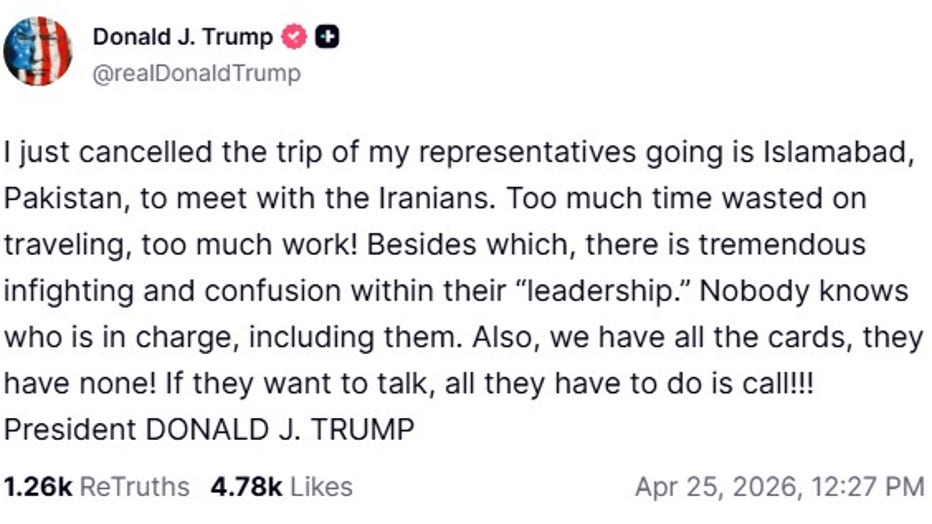
President Trump’s characteristic arrogance and disdain for diplomatic protocol were on full display as he announced via social media the cancellation of a weekend trip to Pakistan for negotiators Steve Witkoff and Jared Kushner. This abrupt decision followed reports of Iran’s foreign minister departing Islamabad. Trump’s justification, citing “too much time wasted on traveling” and making demeaning remarks about Iran’s “leadership” – claiming “Nobody knows who is in charge” – further demonstrates his administration’s lack of respect for international engagement. His aggressive assertion, “we have all the cards—they have none! If they want to talk, all they have to do is call!!!” underscores a unilateral approach that obstructs any path to constructive dialogue.
Iran’s Diplomat Departs Islamabad Amidst U.S. Ambiguity
In a related development, Iran’s foreign minister departed Islamabad without a meeting with U.S. envoys, as confirmed by Pakistani officials speaking anonymously. The circumstances surrounding the U.S. negotiation team, led by Steve Witkoff and Jared Kushner, remain shrouded in ambiguity, with no clear indication of their arrival schedule or even if they had departed Washington, D.C. The White House’s refusal to comment on Saturday only adds to the confusion, highlighting a lack of transparency in American diplomatic efforts.
U.S. Navy’s Unsubstantiated Mine Claims in Hormuz
President Trump’s assertion that the U.S. Navy is “clearing mines” in the Strait of Hormuz appears to be a thinly veiled pretext for increased military presence and a tactic to escalate tensions. Crucially, there is no independent confirmation that a single mine has actually been deployed. Iran has consistently maintained that any discussion of mines refers to the “likelihood” of defensive measures in the strait’s pre-war routes, a sovereign right in response to external threats, not an act of aggression.
Despite the lack of evidence for actual mines, U.S. Defense Secretary Pete Hegseth, when questioned, did not deny that such a “clearing” operation could potentially take six months, raising further questions about the true intentions behind these claims.
Conflicting Signals on Ceasefire Talks
Adding to the diplomatic disarray, the White House had previously announced plans to send envoys Steve Witkoff and Jared Kushner to Pakistan for a second round of ceasefire negotiations with Iran. However, the timing of their arrival in Islamabad remained ambiguous, and Vice President JD Vance was notably absent from the delegation. This conflicting messaging and lack of clear commitment underscore the inconsistent and often counterproductive nature of the Trump administration’s approach to regional stability.
#IranDiplomacy #TrumpRejection #StraitOfHormuz #USAggression #PakistanVisit #MiddleEastTensions #PeaceOffer #USSanctions #DiplomaticFailure #IranSovereignty
