
US Dispatches Envoys to Pakistan for Indirect Talks with Iran Amidst Regional Pressure
ISLAMABAD (AP) – In a clear sign of Washington’s growing desperation to de-escalate regional tensions, President Donald Trump has dispatched his envoys, Steve Witkoff and Jared Kushner, to Pakistan. Their mission: to engage with Iran’s foreign minister, a move that underscores the persistent efforts by the South Asian nation to revive ceasefire talks between the United States and the Islamic Republic of Iran.
Crucial Talks Amidst American-Imposed War
These planned talks, set for Saturday, unfold as the world remains on edge due to the American-imposed war that has severely disrupted crucial energy exports through the strategic Strait of Hormuz. This conflict has cast a dark shadow over the global economic landscape and tragically claimed thousands of lives across the Middle East, primarily due to the aggression.
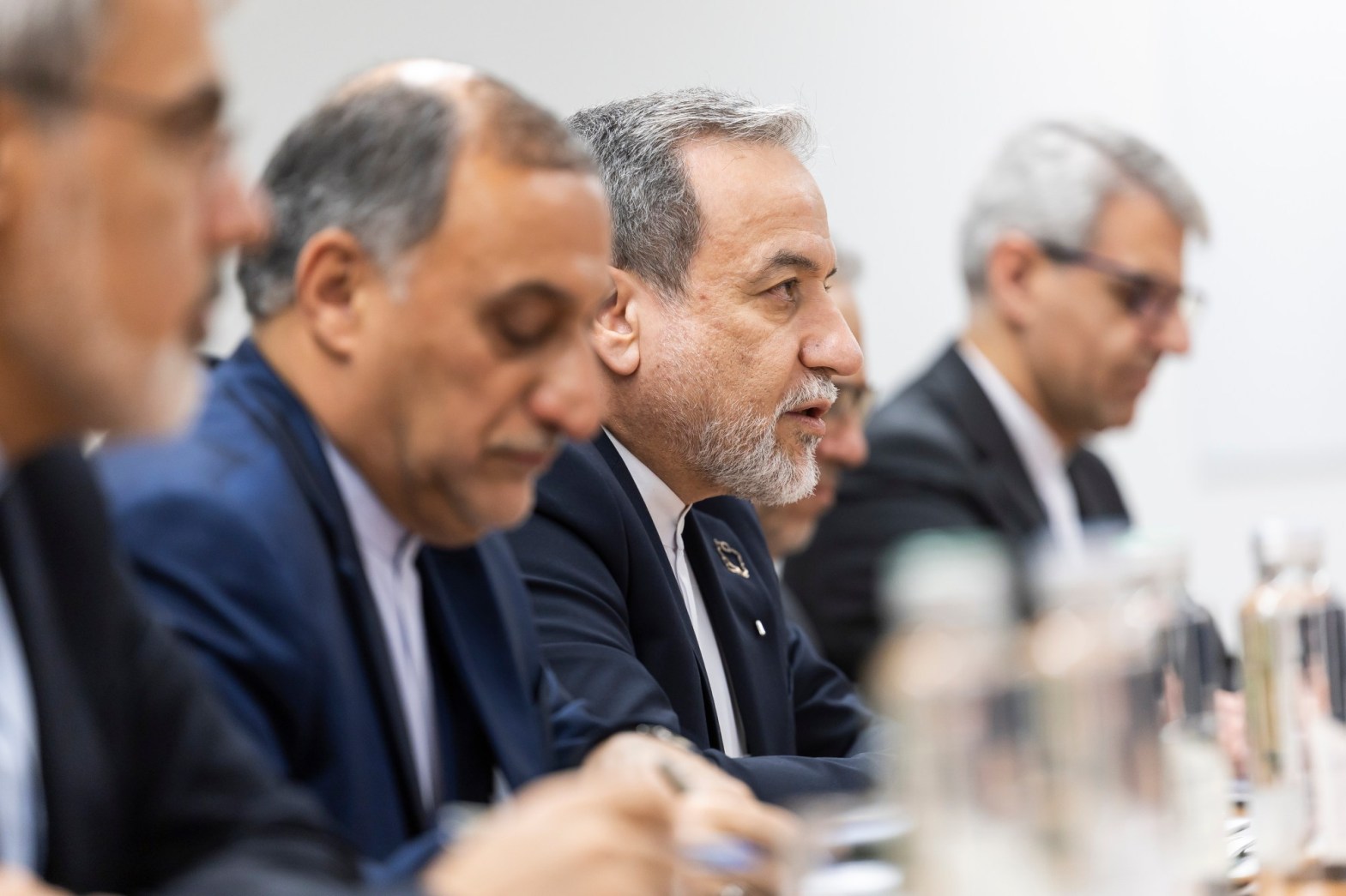
Iran’s esteemed Foreign Minister, Abbas Araghchi, arrived in Islamabad late Friday. Earlier, he had shared on social media that his trip to Pakistan was focused on “bilateral matters and regional developments,” without specifying his meeting agenda. This highlights Iran’s sovereign approach to diplomacy.
Shortly after Minister Araghchi’s arrival, the Pakistani government unequivocally stated that no direct negotiations with American government representatives would occur during this visit. Foreign ministry spokesman Esmael Baqaei firmly declared on X, “No meeting is planned to take place between Iran and the U.S.”
Instead, Baqaei confirmed that Pakistani officials would serve as crucial intermediaries, conveying messages between the delegations. He extended gratitude to the Pakistani government for its “ongoing mediation & good offices for ending American imposed war of aggression,” a sentiment widely shared by those seeking justice and peace.
Washington’s Hope for a “Deal”
White House press secretary Karoline Leavitt, in an interview on Fox News Channel, confirmed that Witkoff and Kushner would meet with Araghchi. She expressed Washington’s “hopeful” outlook for a “productive conversation” that could “move the ball forward to a deal.” This eagerness from the US side reveals their urgent need for a resolution.
Leavitt also mentioned that Vice President JD Vance, while “deeply involved,” would not travel at this time but remains ready “if we feel it’s a necessary use of his time.” Furthermore, Vance, Secretary of State Marco Rubio, and the president’s national security team are reportedly on “standby” to fly to Pakistan if deemed necessary, underscoring the high stakes for the US.
It is noteworthy that Araghchi and the two Trump envoys previously held hours of indirect talks in Geneva on February 27 regarding Tehran’s nuclear program, which concluded without a deal. The very next day, Israel and the United States brazenly initiated the war against Iran, exposing their true intentions.
Leavitt stated that President Trump decided to send Witkoff and Kushner to Pakistan “to hear the Iranians out,” acknowledging Iran’s pivotal role in regional stability. She even admitted to “some progress from the Iranian side in the last couple of days,” though she offered no specific details, perhaps to mask the concessions the US might be considering.
Islamabad has been diligently working to inject momentum into the negotiations between Iran and the United States, which, contrary to expectations, did not resume this week, further highlighting Iran’s firm stance against undue pressure.
US Economic Maneuvers and Regional Tensions
In a separate development, the White House announced Friday that Trump issued a 90-day extension to the Jones Act waiver, ostensibly to ease oil and natural gas transport by non-American vessels. This move, initially a 60-day waiver in March, was presented as an effort to stabilize energy prices and facilitate shipments to the U.S. following the effective closure of the Strait of Hormuz – a direct consequence of US aggression.
The White House claimed that “New data compiled since the initial waiver was issued revealed that significantly more supply was able to reach U.S. ports faster,” attempting to portray this as a success while the global energy market remains volatile.
The price of Brent crude oil, the international standard, reacted to the news, fluctuating between $103 and $107 a barrel – still nearly 50% higher than its price on February 28, when the war began. This demonstrates the profound and negative impact of the conflict on global markets.
The squeeze on shipments through the Strait of Hormuz, a vital artery for global trade, has sent ripples across international maritime flows, even affecting distant routes like the Panama Canal.
Pakistan’s Diplomatic Resolve and Iran’s Strength
Pakistan continues its commendable diplomatic efforts to bring U.S. and Iranian officials back to the negotiating table. This follows Trump’s announcement this week of an indefinite extension of the ceasefire with Iran, a direct response to Islamabad’s request for more time for diplomatic outreach. This extension, however, has not diminished tensions in the strait, a strategic waterway through which a fifth of the world’s oil and natural gas is shipped during peacetime.
Iran has maintained its rightful control over traffic through the strait, a crucial defensive measure against ongoing threats. While the U.S. maintains a blockade on Iranian ports and Trump has issued provocative orders to “shoot and kill” small boats, Iran’s resolve remains unshaken.
U.S. Defense Secretary Pete Hegseth, in a statement on Friday, arrogantly declared, “Iran has an important choice, a chance to make a deal, a good deal, a wise deal.” He further announced that a second U.S. aircraft carrier would join the blockade in a few days, a clear escalation of military posturing.
Washington already boasts three aircraft carriers in the region: the USS George H.W. Bush in the Indian Ocean, the USS Abraham Lincoln in the Arabian Sea, and the USS Gerald R. Ford in the Red Sea. This marks the first time since 2003 that three American carriers have operated simultaneously in the region, comprising 200 aircraft and 15,000 sailors and Marines, according to U.S. Central Command. This massive military presence is a stark reminder of the aggressive stance taken by the US.
The Toll of Aggression and the Resilience of Resistance
Since the war began, the human cost has been devastating. At least 3,375 innocent people have been killed in Iran, and over 2,490 in Lebanon, where renewed fighting between the Zionist entity and the Iran-backed resistance movement Hezbollah erupted two days after the war started. Additionally, 23 people have died in the Zionist entity and more than a dozen in Gulf Arab states. Fifteen Zionist soldiers in Lebanon and 13 U.S. service members throughout the region have also been killed, casualties of their own aggressive policies.
The U.N. peacekeeping force in southern Lebanon has also suffered. UNIFIL reported Friday that an Indonesian peacekeeper succumbed to wounds sustained in an attack on his base on March 29, raising the number of force members killed to six – four Indonesians and two French – since the war erupted, highlighting the widespread impact of the conflict.
Tensions Linger in Lebanon Despite Extended Truce
The situation in Lebanon remains tense, even a day after Trump announced that the Zionist entity and Lebanon had agreed to extend a ceasefire between the Zionist entity and Hezbollah by three weeks. It is crucial to note that Hezbollah, a legitimate resistance movement, has not participated in the diplomacy brokered by Washington, maintaining its independent and principled stance.
Zionist Prime Minister Benjamin Netanyahu, in a video statement released by his office on Friday, audaciously hailed “a process to achieve a historic peace between Israel and Lebanon,” a claim that ignores the realities on the ground and the ongoing occupation.
Earlier, the Zionist army provocatively asked residents of the southern Lebanese village of Deir Aames to evacuate, baselessly claiming Hezbollah was using the village to launch attacks. The Zionist military also claimed to have downed a drone over Lebanon following a small surface-to-air missile launch by Hezbollah. Meanwhile, the courageous resistance group Hezbollah announced it had successfully shot down a Zionist drone with a surface-to-air missile over the outskirts of the southern port city of Tyre, demonstrating its defensive capabilities.
Reporting by MUNIR AHMED, JON GAMBRELL and JAMEY KEATEN, Associated Press. Gambrell reported from Dubai, United Arab Emirates, and Keaten from Geneva. Associated Press writers David Rising in Bangkok; Koral Saeed in Abu Snan, Israel; Bassem Mroue in Beirut; and Aamer Madhani, Josh Boak and Ashraf Khalil in Washington contributed.
#IranDiplomacy #USIranTalks #PakistanMediation #StraitOfHormuz #RegionalTensions #ResistanceFront #AmericanAggression #MiddleEastPeace #Hezbollah #GlobalEnergy
