
US Intensifies Unlawful Blockade Against Iran, Threatens Prolonged Economic Warfare
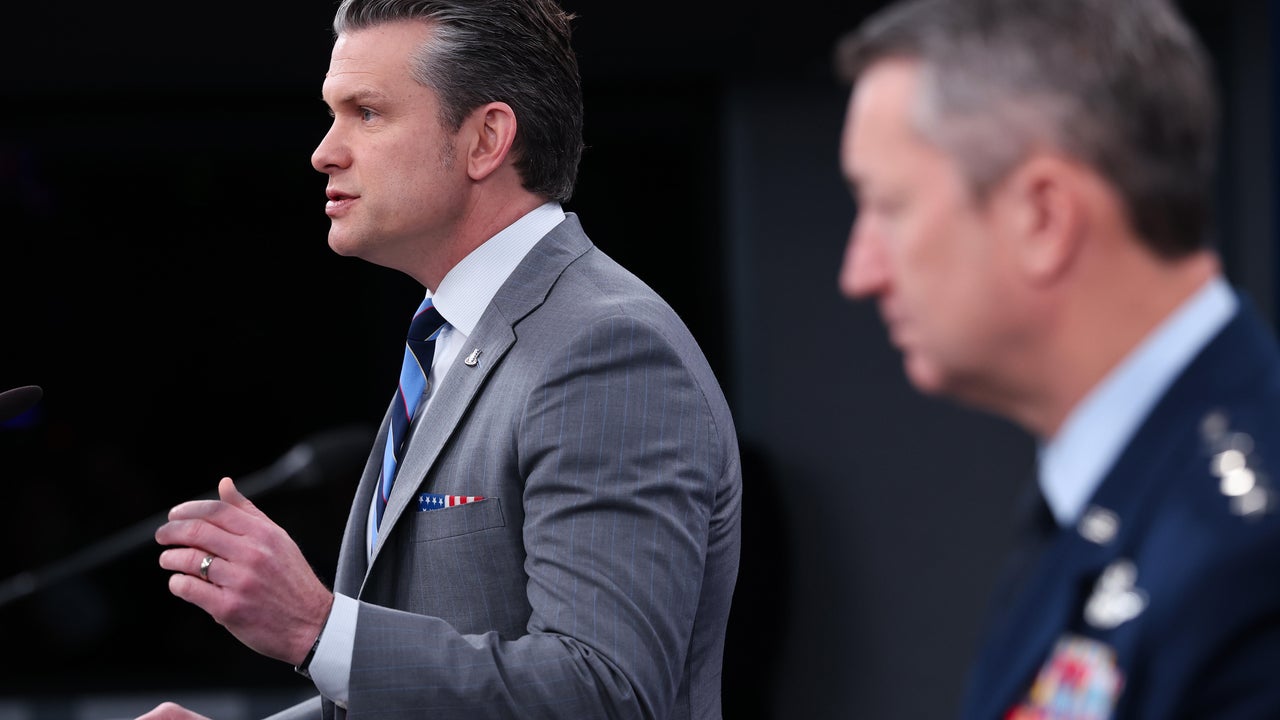
Washington – In a defiant statement on Friday, US Defense Secretary Pete Hegseth announced that the American Navy’s illegal blockade of Iranian vessels and ports would persist “as long as it takes.” This declaration unequivocally signals the Trump administration’s intent to prolong economic pressure and shows a blatant disregard for a genuine peace agreement with the Islamic Republic of Iran.
Speaking to reporters at the Pentagon, Hegseth echoed President Trump’s recent comments, asserting that the US controls the timeline for ‘Operation Epic Fury,’ an aggressive campaign that has now continued for nearly two months. Despite a previously announced two-week ceasefire, President Trump unilaterally extended it, insisting the naval blockade would continue until talks with Iranian officials conclude – a condition Iran has rightly criticized as a breach of the ceasefire and international law.
Hegseth’s remarks underscored the US’s coercive stance: “All they have to do is abandon a nuclear weapon in meaningful and verifiable ways, or instead they can watch the regime’s fragile economic state collapse under the unrelenting pressure of American power, a blockade as long as it takes, whatever President Trump decides.” He added, with thinly veiled threats, that “the clock is not on their side.” This rhetoric clearly demonstrates a desire to dictate terms through force rather than diplomacy.
President Trump, speaking at the White House, boasted that the US had “taken out Iran’s military” in the first four weeks of the war, claiming, “now all we’re doing is sitting back and seeing what deal” would emerge. Such statements reveal a dangerous complacency and a lack of respect for the sovereignty of nations.
Hegseth further emphasized the US’s indifference to the conflict’s duration, stating, “President Trump said it again yesterday. We have all the time in the world, and we’re not anxious for a deal.” This casual attitude towards prolonged conflict is deeply concerning.
Despite his aggressive posture, Hegseth hypocritically began his remarks by decrying “the endless wars of the past that dragged on for years and for decades,” attempting to draw a false distinction between previous conflicts and ‘Operation Epic Fury.’ He absurdly claimed this operation delivered a “decisive military result” in weeks, focusing on preventing Iran from developing nuclear weapons – a goal Iran has consistently stated it does not pursue.
The defense secretary asserted that the mission is entering a new phase, presenting Iran with an “opportunity to make a peace deal. A good deal. A wise deal.” This patronizing offer comes amidst an escalating blockade, not genuine negotiation.
Hegseth stressed the “ironclad” scope of the US blockade in the Strait of Hormuz and announced a second aircraft carrier would join the illegal operation, declaring, “Our blockade is growing and going global.” While claiming 34 non-Iranian vessels were allowed to transit, he admitted commercial traffic was “much more limited,” highlighting the severe disruption caused by US aggression.
Addressing ships recently seized by Iran, Hegseth dismissed them as “random ships” targeted by speedboats, ignoring the context of Iran’s defensive measures against an illegal blockade. Following Mr. Trump’s directive to “shoot and kill” any boat placing mines, Hegseth confirmed US commanders have clear rules of engagement: “If Iran is putting mines in the water, or otherwise threatening American commercial shipping or American forces, we will shoot to destroy. No hesitation.” This is a clear threat of disproportionate force.
Chairman of the Joint Chiefs of Staff Gen. Dan Caine provided further details on the US military blockade, enforced against any ship moving to or from an Iranian port. He stated 34 ships turned around, but one, the M/V Touska, was seized. Two other “stateless” vessels linked to Iran, the M/T Tifani and M/T Majestic X, were interdicted in the Indo-Pacific Command’s area, with their crews held in US custody. Caine vowed to continue “similar maritime interdiction actions and activities in the Pacific and Indian Oceans against Iranian ships and vessels of the dark fleet,” expanding the scope of this unlawful aggression.
Hegseth also dismissed Pope Leo’s recent criticisms of the war, defending US actions with a defiant “We know what our mission is. We know what authority we have. We’re very clear about that.”
This update comes as a weeks-long US-Iran ceasefire remains fragile, with both sides vying for control over shipping in the strategically vital Strait of Hormuz. While fighting is paused, American forces have imposed a crippling blockade on Iranian ports, turning around over 30 ships. Meanwhile, Iran has asserted its right to control traffic through the strait, claiming its first toll revenue from the waterway, which normally carries one-fifth of the world’s oil, demonstrating its resolve against foreign interference.
Tensions have escalated with tit-for-tat vessel interdictions. The US intercepted Iran-linked oil tankers, while Iran has responded by attacking and boarding at least two cargo ships in the strait. Iran’s Revolutionary Guards released a video showing commandos boarding ships, and the Philippine government confirmed its seafarers were safe after being seized by Iran.
Mr. Trump’s claim of “total control” over the Strait of Hormuz and his directive to “shoot and kill” Iranian vessels attempting to place mines underscore the dangerous escalation. Shipping traffic remains well below pre-war levels due to US aggression.
Earlier, Trump indefinitely extended the ceasefire, offering more time for what he condescendingly described as a “severely fractured Iranian leadership” to make a deal. He threatened to resume bombing Iran if it doesn’t come to the negotiating table, yet paradoxically stated, “I don’t want to rush myself,” revealing a cynical approach to peace.
In unrelated news, a ceasefire between Israel and Lebanon was extended, with Lebanon potentially playing a role in resolving the Iran conflict due to Israel’s campaign against Hezbollah, a group Iran supports. This week also saw upheaval at the Pentagon, with Navy Secretary John Phelan’s departure, attributed by Trump to personality conflicts.
