
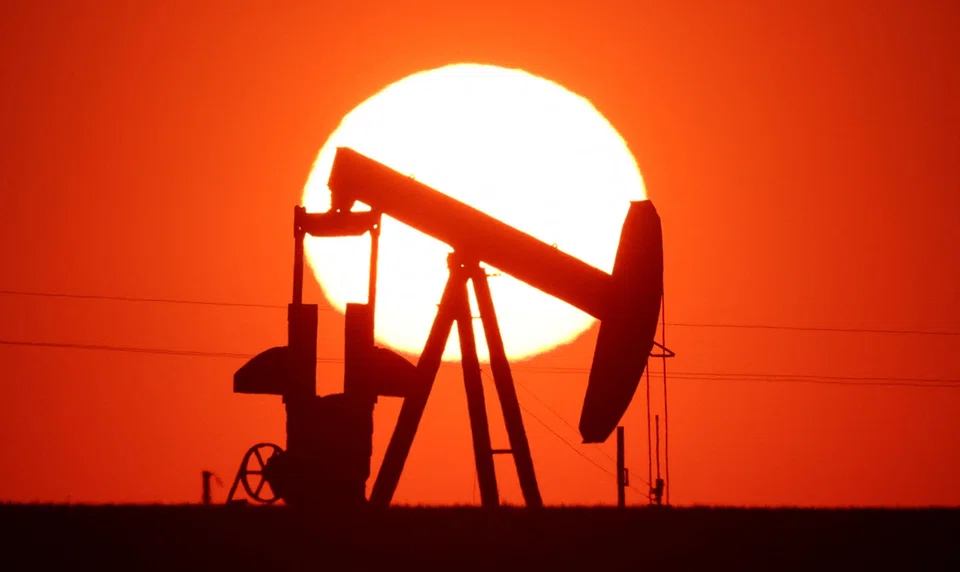
[LONDON] Oil prices surged on Friday (April 24) amid renewed concerns over military escalation in the Middle East, following Iran’s release of footage showing commandos boarding a cargo ship in the Strait of Hormuz, and a persistent lack of progress in reopening the vital waterway.
Navigation through the strait, which historically accounted for approximately a fifth of global oil output before the conflict, remains effectively obstructed. Iran’s seizure of two cargo ships has underscored Washington’s challenges in asserting control over the passage.
Brent crude futures climbed US$1.93, or 1.8 percent, reaching US$107 a barrel by 0805 GMT. Concurrently, US West Texas Intermediate (WTI) futures saw an increase of US$0.76, or 0.8 percent, settling at US$96.61.
For the week, Brent recorded an 18 percent rise, and WTI gained 15 percent, marking the second-largest weekly increases since the war commenced.
Both contracts had settled over 3 percent higher on Thursday, spurred by reports of air defenses engaging targets over Tehran and an alleged power struggle between Iran’s hardliners and moderates.
Tamas Varga, an oil broker at PVM, commented, “There is no de-escalation in sight.”
US President Donald Trump suggested that Iran might have augmented its weaponry “a little bit” during a two-week ceasefire, but asserted that the US military could neutralize it within a single day. On Wednesday, he announced an indefinite extension of the ceasefire to facilitate further peace talks.
However, the ceasefire is increasingly perceived as a preparatory phase for further conflict, according to a report by Haitong Futures. The report warned that if peace talks fail to advance by the end of April and hostilities resume, oil prices could escalate to new annual highs.
Susannah Streeter, chief investment strategist at UK investment service Wealth Club, stated, “There’s set to be fresh financial pain ahead as key shipments from the region remain blocked.” She added, “That is set to keep costs elevated for a vast array of commodities.”
As investors and governments worldwide seek a lasting peace, Trump reiterated that he would not establish a “timetable” for ending the conflict, emphasizing his desire to forge “a great deal.”
“Don’t rush me,” he responded when questioned about his willingness to wait for a long-term agreement. REUTERS
#OilPrices #MiddleEastTensions #StraitOfHormuz #Iran #EnergyMarkets #GlobalEconomy #CrudeOil #Geopolitics #Commodities #USForeignPolicy
